About Mukutan Conservancy
Mukutan Conservancy
Enjoy a Mukutan Conservancy Safari in a remarkable conservation area in Laikipia County, Kenya, spread across about 88,000 acres on the eastern rim of the Great Rift Valley. It protects a mosaic of indigenous woodland, forest, savanna and the dramatic Mukutan Gorge, including some of Kenya’s last native cedar forests and more than 200 indigenous plant species. Formerly known as Laikipia Nature Conservancy, it has become known for working hand in hand with the six communities around it, through grazing, livestock, farming and beekeeping programmes. A stay here combines wilderness, waterfalls, hot springs, conservation and community, in a remote part of Kenya far from the busy safari circuits.
Quick Facts
| Quick Fact | Details |
|---|---|
| Location | Laikipia County, Kenya, on the eastern rim of the Great Rift Valley |
| Size | About 88,000 acres |
| Formerly Known As | Laikipia Nature Conservancy |
| Landscape | Indigenous woodland, cedar forest, savanna, gorge, waterfalls and hot springs |
| Famous For | Mukutan Gorge, native cedar forest and community conservation |
| Main Wildlife | Elephants, buffaloes, giraffes, zebras, lions, leopards, cheetahs and baboons |
| Community | Six communities around the conservancy, represented by a community committee |
| Conservation Partner | Fauna & Flora, working with Mukutan since 2019 |
| Main Activities | Guided walks, gorge and waterfall hikes, game drives, fishing, horse riding and village visits |
| Accommodation | Makena’s Hills Tented Lodge, Mukutan Retreat and Mukutan Bandas |
| Best Time to Visit | Drier months, confirmed with your lodge |
Where Is Mukutan Conservancy Located?
Mukutan Conservancy is in Laikipia County, in the west of the region, right on the edge of the Great Rift Valley. From the rim, views run out across the valley, and some lodges look towards Lake Baringo. The conservancy lies in a wider landscape that includes the Englesha Forest and the Mukutan Gorge. Its scenery is very different from the open plains of the Masai Mara, with forested slopes, deep gorges, palm-filled valleys and rugged hills creating a secluded safari setting.
What Is the History of Mukutan Conservancy?
Mukutan Conservancy was formerly known as Laikipia Nature Conservancy. Over the past decade, poaching and land incursions took a toll on the area, and flagship species such as black rhino were lost. The region’s gorges and forests also gave cover to bandits, and tensions over grazing and pasture affected the surrounding communities.
A turning point came when Mukutan began working with its neighbours rather than apart from them. Since 2019, the conservancy has partnered with Fauna & Flora, the world’s oldest international conservation organisation. A three-year programme from 2023 to 2026, supported by the Nando and Elsa Peretti Foundation, backs inclusive land use that allows communities to develop economically while keeping conservation space for flagship and other species. Residents describe a shift from seeing the conservancy as a threat to seeing it as a partner, and fewer attacks have been reported in the region.
Lodge listings also link parts of the surrounding landscape to the Gallmann family’s Ol Ari Nyiro ranch, home to the conservationist and author Kuki Gallmann.
Why Is Mukutan Conservancy Famous?
Mukutan is known for its dramatic gorge, its native cedar forests, and its community-led approach to conservation. The name means “the meeting”, which fits a place where many hills and valleys converge in a maze of unspoiled vegetation, waterfalls, hot springs and ancient caves.
The conservancy is also recognised for its community programmes, which are among its most distinctive features:
| Programme | What It Does |
|---|---|
| Community grazing | Pastoralists can graze livestock in the conservancy for a small fee, with grass banks for both community livestock and wildlife |
| Livestock fattening | Pastoralists entrust cattle to Mukutan to fatten and sell. Over 700 cattle have been sold, generating more than KES 40 million for residents |
| Hass avocado farming | Mukutan gives around 20,000 Hass avocado seedlings to local farmers each year |
| Beekeeping | A beekeeping project has benefited over 1,000 residents |
| Livelihood support | Medication, cattle spraying, and access to social security and health insurance services |
Even the conservancy’s name has travelled. A rescued orphan elephant at the Sheldrick Wildlife Trust was named Mukutan after the gorge, linking him to his birthplace.
What Wildlife Can You Spot in a Mukutan Conservancy Safari?
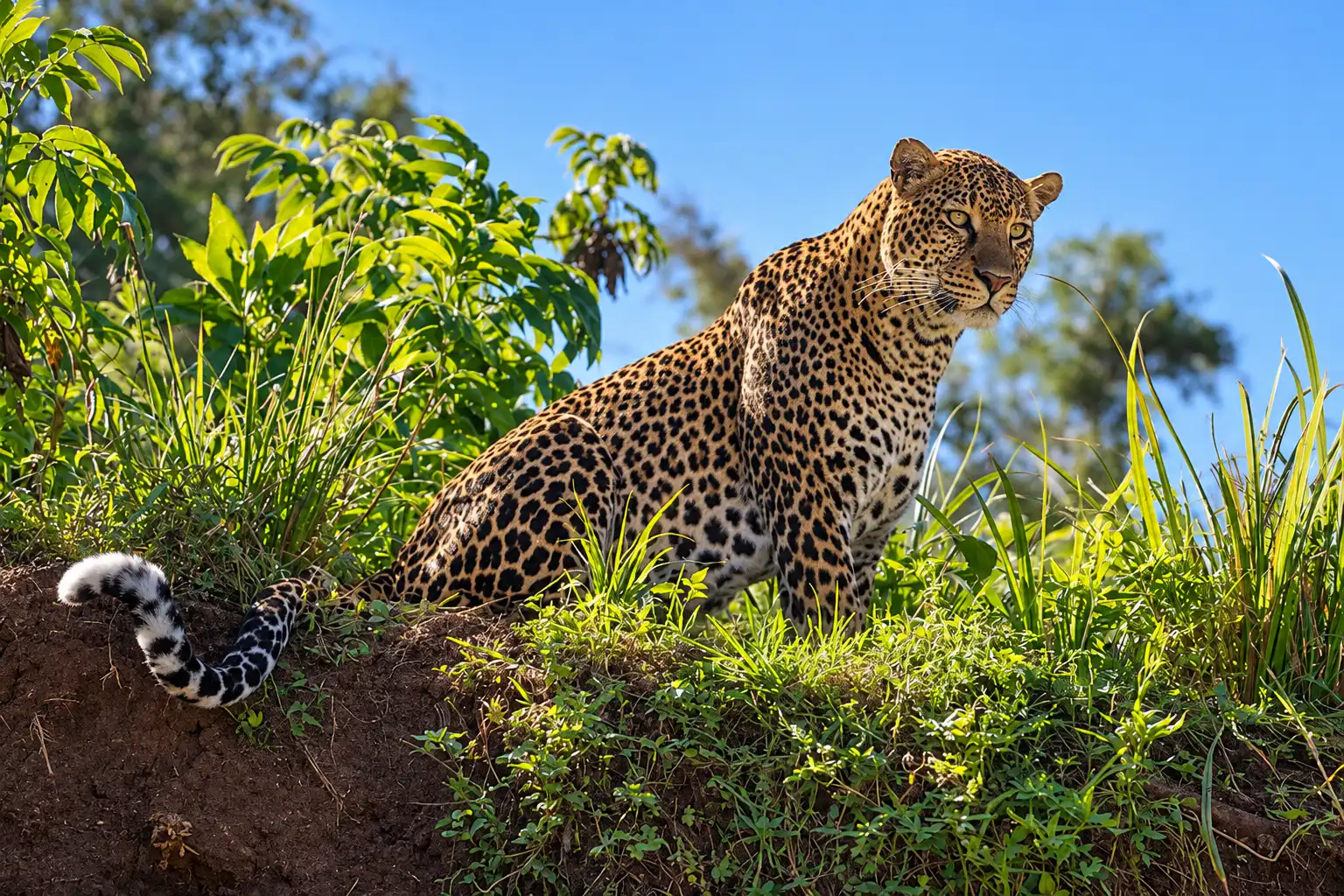
The conservancy’s mix of forest, woodland, savanna and gorge supports a wide range of wildlife. Possible sightings include:
- Elephants
- Cape buffaloes
- Giraffes
- Zebras
- Lions
- Leopards
- Cheetahs
- Baboons
- Antelopes and gazelles
Wildlife sightings vary with season, weather and location. Black rhino were lost during the period of poaching and land incursions, and restoring flagship species is part of the conservancy’s long-term recovery goals, so don’t expect to see them on a visit today.
What Birds Can You See in Mukutan Conservancy?
Mukutan is a rewarding destination for birdwatchers. Over 400 bird species have been recorded across the wider landscape, including more than 40 listed on the IUCN Red List. Birding is especially interesting around the forest, the gorge, streams, the dam and the wooded slopes. Your lodge guide can point out the best spots for the season.
What Activities Can You Enjoy in a Mukutan Conservancy Safari?
Guided walks are a highlight, taking you through the Englesha Forest and deep into the Mukutan Gorge. A hike to the big waterfall is one of the best-known outings, and depending on the weather, you can also soak in the mineral-rich hot springs. Other activities include:
| Activity | What to Expect |
|---|---|
| Guided walks | Explore the Englesha Forest and Mukutan Gorge with a local guide |
| Waterfall excursion | Hike into the gorge to the big waterfall |
| Game drives | Day and night drives in search of wildlife |
| Fishing | Fish the streams and dam |
| Horse riding and camel rides | Explore the trails on horseback or by camel |
| Wildlife hides | Watch game from hides overlooking the dam |
| Hot springs | Soak in thermal springs, depending on the weather |
| Village visits | Meet local communities and learn about their way of life |
What Unique Bush Experiences Can You Enjoy?
Mukutan suits travellers who want more than a conventional game drive. Specialist walks such as insect walks and ethnobotanical walks reveal the smaller life of the forest. Picnics and sundowners are part of many stays, and wildlife hides give you quiet time beside the water while waiting for game. Private yoga sessions and creative retreats can be arranged at some lodges, and guests can volunteer with or visit community projects. Limited phone and internet access at some lodges adds to the feeling of a true escape.
What Accommodation Is Available?
Accommodation in and around Mukutan is small-scale and remote. Options range from a rustic off-grid banda to a stone-and-thatch retreat on the edge of the gorge.
| Accommodation | Style | Best For | Listed Rate |
|---|---|---|---|
| Makena’s Hills Tented Lodge | Six large tents, each with an attached bathroom, private veranda and private massage bed | Couples, small groups, creative and yoga retreats | Banda option listed from US$80 per person per night full board (children 6 to 12 sharing: US$60), 2-night minimum |
| Mukutan Retreat | Three large stone cottages with private verandas, built from local stone, papyrus and sustainably gathered cedar and olive wood | Travellers wanting seclusion and simple, refined comfort | Listed at US$500 to US$750 per person sharing per night, with conservancy fees of US$80 per person per night listed as extra |
| Mukutan Bandas | Rustic, off-grid secluded cottage in a quiet corner of the conservancy | Couples seeking a hideaway | Listed on Airbnb, so check the listing for current pricing |
Makena’s Hills Tented Lodge sits on the western edge of the conservancy, on the rim of the Great Rift Valley. Listed rates include full board, game drives, airstrip transfers, a waterfall excursion, fishing, guided walks, picnics and sundowners.
Mukutan Retreat perches at the edge of the gorge and is built from local stone, papyrus and indigenous woods. Its cuisine is described as a mix of classic Italian dishes and organically grown ingredients.
Mukutan Bandas offer a simple base close to Lake Baringo and Lake Bogoria.
How Do You Get to Mukutan Conservancy?
| Travel Option | Details |
|---|---|
| By Air | About one hour from Nairobi. There is a private airstrip for charter flights, and scheduled flights run to Loisaba or Laikipia |
| By Road | About four hours from Nairobi, on rocky conservancy tracks that need a 4x4 |
| From Nairobi | Flying is the most convenient option, while the road journey shows northern Kenya’s changing landscapes |
| Local Transfers | Lodges can arrange airstrip transfers, and these are included in some listed rates |
What Is the Best Time to Visit Mukutan Conservancy?
The drier months are generally the easiest time for walking, hiking and wildlife viewing, as vegetation thins and animals gather near water. After seasonal rains the landscape turns green, and the waterfalls in the gorge are at their most dramatic. Conditions change through the year, so ask your lodge for current advice before you book.
Why Should You Visit Mukutan Conservancy?
Mukutan brings together dramatic Rift Valley scenery, native cedar forest, waterfalls and community-led conservation in one of Laikipia’s most distinctive destinations. A stay here lets you walk deep into a gorge, soak in hot springs, and see first-hand how conservation and local livelihoods can support each other. For travellers who want a quieter, more meaningful Kenya safari away from the busiest wildlife areas, Mukutan offers a rare sense of place.
Highlights
Dramatic Mukutan Gorge and Great Rift Valley views
Ancient cedar forests and diverse indigenous plant life
Wildlife including elephants, lions, leopards, and giraffes
Waterfall hikes and natural hot springs
Guided nature walks, birdwatching, and night game drives
Community-led conservation and cultural village visits
Mukutan Conservancy map
Explore the location of Mukutan Conservancy and see how it fits into your Kenya safari journey.