
When people think of an African safari, the Big Five usually come to mind: lions, leopards, elephants, rhinos and buffaloes. These iconic animals have long been at the centre of Kenya's safari tourism, attracting visitors from across the world to destinations such as the Maasai Mara, Amboseli and Lake Nakuru. However, Kenya's wildlife heritage extends far beyond these famous species.
From the unusual feeding habits of the gerenuk in Samburu to the spectacular flamingo gatherings at Lake Bogoria, Kenya offers wildlife encounters that go beyond the traditional game drive. Its diverse ecosystems, ranging from open savannahs and dry acacia woodlands to freshwater lakes, forests and mountain habitats, support an extraordinary variety of animal and bird species.
For travellers willing to explore beyond the familiar safari circuit, there are fascinating wildlife experiences waiting to be discovered. Here are some unique wildlife encounters to include in your next Kenyan safari.
1. Discover the Special Five of Samburu
One of Kenya's most distinctive wildlife experiences is searching for the Samburu Special Five in the country's northern region. These five species are particularly associated with the arid landscapes of Samburu National Reserve and neighbouring conservation areas.
The Samburu Special Five consist of:
Grevy's zebra: Recognised by its narrow black-and-white stripes, large rounded ears and white belly, it is the largest living wild equid.
Reticulated giraffe: Known for its striking geometric coat patterns, this giraffe is particularly associated with northern Kenya.
Somali ostrich: A large flightless bird distinguished by its blue-grey neck and legs in males.
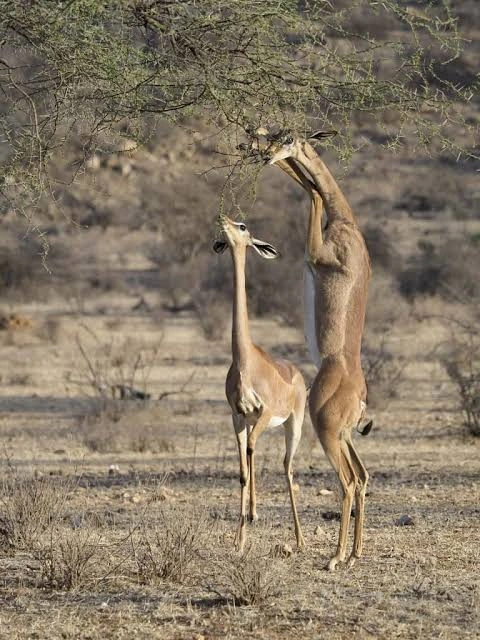
Gerenuk: Often called the giraffe gazelle, it is famous for standing on its hind legs to browse leaves from tall shrubs.
Beisa oryx: An elegant antelope with long, straight horns and distinctive facial markings, adapted to dry environments.
Unlike the Big Five, these animals are closely associated with northern Kenya's semi-arid ecosystems. Exploring Samburu offers visitors an opportunity to appreciate wildlife species that are less commonly encountered on conventional southern Kenya safari routes.
A safari in Samburu can also be combined with Buffalo Springs and Shaba National Reserves, creating a rewarding northern Kenya wildlife circuit.
2. Witness the Flamingo Spectacle at Kenya's Rift Valley Lakes
Kenya's Great Rift Valley is home to a remarkable network of alkaline and freshwater lakes that attract large populations of waterbirds. Among the most spectacular sights is the gathering of flamingos, whose pink plumage can transform sections of a lake shoreline into a colourful natural spectacle.
Lake Bogoria is particularly renowned for its lesser flamingos, which feed on microscopic algae found in its alkaline waters. Lake Nakuru and Lake Elementaita also provide important habitats for flamingos and numerous other waterbird species.
Flamingo numbers and distribution vary depending on water levels, food availability and changing environmental conditions. This means that every visit can offer a different experience.
Beyond flamingos, visitors may encounter pelicans, African fish eagles, herons, cormorants and other waterbirds. For birdwatchers and nature photographers, exploring these lakes offers a rewarding alternative to traditional savannah game drives.
3. Search for African Wild Dogs in Kenya's Conservancies
African wild dogs, also known as painted wolves, are among the continent's most fascinating and endangered carnivores. Unlike lions and leopards, they live in highly social packs, relying on cooperation, communication and coordinated hunting strategies.
In Kenya, Laikipia is one of the important landscapes for experiencing these elusive predators. Its network of private ranches and community conservancies provides valuable habitats for wild dogs and other threatened wildlife.
Watching a pack interact in its natural environment can be an extraordinary safari experience. Visitors may observe social grooming, playful behaviour, coordinated movement and, occasionally, hunting activity.
African wild dogs are not guaranteed sightings, as they cover large territories and move frequently. However, travelling with experienced guides in suitable conservation areas increases the opportunity to learn about their behaviour and ecological importance.
4. Experience a Night Game Drive in a Kenyan Conservancy
Most traditional safaris take place during daylight hours, when visitors search for animals across open plains and woodland habitats. However, the African wilderness changes considerably after sunset, revealing a different community of wildlife.
Night game drives, available in selected private conservancies, provide opportunities to search for nocturnal and predominantly nocturnal species that are rarely seen during ordinary daytime safaris.
Depending on the location and conditions, visitors may encounter:
Aardvarks: Unusual nocturnal mammals that use their powerful claws to dig for termites and ants.
Genets: Small, agile carnivores with spotted coats and long ringed tails.
African civets: Nocturnal mammals that forage for insects, small animals and fruit.
Bush babies: Small primates known for their large eyes, remarkable jumping ability and distinctive calls.
Servals: Medium-sized wild cats with long legs, large ears and spotted coats.
A night drive offers a different perspective on wildlife behaviour and the interconnected nature of African ecosystems. It is particularly appealing to repeat safari travellers seeking experiences beyond conventional daytime game viewing.
Night drives are not permitted in every Kenyan national park or reserve, so travellers should select conservancies and accommodation providers where the activity is authorised.
5. Visit the Chimpanzees at Ol Pejeta Conservancy
While Kenya is famous for its savannah wildlife, it also offers opportunities to learn about primates that are not naturally found in the country's wild ecosystems.
The Sweetwaters Chimpanzee Sanctuary provides a refuge for rescued and orphaned chimpanzees. Located within Ol Pejeta Conservancy, the sanctuary offers visitors an opportunity to observe these intelligent primates in a protected environment.
Chimpanzees are known for their complex social structures, tool use, communication and problem-solving abilities. Observing their interactions provides an interesting insight into primate behaviour and the importance of wildlife rescue and rehabilitation.
A visit to the sanctuary can be incorporated into an Ol Pejeta safari, making it an excellent addition for families, conservation enthusiasts and travellers interested in learning about wildlife beyond the traditional game-viewing experience.
6. Track Rhinos at Ol Pejeta Conservancy
For travellers interested in endangered species conservation, Ol Pejeta Conservancy offers one of Kenya's most significant wildlife experiences.
The conservancy is internationally recognised for its rhino conservation efforts and is home to substantial populations of black and southern white rhinos. It is also the location of the world's last two northern white rhinos, both females, whose protection represents an important chapter in global conservation history.
Depending on the activities available and conservation protocols, visitors may have opportunities to learn about rhino monitoring, anti-poaching operations and the work undertaken by conservation teams.
Unlike an ordinary game drive focused on spotting animals, this experience provides a deeper understanding of the challenges involved in protecting endangered species.
Ol Pejeta is particularly worth including in itineraries that combine wildlife viewing with conservation education.
7. Experience a Walking Safari in Kenya's Wilderness
A walking safari offers a completely different way of experiencing the African wilderness. Instead of observing the landscape from a safari vehicle, visitors explore the natural environment on foot under the guidance of an experienced and authorised walking safari guide.
The experience is less about covering long distances or searching for large predators and more about appreciating the smaller details that are often overlooked during conventional game drives.
During a guided walk, visitors may learn how to identify animal tracks, recognise bird calls, distinguish different plants and understand the relationships between insects, vegetation and larger wildlife.
Walking safaris are available in selected Kenyan conservancies and wilderness areas, including parts of Laikipia and the northern safari circuit.
They are particularly rewarding for travellers who enjoy nature interpretation, photography and learning about the finer details of an ecosystem.
8. Discover the Gerenuk's Extraordinary Feeding Behaviour
One of the most unusual wildlife encounters in northern Kenya is watching a gerenuk feed. This slender antelope has evolved a distinctive feeding behaviour that allows it to access vegetation beyond the reach of many other browsing animals.
Unlike most antelopes, the gerenuk frequently stands upright on its hind legs, using its long neck and forelegs to reach leaves growing on taller shrubs and trees.
Its elongated neck, narrow head and large eyes give it a distinctive appearance. It can also survive for extended periods without drinking free-standing water, obtaining much of its moisture from the vegetation it consumes.
Samburu National Reserve and the surrounding northern Kenya landscapes are among the best places to look for gerenuks.
For wildlife enthusiasts, observing this unusual feeding behaviour is a reminder that some of Africa's most interesting animal adaptations are found beyond its famous large mammals.
9. Explore Kenya's Marine Wildlife Along the Indian Ocean Coast
Kenya's wildlife experiences are not limited to national parks and inland conservancies. Along the Indian Ocean coastline, a completely different world of marine biodiversity awaits discovery.
Destinations such as Watamu, Malindi and Diani provide opportunities to explore coral reefs, seagrass beds and coastal marine ecosystems.
Depending on the location and season, visitors may encounter:
Sea turtles: Green turtles and hawksbill turtles are among the species found in Kenyan coastal waters.
Dolphins: Bottlenose and other dolphin species can be encountered in selected coastal areas.
Whale sharks: These enormous but gentle filter-feeding fish are occasionally encountered in Kenyan waters, particularly around the southern coast during seasonal movements.
Reef fish: Coral reefs support colourful species that contribute to the remarkable diversity of the Indian Ocean.
Humpback whales: These migratory marine mammals visit the East African coastline seasonally.
Snorkelling, responsible marine excursions and guided reef experiences allow visitors to appreciate this underwater biodiversity.
For travellers planning a longer holiday, combining a wildlife safari with a coastal marine experience creates a more complete picture of Kenya's natural heritage.
10. Experience a Camel Safari in Northern Kenya
A camel safari offers a distinctive way to explore Kenya's drier landscapes. Particularly associated with northern Kenya, camel excursions provide a slower and more immersive approach to experiencing the wilderness.
Unlike conventional game drives, where vehicles cover large distances in search of wildlife, camel safaris allow visitors to appreciate the environment at a gentler pace.
Depending on the route, visitors may explore open plains, dry riverbeds, rocky terrain and traditional pastoral landscapes while learning about the relationship between local communities and their livestock.
Laikipia is particularly well known for camel-supported walking expeditions and wilderness experiences.
These excursions can offer opportunities to observe birds, smaller mammals and other wildlife while appreciating the landscapes and cultural heritage of northern Kenya.
For adventurous travellers looking for something different from a standard safari vehicle experience, a camel safari can be a memorable addition to their itinerary.
11. Witness the Spectacular Life of Kenya's Hyenas
Often misunderstood and unfairly portrayed as mere scavengers, spotted hyenas are among Africa's most intelligent and socially complex predators.
Kenya offers excellent opportunities to observe spotted hyenas, particularly in wildlife-rich landscapes such as the Maasai Mara and surrounding conservancies.
Hyenas live in structured social groups known as clans, which can contain numerous individuals. Their social relationships, communication systems and hunting strategies are fascinating subjects for wildlife enthusiasts.
Contrary to popular belief, spotted hyenas are accomplished hunters and obtain a substantial proportion of their food through active hunting rather than scavenging.
During a safari, visitors may observe hyenas interacting within their clans, caring for cubs around communal dens or moving across the plains in search of food.
Learning about these animals provides a better understanding of their ecological importance as both predators and scavengers, helping maintain the balance of African ecosystems.
12. Explore Kenya's Lesser-Known World of Reptiles and Amphibians
Kenya's reptiles and amphibians are among the country's most overlooked wildlife attractions. While most safari itineraries focus on mammals and birds, these smaller creatures play important roles in maintaining healthy ecosystems.
Visitors exploring Kenya's different habitats may encounter:
Nile crocodiles: Frequently found in rivers and lakes, including the Mara River, where they are part of the wider aquatic ecosystem.
Chameleons: These remarkable reptiles are known for independently moving eyes, specialised feet and colour-changing abilities.
Leopard tortoises: Recognisable by their beautifully patterned shells, they inhabit various dry and semi-arid environments.
Geckos: Small, adaptable reptiles that occupy different habitats and are often encountered around rocky areas and accommodation facilities.
Frogs and toads: Particularly interesting in wetter environments, where they contribute to insect control and food webs.
A specialist nature walk with a knowledgeable guide can reveal a fascinating side of Kenya's biodiversity that is easily missed during ordinary game drives.
13. Discover the Rare Wildlife of Arabuko-Sokoke Forest
For travellers interested in rare and lesser-known wildlife, Arabuko-Sokoke Forest offers an experience quite different from Kenya's traditional safari destinations.
Located along the Kenyan coast between Kilifi and Malindi, this forest is one of East Africa's important remaining coastal forest ecosystems. It supports several rare and specialised species that are difficult to encounter elsewhere.
Some of its most interesting wildlife includes:
Golden-rumped elephant shrew: A distinctive small mammal with a long, flexible snout and a prominent golden patch on its rump.
Sokoke scops owl: A rare, small owl associated with coastal forest habitats.
Sokoke bushy-tailed mongoose: An elusive forest-dwelling mammal.
Clarke's weaver: A bird associated with coastal forest habitats in Kenya.
Arabuko-Sokoke is particularly rewarding for birdwatchers, naturalists and travellers interested in biodiversity conservation.
Exploring the forest with a knowledgeable local guide provides opportunities to learn about endemic species, forest ecology and the importance of protecting Kenya's remaining coastal woodlands.
Planning a Safari Beyond the Big Five
Exploring Kenya beyond the Big Five opens up an entirely different dimension of African wildlife tourism. From the unusual adaptations of the gerenuk in Samburu to the rare forest species of Arabuko-Sokoke, the country offers experiences that appeal to curious travellers, conservation enthusiasts, birdwatchers and seasoned safari explorers.
The secret to enjoying these experiences is choosing destinations that match your interests. Northern Kenya is particularly rewarding for specialised wildlife encounters, Laikipia offers exceptional conservation and wilderness experiences, while the Great Rift Valley lakes provide outstanding birdwatching opportunities. The Indian Ocean coastline adds another dimension through its remarkable marine biodiversity.
At Olengugih Safaris, we believe that an African safari should be about more than ticking animals off a checklist. It should be an opportunity to discover ecosystems, understand wildlife behaviour and appreciate the natural heritage that makes Kenya such an extraordinary destination.
Whether you are planning your first Kenyan safari or returning for a different kind of adventure, we can help you create an itinerary that takes you beyond the familiar and introduces you to the country's remarkable wildlife diversity.
Explore Kenya beyond the Big Five. Your next extraordinary wildlife encounter could be waiting somewhere unexpected.