
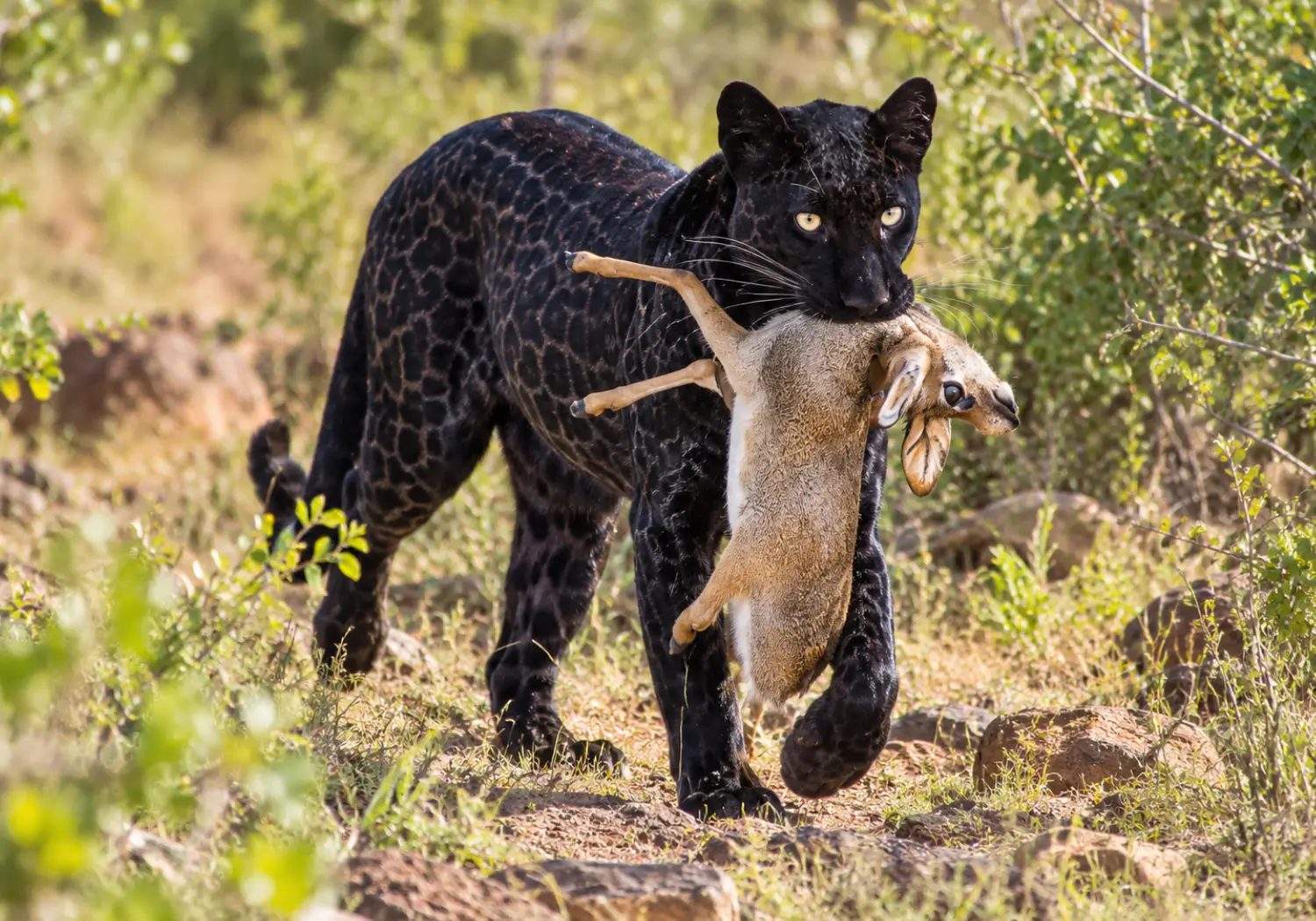
Black Leopard in Kenya: Where to Find This Rare Melanistic Leopard
The black leopard in Kenya is one of the most elusive animals on an African safari. Unlike the classic golden leopard covered in dark rosettes, a melanistic leopard has an unusually high concentration of dark pigment, giving its coat an almost completely black appearance. Look closely, however, and the leopard’s familiar rosette pattern can often still be seen beneath the dark coloration.
Kenya has some notable areas associated with black leopard sightings, particularly within the Laikipia region. However, these animals are exceptionally rare, so seeing one requires considerably more than simply choosing a particular safari destination. Patience, local knowledge, suitable habitat, and a great deal of luck all play a role.
What Is a Black Leopard?
A black leopard is not a separate species or subspecies. It is a melanistic leopard, meaning that genetic variation causes the animal to produce unusually high levels of melanin.
The result can be dramatic. In bright sunlight, a black leopard may appear almost entirely dark, while softer light can reveal the rosettes beneath its coat. This is one reason photographs sometimes show more detail than the human eye can see during a fleeting sighting.
Melanism occurs naturally in leopards, although it is uncommon. Interestingly, black leopards are more frequently associated with certain forested and densely vegetated environments than the open grasslands often associated with traditional African safari imagery.
Where Can You See Black Leopards in Kenya?
Kenya's Laikipia region is particularly interesting for travelers hoping to encounter a melanistic leopard. Several private conservation areas and ranches in the region have been associated with reports or sightings of unusually dark leopards.

Solio Game Reserve
Solio Game Reserve is one of the specific places associated with black leopard reports in Kenya. Located in Laikipia County, the reserve is better known internationally for its important rhino conservation work, but it also supports a variety of predators and other wildlife.
The reserve's varied habitat provides suitable conditions for leopards. A black leopard sighting, however, remains an exceptional event rather than something visitors should expect on every game drive.
Ol Gaboli Lodge
Ol Gaboli Lodge in Laikipia is another location associated with reports of black leopards. Its wildlife-rich landscape provides habitat for leopards alongside other species found across the Laikipia ecosystem.
For safari travelers, the attraction goes beyond the possibility of seeing a melanistic leopard. The lodge offers an opportunity to experience wildlife in a private conservation setting where sightings can be less predictable and more intimate than simply following a checklist of famous animals.
Laikipia Wilderness Camp
The Laikipia Wilderness Camp area is also associated with black leopard sightings and has gained attention among travelers interested in finding this unusually colored big cat.
Laikipia's combination of rugged terrain, bushland, woodland, and conservation areas creates suitable leopard habitat. Consequently, the region remains one of the places worth considering for travelers specifically interested in melanistic leopards.
Why Are Black Leopards So Rare?
Seeing a leopard is already a special safari experience, but seeing a melanistic leopard is considerably less predictable. The dark coloration results from a genetic trait, and only a small proportion of leopards display it.
Furthermore, leopards are naturally secretive animals. They often rest during the day, move through thick vegetation, and become more active around dawn, dusk, or during the night. A black leopard can therefore disappear into its surroundings remarkably well.
This combination of rarity, elusive behavior, and camouflage makes a confirmed sighting an extraordinary safari moment.
How Can You Increase Your Chances of Seeing One?
There is no guaranteed method for finding a black leopard. Nevertheless, travelers can improve their chances by choosing areas with known leopard populations and working with experienced guides who understand the movements and behavior of local predators.
Early morning and late afternoon game drives can be productive because leopards may become more active around these periods. In addition, spending several days in one wildlife area gives guides more opportunities to track fresh signs and follow recent sightings.
Most importantly, do not book a safari expecting a guaranteed black leopard encounter. A responsible safari operator should present it as a rare possibility rather than a promised attraction.
Black Leopard vs Regular Leopard
The main difference is coloration rather than species.
| Feature | Black Leopard | Typical Leopard |
|---|---|---|
| Species | Leopard | Leopard |
| Coat | Very dark or black | Golden or yellowish |
| Rosettes | Often visible in certain light | Clearly visible |
| Melanin | High | Normal |
| Rarity | Uncommon | Much more common |
| Behavior | Similar leopard behavior | Similar leopard behavior |
Therefore, seeing a black leopard does not mean you have encountered a different species. You have encountered an unusually colored member of the same species.
What Other Wildlife Can You See in Laikipia?
A safari focused on black leopards should never become a single-species search. Laikipia is one of Kenya's important wildlife landscapes, with diverse habitats supporting numerous animals.
Depending on the specific conservancy, visitors may encounter elephants, buffaloes, lions, cheetahs, giraffes, zebras, antelopes, rhinos, hyenas, and many bird species. Each game drive can therefore offer something different, even when the elusive black leopard remains hidden.
That unpredictability is part of what makes wildlife tourism so rewarding. You may leave without seeing the animal you hoped for, yet return with an unforgettable encounter with another species.
Why Is the Black Leopard Special?
The fascination surrounding Kenya's black leopard comes from its combination of rarity, beauty, and mystery. A dark silhouette moving silently through thick vegetation can look almost unreal, particularly when sunlight finally reveals the faint rosettes across its coat.
For photographers and wildlife enthusiasts, the possibility of encountering one adds another layer of excitement to a Laikipia safari. However, the real value lies in experiencing the ecosystem rather than simply chasing a single animal.
Black Leopard Safari in Kenya
For travelers specifically interested in a black leopard in Kenya, Solio Game Reserve, Ol Gaboli Wildlife Conservancy, and the Laikipia Wilderness Camp area are locations worth researching. Sightings remain rare and cannot be guaranteed, so choosing an experienced local safari operator and allowing enough time in the region is important.
The search itself can become part of the adventure. One moment you may be watching a rhino grazing across the plains; the next, your guide may notice fresh leopard tracks disappearing into the bush. That sense of uncertainty is precisely what makes searching for Kenya's elusive black leopard so captivating.