Special Five Animals in Kenya: Where to See Them on Safari
The Special Five animals in Kenya are Grevy's zebra, the reticulated giraffe, the beisa oryx, the gerenuk and the Somali ostrich. All five thrive in the hot, dry north. The easiest place to find them together is Samburu National Reserve and its neighbours, Buffalo Springs and Shaba. Go in the dry months and head out at dawn and dusk.
Special Five animals in Kenya at a glance
- The five animals: Grevy's zebra, reticulated giraffe, beisa oryx, gerenuk and Somali ostrich
- Best places to see them: Samburu, Buffalo Springs and Shaba national reserves
- Also worth a visit: Lewa, Borana, Loisaba and other Laikipia conservancies
- Habitat: hot, dry savanna, acacia woodland, thornbush and riverine forest
- Key water source: the Ewaso Ng'iro River
- Best time to go: June to October and January to March
- Best time of day: early morning and late afternoon
- Time needed: at least three nights
- Great for: wildlife lovers, photographers, birders and second-time safari travellers
What are the Special Five animals in Kenya?
The Special Five animals in Kenya are a group of five rare, dry-country species. They are also called the Samburu Special Five or the Northern Five. Most of them are far easier to see in northern Kenya than anywhere else in the country.
The name is a nod to the Big Five. The Big Five are lion, leopard, elephant, buffalo and rhino. The Special Five are quieter and rarer. They suit travellers who want something different from a classic Masai Mara trip.
All five cope well with heat and thin grazing. Some barely need to drink. They are also shy, so a skilled guide makes a big difference.
A Special Five safari is about patience, light and big open scenery. Many guests choose it as their second safari in Kenya.
Animal | What makes it special | Conservation note |
|---|---|---|
Grevy's zebra | The largest wild zebra, with narrow stripes | Endangered |
Reticulated giraffe | Bold coat patches with sharp white lines | Endangered |
Beisa oryx | Long, straight horns and a black-and-white face | Numbers declining |
Gerenuk | A slender antelope with a very long neck | Near threatened |
Somali ostrich | A separate species with a blue neck and legs | Vulnerable |
Meet the Special Five animals in Kenya
Grevy's zebra
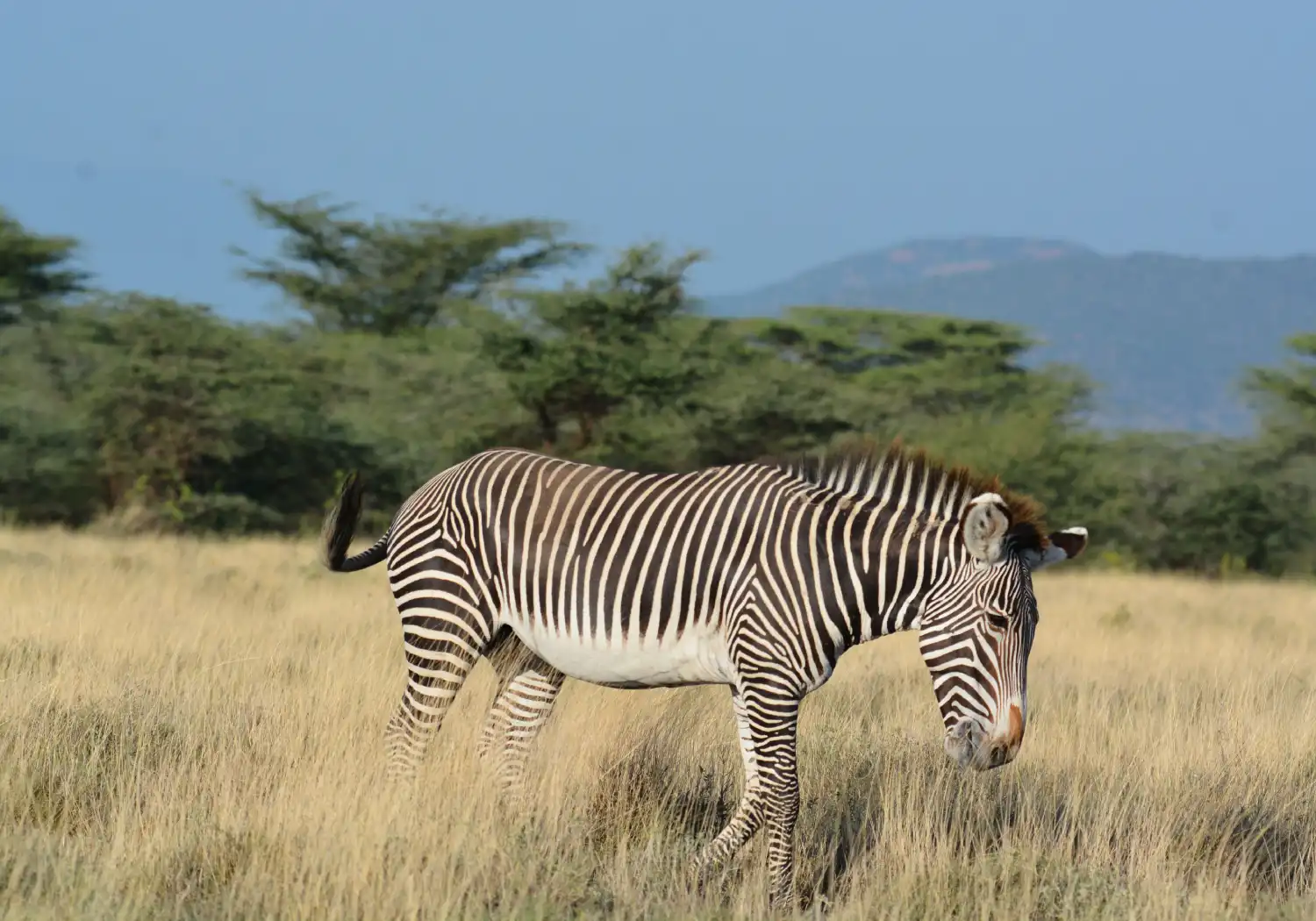
Grevy's zebra is the largest wild zebra. Its stripes are narrow and tightly packed. It has a white belly and big, round ears. Males are territorial, so you often meet lone males or small groups.
This species has fallen sharply. Roughly 3,000 remain, mostly in northern Kenya and southern Ethiopia. It is listed as endangered.
Where to see it: Samburu, Buffalo Springs, Shaba, and the Lewa, Borana and Laikipia conservancies. Tip: scan riverbanks and open plains in the early morning.
Reticulated giraffe
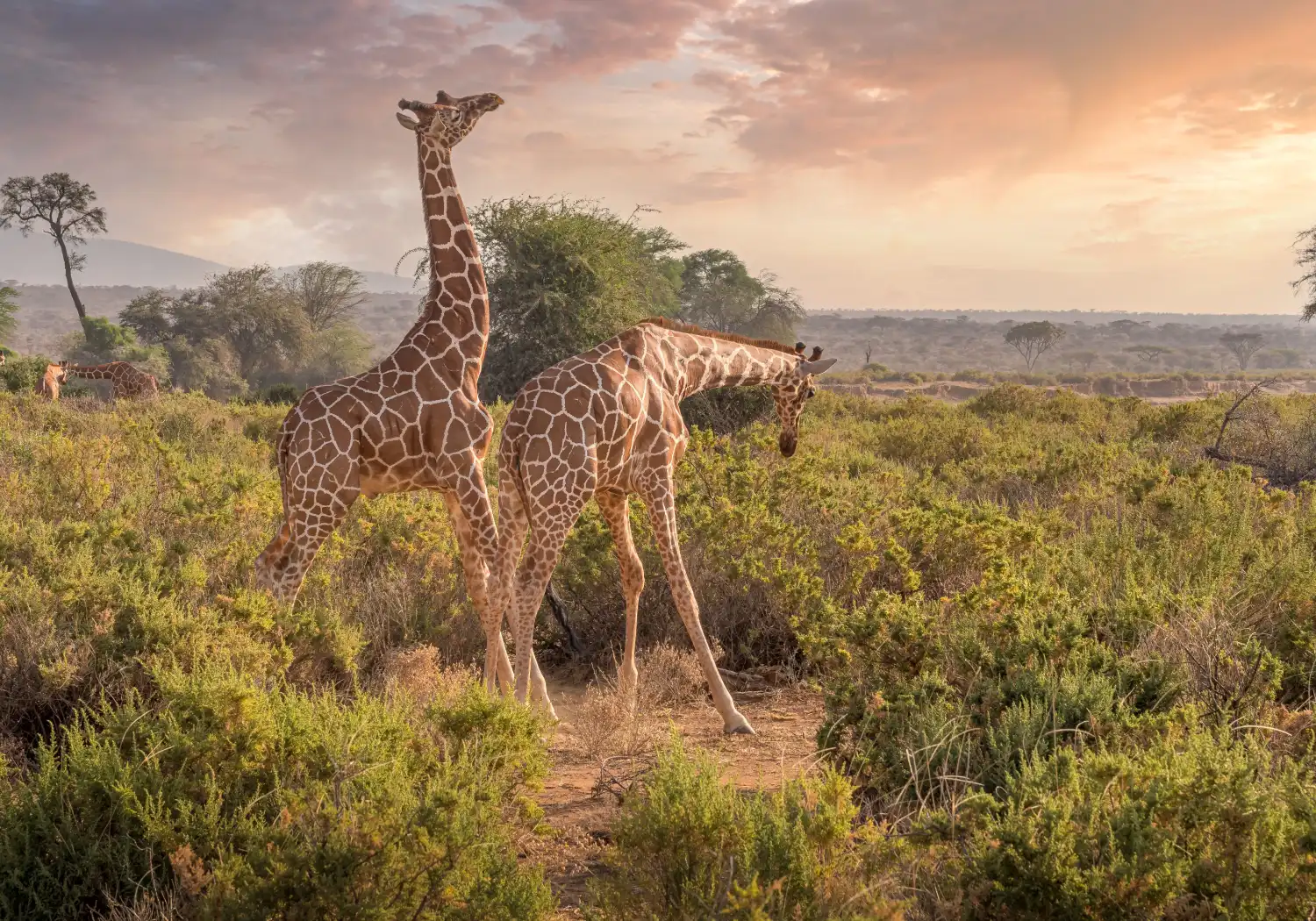
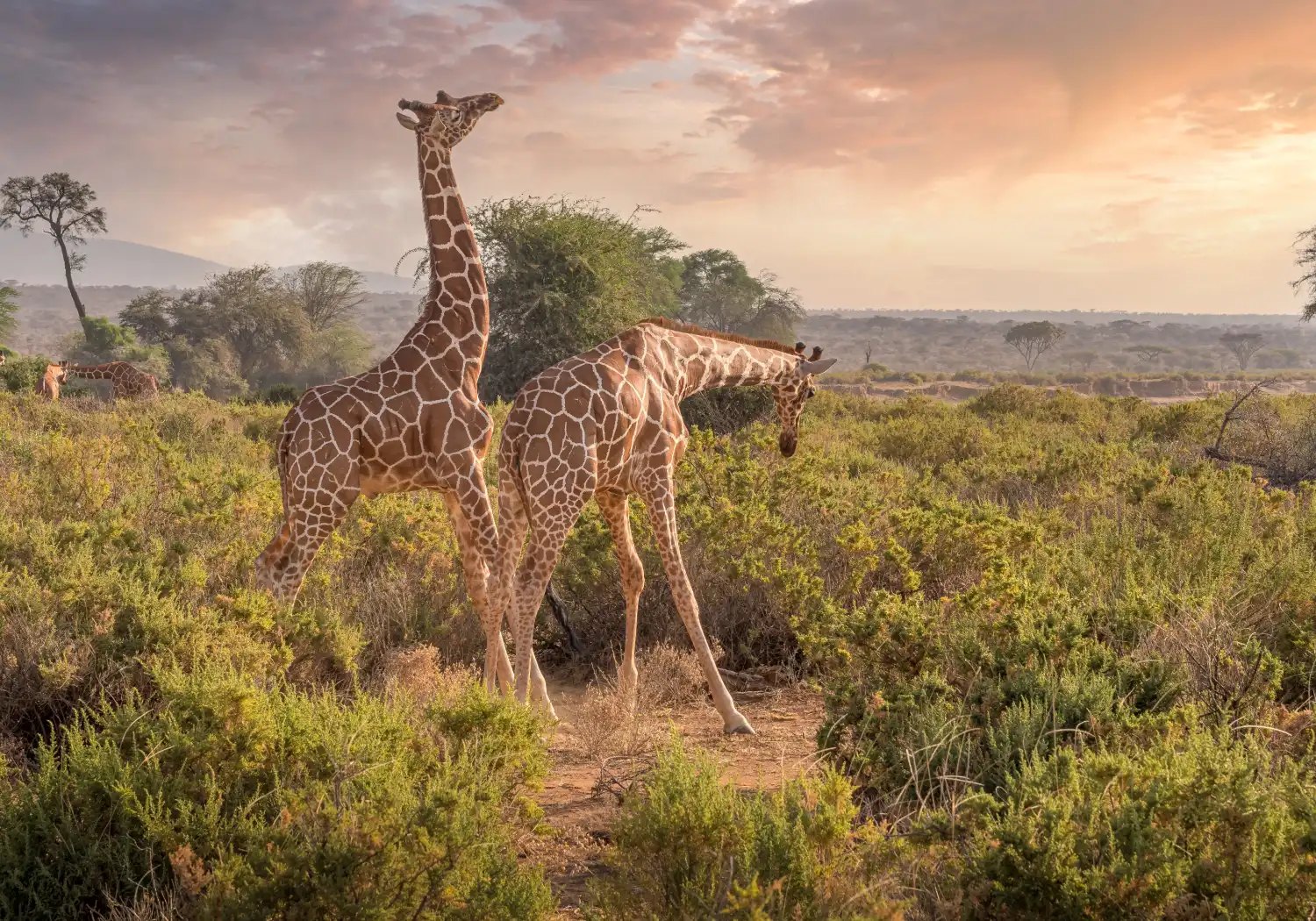
The reticulated giraffe has large patches edged by thin, sharp white lines. No two animals share the same pattern. It feeds on acacia leaves and often gathers near the Ewaso Ng'iro River.
It lives in northern Kenya, southern Ethiopia and Somalia. It is endangered. Habitat loss and poaching are the main threats.
Where to see it: Samburu, Buffalo Springs, Shaba and the Laikipia conservancies. Tip: giraffes are easiest to find on early and late drives.
Gerenuk
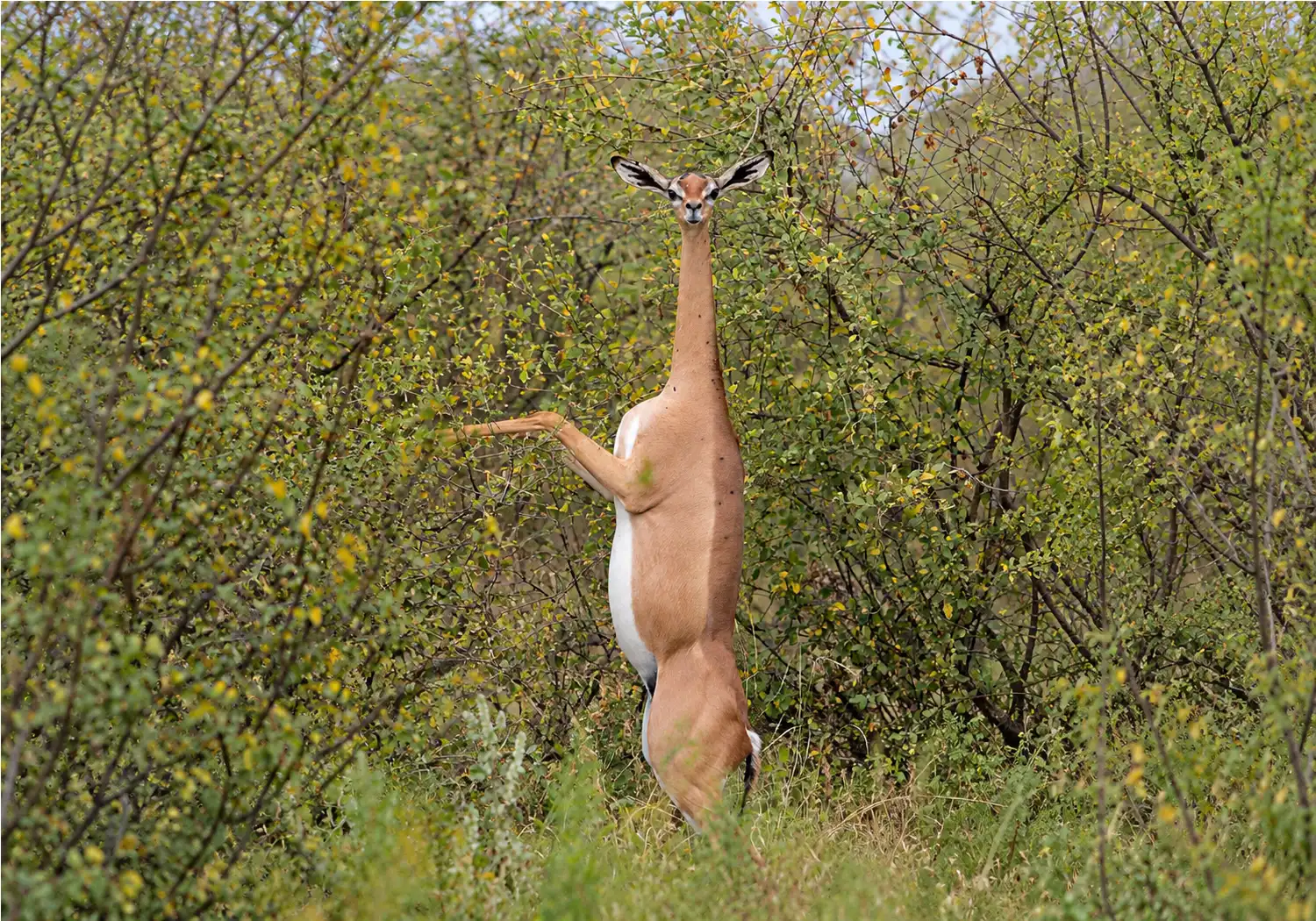
The gerenuk is a slim antelope with a long neck and long legs. Its Somali name means "giraffe-necked". It stands on its hind legs to reach leaves, flowers and shoots. It rarely needs to drink.
Gerenuk are shy and usually live alone or in small groups. The species is near threatened.
Where to see it: dry thornbush in Samburu, Buffalo Springs, Shaba and Loisaba. Tip: look for a long neck rising above the bushes at first light.
Beisa oryx
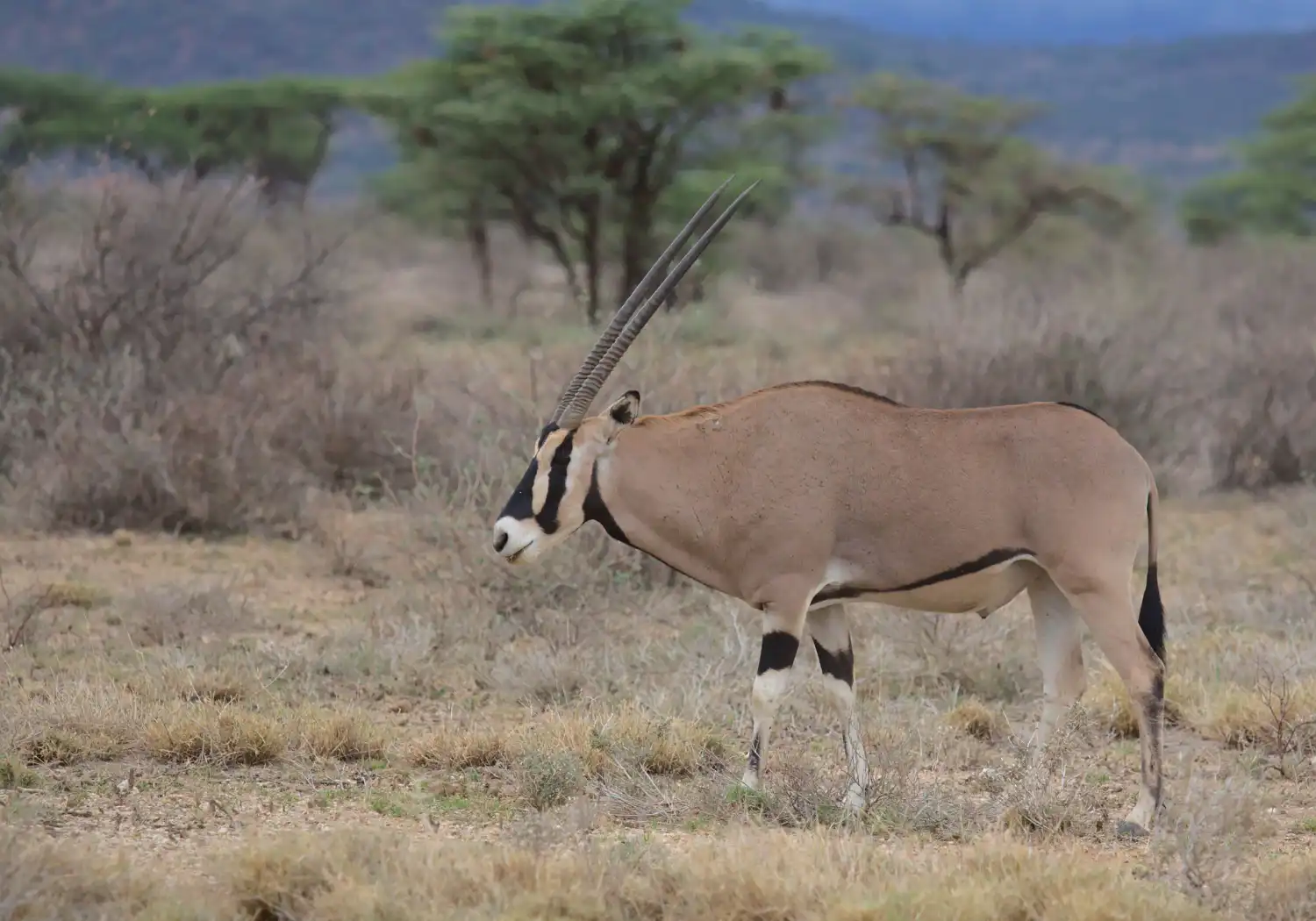
The beisa oryx is a grey-brown antelope with a white belly and black face markings. Both sexes carry long, straight horns. Herds follow a dominant male. The oryx gets much of its moisture from plants, so it can go a long time without a drink.
Numbers are declining because of poaching and the loss of habitat.
Where to see it: Samburu, Buffalo Springs, Shaba and open plains in Laikipia. Tip: scan open, dry grassland. Oryx are shy and move off quickly.
Somali ostrich
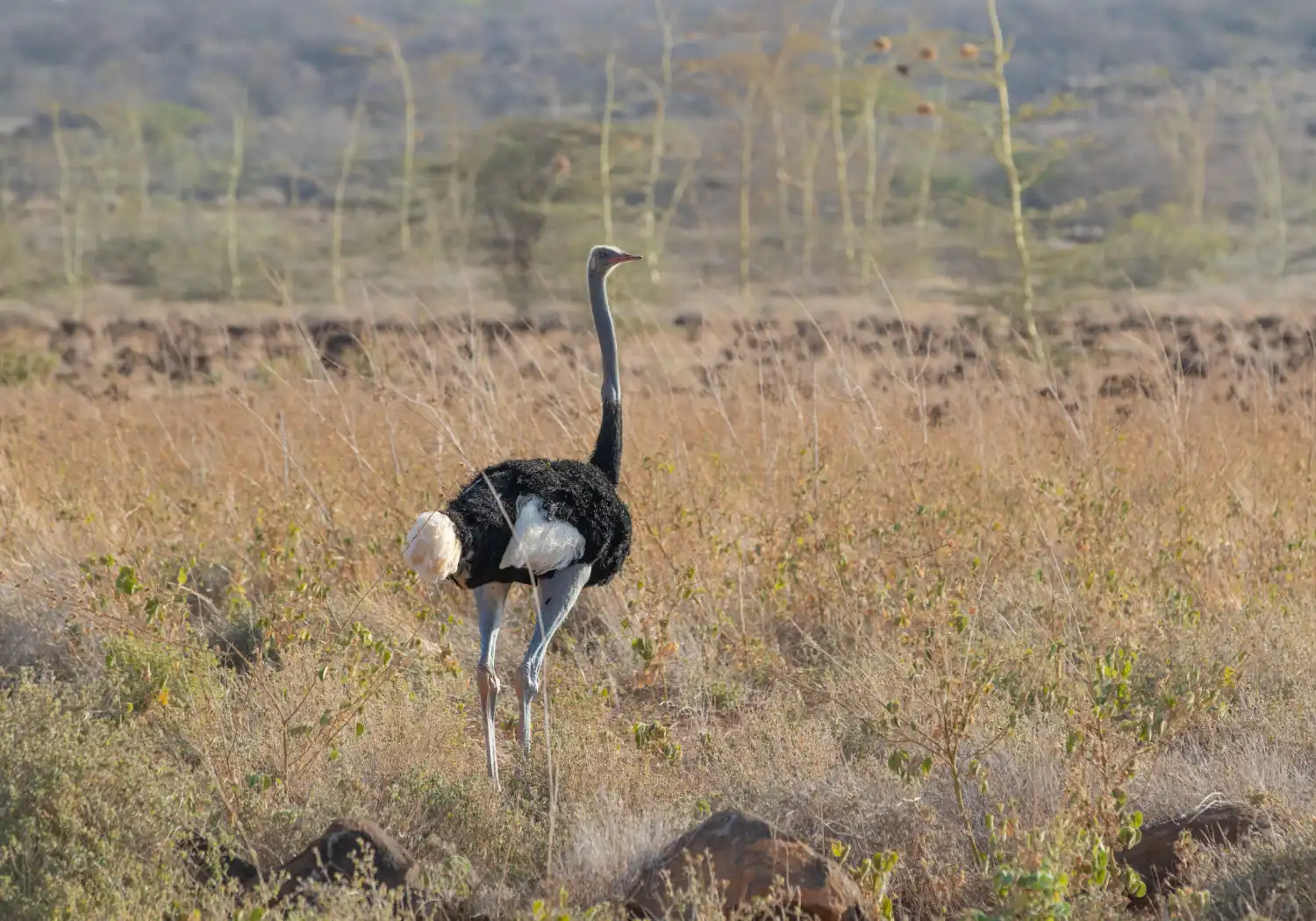
Scientists recognised the Somali ostrich as its own species in 2014. The male has a bright blue neck and legs. The colour deepens in the breeding season. The female is greyish-brown. It cannot fly, but it can run at about 70 km/h.
It is listed as vulnerable because of hunting and habitat loss.
Where to see it: open plains and dry scrub in Samburu, Buffalo Springs and Shaba. Tip: check the grassy plains. Ostriches often stand near zebra or antelope herds.
Where to see all the Special Five animals in Kenya
The best place to see all five is the Samburu area of northern Kenya. Three reserves share one landscape.
- Samburu National Reserve: the main stop. The Ewaso Ng'iro River runs through it and draws Grevy's zebra, giraffe and elephant. Acacia woodland holds reticulated giraffe and gerenuk. Open plains hold beisa oryx and Somali ostrich.
- Buffalo Springs National Reserve: lies across the river from Samburu. It is a good place to look for gerenuk and the rest of the five.
- Shaba National Reserve: quieter, with similar animals and dramatic rocky hills.
Beyond the Samburu reserves, add one of these:
- Loisaba Conservancy, Laikipia: a private conservancy where visitors report Grevy's zebra, reticulated giraffe and gerenuk.
- Lewa and Borana conservancies: both protect Grevy's zebra. A recent count found 264 Grevy's zebra across the Lewa-Borana landscape, Ngare Ndare Forest and the Mount Kenya elephant corridor.
- Other Laikipia conservancies: several hold beisa oryx, reticulated giraffe and Grevy's zebra.
For the best odds of ticking off all five, spend at least three nights in or near Samburu. A longer trip can add a Laikipia conservancy for a change of scenery.
Best time to see the Special Five animals in Kenya
The dry months are best, roughly June to October and January to March. Animals gather near the Ewaso Ng'iro River and other permanent water. That makes them easier to find. The skies are clear and the tracks are firm.
The wetter months, roughly April to May and November, bring green grass and fewer visitors. Animals spread out, and tall grass hides them. Sightings take more effort.
Period | Landscape | Special Five viewing |
|---|---|---|
June to October | Dry, golden and dusty | Excellent. Animals gather near water. |
January to March | Hot and dry | Very good. Fewer visitors than mid-year. |
April to May | Green and wet | Harder. Animals spread out. |
November | Fresh and green | Fair. Short rains can slow drives. |
Best time of day: go out at dawn and late afternoon. Grevy's zebra visit riverbanks and plains in the early morning. Giraffe and gerenuk are most active in the cooler hours. Rest at camp at midday.
It gets hot here, so pack a hat, sun cream and plenty of water.
How to get to the Special Five animals and sample routes
Samburu lies in northern Kenya, north of Mount Kenya. Most visitors arrive in one of two ways.
- By road from Nairobi: a long drive of roughly six hours. Many travellers break it with a night in Laikipia or near Mount Kenya.
- By air: a scheduled or charter flight from Nairobi's Wilson Airport to a Samburu or Laikipia airstrip. The flight takes about one hour.
Times are approximate. They depend on traffic and the airstrip you choose.
Here are three ways to build a trip around the Special Five animals in Kenya:
- Samburu focus (4 days): three nights in Samburu with morning and afternoon game drives, guided walks and sundowners.
- Samburu and Laikipia (6 days): three nights in Samburu, then two or three nights on a Laikipia conservancy for horse riding, walking and rhino tracking.
- Northern Kenya and Masai Mara (8 to 10 days): pair the Special Five with the Big Five in the Masai Mara.
Olengugih Safaris can adapt any of these to your dates, interests and budget.
Conservation: why the Special Five matter
Several of the Special Five face real threats. Grevy's zebra has fallen by at least 80% since the late 1970s. Roughly 3,000 remain. Hunting and poaching caused much of the loss. Competition with livestock for water and grass adds pressure.
The reticulated giraffe is endangered. Habitat loss, conflict with people and poaching all play a part. The Somali ostrich is vulnerable, and the beisa oryx is in decline.
Private and community conservancies in northern Kenya protect these animals. They keep wildlife corridors open, employ local rangers and fund community projects. Your safari fees support this work. A visit helps keep these species, and the people who protect them, on the land.
Tips for spotting the Special Five animals in Kenya and what to pack
- Hire a skilled guide: local guides know where each animal feeds and rests.
- Drive at dawn and dusk: animals are most active and the light is soft.
- Scan the horizon: look for a long neck above bushes (gerenuk), a blue neck on the plains (Somali ostrich) and long straight horns (oryx).
- Watch the river: check the Ewaso Ng'iro River and nearby plains for zebra and giraffe.
- Be patient: these animals are shy. Stay quiet and keep your distance.
- Bring binoculars: the animals often keep well away from vehicles.
What to pack:
- Neutral clothing, a hat and sunglasses
- Light layers for cool mornings
- High-factor sun cream and insect repellent
- Binoculars and a camera with a zoom lens
- Closed shoes and a reusable water bottle
Frequently asked questions about the Special Five animals in Kenya
What are the Special Five animals in Kenya? They are Grevy's zebra, the reticulated giraffe, the beisa oryx, the gerenuk and the Somali ostrich. They live mainly in northern Kenya.
Where can I see the Special Five animals in Kenya? Samburu National Reserve is the best place. Buffalo Springs and Shaba share the same landscape and are also good. Some of the five also live in Laikipia, on Lewa and on Loisaba.
What is the best time to see the Special Five? The dry months, roughly June to October and January to March. Animals gather near water and are easier to find.
Are the Special Five and the Big Five the same? No. The Big Five are lion, leopard, elephant, buffalo and rhino. The Special Five are northern dry-country animals.
How many days do I need to see the Special Five? Plan at least three nights in Samburu. A longer stay raises your chances.
Is Grevy's zebra endangered? Yes. Roughly 3,000 remain in the wild, and it is listed as endangered.
What is the difference between a Somali ostrich and a common ostrich? The Somali ostrich is a separate species, recognised in 2014. Males have a blue neck and legs. The common ostrich has a pink neck and legs.
Can I see the Special Five and the Big Five on the same trip? Yes. Combine Samburu with a Laikipia conservancy or the Masai Mara.
Can I do a horse riding safari to see the Special Five? Yes. Riding in Laikipia and Borana lets you move quietly among zebra, giraffe and oryx.
Is Samburu good for photography? Yes. Soft light at dawn and dusk, open land and photogenic animals make it popular with photographers.
Plan your Special Five animals in Kenya safari with Olengugih Safaris
Tell us your travel dates, group size and interests. We will build a northern Kenya itinerary that gives you the best chance of seeing all five animals, and send you a free quote. Contact Olengugih Safaris to start planning.