What Animals Can You See on a Horse Riding Safari in Kenya?
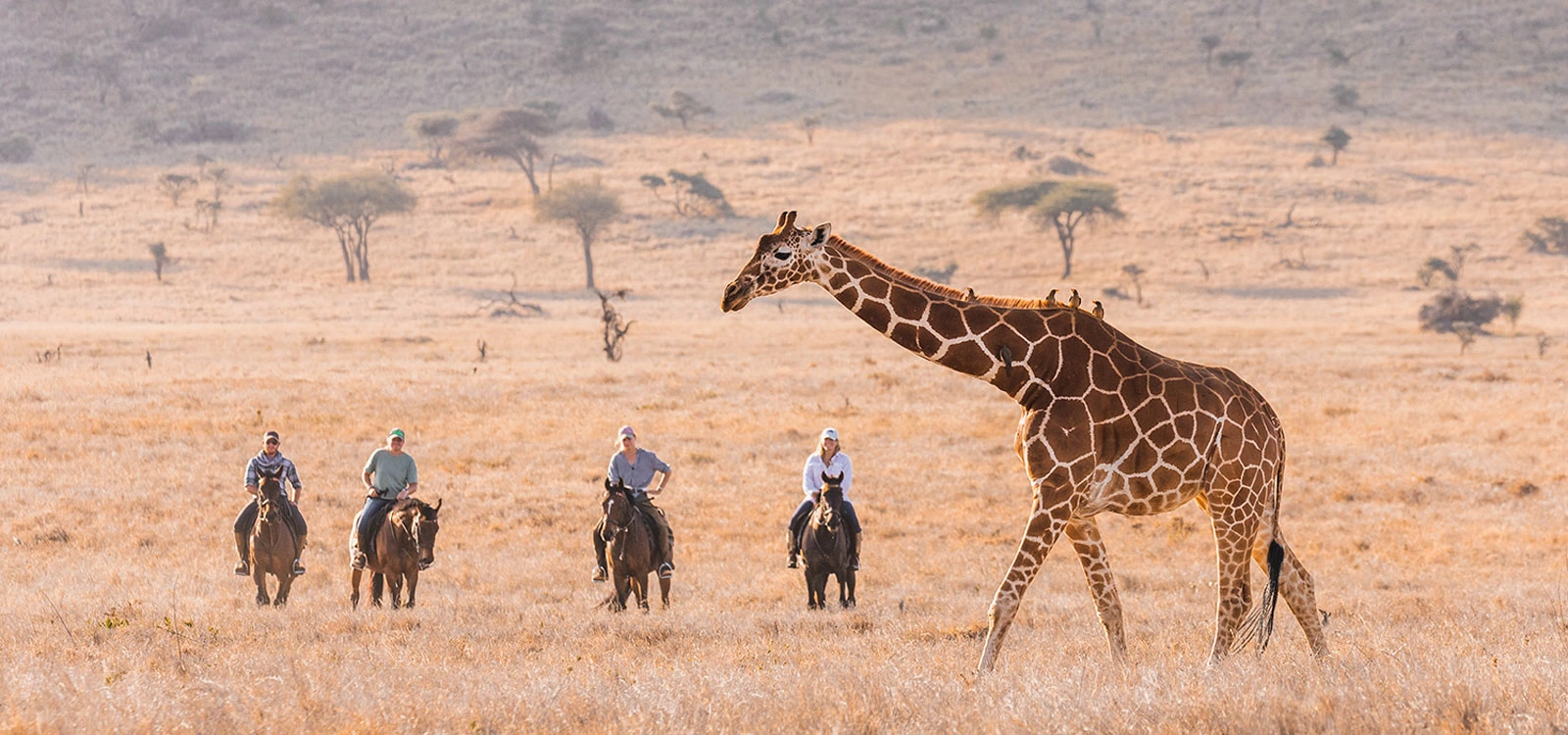
On a wildlife horse riding safari in Kenya you can ride beside zebra, giraffe, eland, impala and wildebeest. In some areas you may also see elephants, rhinos, buffalo and predators from a safe distance. Animals often accept horses more calmly than vehicles.
Last updated: 18 November 2026
Wildlife on a horse riding safari at a glance
- Most common sightings: zebra, giraffe, impala, Thomson's gazelle, eland and hartebeest.
- Possible sightings: elephants, buffalo, warthogs, ostriches and jackals.
- Rarer sightings: lions, leopards, cheetahs and rhinos, depending on the area.
- Great Migration: wildebeest and zebra in the Masai Mara, from July to October.
- Birdlife: secretary birds, hornbills, eagles, lilac-breasted rollers and vultures.
- Best places: Masai Mara conservancies and Laikipia conservancies.
- Safety: your guide keeps a safe distance from dangerous animals.
- Best months: January to February, and July to October.
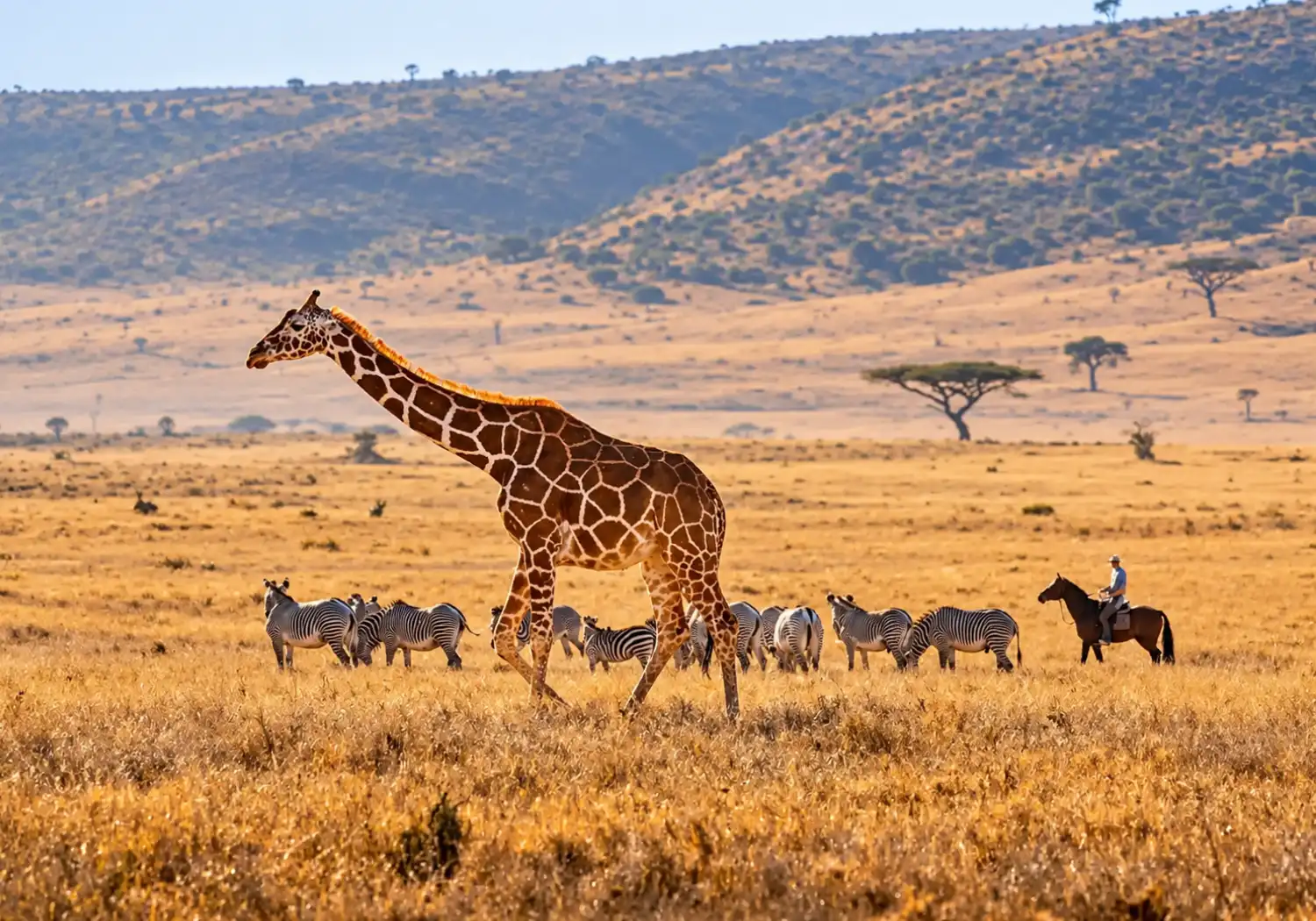
Animals you can see on a horse riding safari in Kenya
Horses let you move quietly and cover ground that vehicles cannot reach. The table shows how likely each sighting is and how close you can get.
Animal | Chance of seeing | How close you get |
|---|---|---|
Zebra | Very high | You can ride alongside the herd |
Giraffe | Very high | Close, often within a few horse lengths |
Impala and gazelles | Very high | Close, if you move slowly |
Eland and hartebeest | High | Moderate, they are wary |
Wildebeest | High, very high in migration | Close on the open plains |
Warthog and ostrich | High | Moderate |
Elephant | Medium | Safe distance only, guided by your leader |
Buffalo | Medium | Safe distance only |
Lion | Low to medium | Viewed from a safe distance, often with a vehicle |
Leopard and cheetah | Low | Brief sightings from a distance |
Rhino | Area-dependent | Only in rhino conservancies, with a guide |
Sightings depend on the area, the season and the luck of the day. No guide can promise a particular animal.
What to expect from each kind of wildlife
Zebra, giraffe and antelope
These are the stars of a horse riding safari. Horses are not a threat to them. You can often walk, trot or canter beside zebra herds. Giraffes watch you calmly, and you can pass within a few horse lengths. Impala, gazelle and eland bound away when you get too close.
Wildebeest and the Great Migration
From July to October, huge herds of wildebeest and zebra cross the Masai Mara. Riding among them is a rare experience. Your guide chooses safe, open ground and keeps clear of river crossings with crocodiles.
Elephants and buffalo
Elephants and buffalo are strong and unpredictable. Your guide reads their mood and keeps a long distance. You may watch them from a ridge or move away quietly. Follow every instruction at once. Never ride between a mother and her young.
Lions, leopards and cheetahs
Predators are usually seen from afar. Lions rest in shade during the day. Leopards hide in trees and thickets. Cheetahs scan from termite mounds. For close sightings of big cats, many guests add a game drive.
Rhinos
Rhinos are possible only in some conservancies that protect them. Ask your operator which areas allow it. Your guide keeps a safe distance and checks wind direction first.
Birds and small animals
You will pass secretary birds, hornbills, eagles, bee-eaters and lilac-breasted rollers. Jackals, dik-diks and hares dart through the grass. Riding quietly helps you spot them.
Where to ride, when to go and how to stay safe
Best places in Kenya
Area | What you may see | Best for |
|---|---|---|
Masai Mara conservancies | Zebra, giraffe, wildebeest, lions, elephants | Migration season and big plains |
Laikipia conservancies | Giraffe, zebra, elephants, rhinos, predators | Variety and Mount Kenya views |
Amboseli region | Elephants, zebra, wildebeest, birds | Open views of Kilimanjaro |
Not every park allows riding. Riding is usually offered in private conservancies. Ask us where it is allowed.
Best months
January to February and July to October are the best months. Grass is shorter, so animals are easier to see. July to October also brings the Great Migration to the Mara. Wet months are quieter and greener.
Safety rules on horseback
- Listen to your guide at all times.
- Stay in a group and keep your horse calm.
- Never chase or crowd animals.
- Wear your helmet whenever you ride.
- Avoid sudden movements and loud noise.
Rider tips for better sightings
- Ride at dawn and late afternoon when animals are active.
- Keep your voice low.
- Wear neutral colours.
- Carry compact binoculars and a small camera.
- Be ready to change plans if your guide sees danger.
Frequently asked questions
What animals can you see on a horse riding safari in Kenya?
You can see zebra, giraffe, impala, gazelles, eland and wildebeest. In some areas you may also see elephants, buffalo, rhinos and big cats from a distance.
Can you ride near lions on a horse riding safari?
No. Guides keep a safe distance from lions and other predators. Lions are usually seen from afar or from a vehicle.
Is it safe to ride near elephants?
Only with an experienced guide. Elephants are watched from a distance and the group moves away if needed. Follow your guide's instructions at once.
Do animals run from horses?
Many animals tolerate horses better than people on foot or vehicles. Zebra, giraffe and antelope often let you approach closely if you move calmly.
Can you see the Great Migration on horseback?
Yes, in the Masai Mara from July to October. You may ride near herds of wildebeest and zebra. Your guide keeps away from river crossings.
Can you see rhinos on a horse riding safari?
Only in conservancies that protect them. Your guide keeps a safe distance. Ask your operator which areas offer this.
What is the best time of year for wildlife on horseback?
January to February and July to October. The grass is shorter and animals gather near water.
Where can I do a horse riding safari in Kenya?
Riding is usually offered in private conservancies, such as those in the Masai Mara and Laikipia. Ask us which areas suit your riding level.
Do I need to be an experienced rider?
You should ride confidently at a walk, trot and canter. Tell us your level when you book. We match you with a suitable horse.
Can Olengugih Safaris help me plan a wildlife horse riding safari in Kenya?
Yes. Tell us your dates and riding level. We will suggest the best area, the best months and what to pack.
Plan your wildlife horse riding safari with Olengugih Safaris
Tell us your riding level, your dates and the animals you most want to see. We will suggest the right area and the best months. We can also add a game drive for big cats.