About the Common Eland
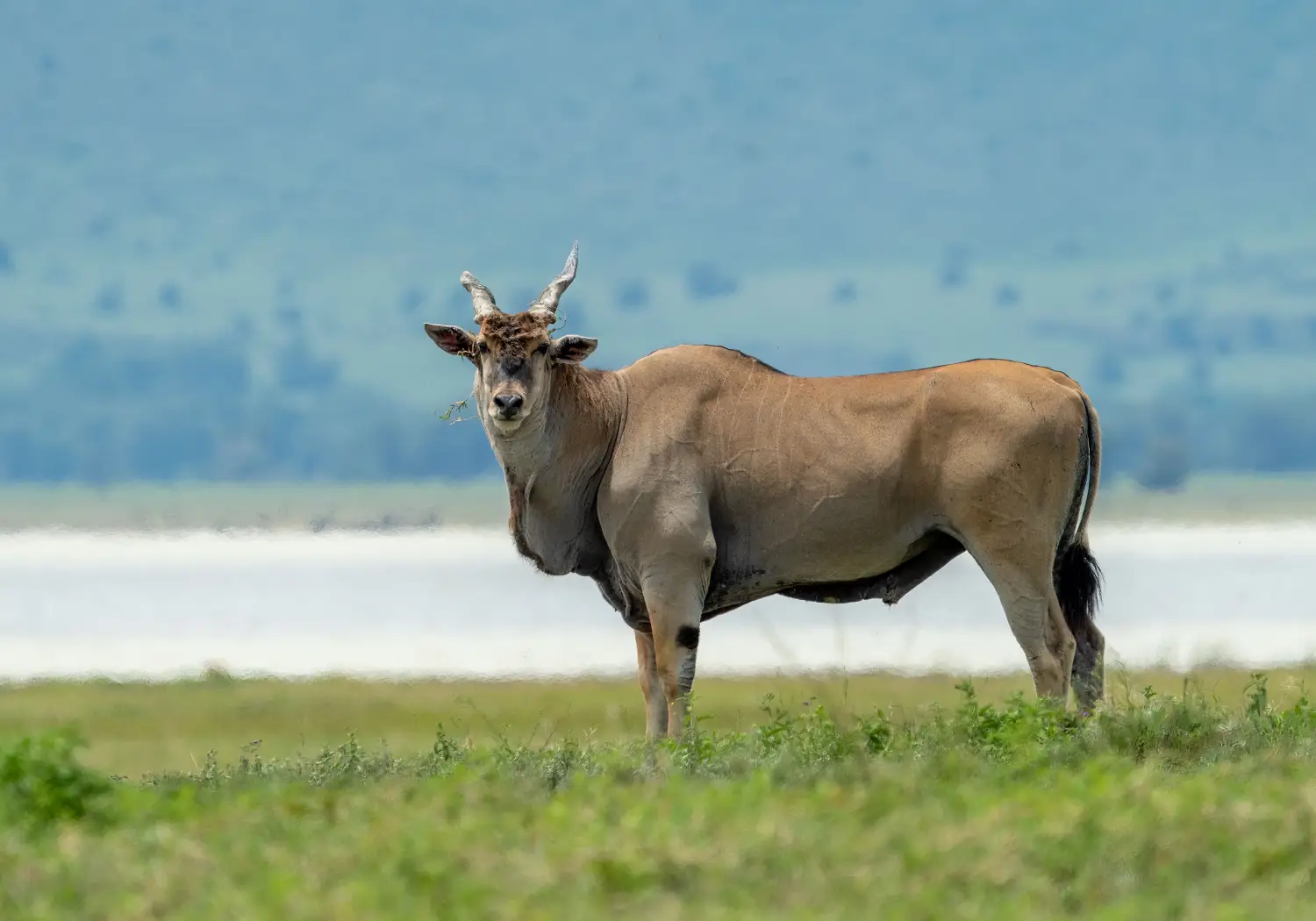
The common eland (Taurotragus oryx) is the largest antelope in the world. A big bull can weigh as much as a small car’s engine block would suggest, and over 600 kg is common, with the biggest males heavier still. Both sexes carry tightly spiralled horns, and adults have a loose flap of skin under the throat called a dewlap. Despite its bulk, the eland is shy, graceful and a surprisingly powerful jumper.
Quick answer: The common eland is the world’s largest antelope, found on open plains, savanna and light woodland across eastern and southern Africa. In Kenya, look for it in the Masai Mara, Amboseli, Nairobi National Park, Tsavo and Laikipia, usually in herds, and often wary of vehicles. Sightings are never guaranteed.
What Does a Common Eland Look Like?
An eland is a huge, ox-like antelope with a light tawny to greyish-fawn coat. Older males turn greyer and develop a dark tuft of hair on the forehead and a heavy dewlap hanging from the throat. Faint white stripes can show down the flanks, especially on younger animals.
Both sexes have straight, spiralled horns. Those of males are shorter and thicker, while those of females are longer and thinner. Adults stand well over a metre and a half at the shoulder, and they look more like cattle than most antelopes.
Where Do Common Eland Live?
Eland are adaptable. They live on open plains, savanna, scrub and light woodland, and they range from lowlands to highland grassland. They can tolerate dry conditions better than most large antelopes, and they often cover wide areas in search of food.
In Kenya, that means the big grassland ecosystems and many conservancies. Browse our guide to Kenya’s national parks and reserves to see where these habitats are found.
What Do Common Eland Eat?
Eland are mixed feeders. They graze on grass when it is fresh and browse on leaves, shoots, herbs and fruit when it is not. They may also dig for roots and tubers, and they can snap off branches with their horns to reach foliage.
Eland also feed at night, when leaves hold more moisture, which helps them cope with dry spells and go without drinking for long periods.
Common Eland Behaviour
Eland live in herds that vary a lot in size, from a few animals to large groups, with mixed herds of females and young and separate bachelor groups. They are nervous of vehicles and people, and they often keep their distance.
The Clicking Sound
Walking eland often make a clicking noise, thought to come from tendons in the legs. The sound can carry a surprising distance and helps herd members stay in touch.
Powerful Jumpers
Despite their size, eland can leap high fences from a standing start. This ability, together with their speed, helps them escape predators.
Breeding
Females give birth to a single calf after a pregnancy of around nine months. Calves lie hidden in cover at first, then join “crèches” with other young eland, watched over by adults.
Is the Common Eland Endangered?
The common eland is listed as Least Concern on the IUCN Red List, but it has declined in many areas because of hunting, habitat loss and competition with livestock for grazing. You can see where observers have recorded eland across Africa on iNaturalist.
Protected areas and community conservancies keep the open landscapes eland need. Learn more about conservation-based safaris in Kenya.
How to See Common Eland on Safari in Kenya
Eland are wary, so a good sighting takes patience and a good guide.
Choose open country
- Masai Mara: open plains, where eland often keep a distance from vehicles. See our Masai Mara safaris.
- Amboseli: dry, open savanna with wide views. See our Amboseli National Park page.
- Nairobi National Park: open grassland, with the city skyline behind. Try our Nairobi National Park private 4x4 safari.
- Laikipia and Ol Pejeta: conservancy plains with many plains species. See our Laikipia page.
Go early and late
Morning and evening are the best times, when eland graze in the open and the light is soft.
Build a route with variety
The 7-day Kenya Elephants, Lakes and Masai Mara safari covers Amboseli, the lakes and the Mara. You can also browse Kenya wildlife safaris.
Travel in the dry season
Short grass and open views help you spot herds from far away. The drier months are generally June to October and January to February. See our best time to visit Kenya guide.
Photograph with a long lens
Eland rarely let vehicles come close, so a long lens makes a big difference. Our photographic safaris in Kenya are built for this.
Responsible Wildlife Viewing
Keep your distance, switch off the engine and avoid sudden movements. A nervous herd can bolt at the slightest noise, so quiet patience works best.
Frequently Asked Questions About the Common Eland
What is a common eland?
The largest antelope in the world, with spiral horns on both sexes, a dewlap and a tawny coat. It lives on open plains and savanna in eastern and southern Africa.
How big is an eland?
Adults stand around 1.5 to 1.8 metres at the shoulder. Males can weigh up to about 900 kg, and females are lighter.
Where can I see eland in Kenya?
Try the Masai Mara, Amboseli, Nairobi National Park, Tsavo and Laikipia. Sightings are never guaranteed.
What do eland eat?
Grass, leaves, herbs, fruit and roots, depending on the season.
Do both male and female eland have horns?
Yes. Both sexes carry spiralled horns.
What is the difference between an eland and a kudu?
Eland are much bigger and have a dewlap, with straight horns twisted tightly. Greater kudu have a more slender build with large, curling horns and white stripes on the body.
Are eland endangered?
No. They are listed as Least Concern, though numbers have fallen in some areas.
When is the best time to see eland?
Early morning and late afternoon. The dry months, June to October and January to February, give the best visibility.
Plan Your Open Plains Safari in Kenya
Want to see Africa’s largest antelope along with lions, elephants and more? Olengugih Safaris can design a private, flexible Kenya itinerary through the Mara, Amboseli, Nairobi and beyond. Start planning your safari or contact our team for a free quote.
Interesting facts and identification clues
Interesting Facts About the Common Eland
- The common eland is the largest antelope in the world.
- Both males and females carry spiral horns.
- Walking eland often make a clicking sound that can be heard from some distance.
- An eland can jump a fence about two metres high from a standing start.
- Eland can go without drinking for long periods because they get moisture from their food, especially leaves eaten at night.
- Eland have been studied as possible domestic animals because they are calm and produce rich milk.
Content reviewed 16 Oct 2026