
About the Common Reedbuck
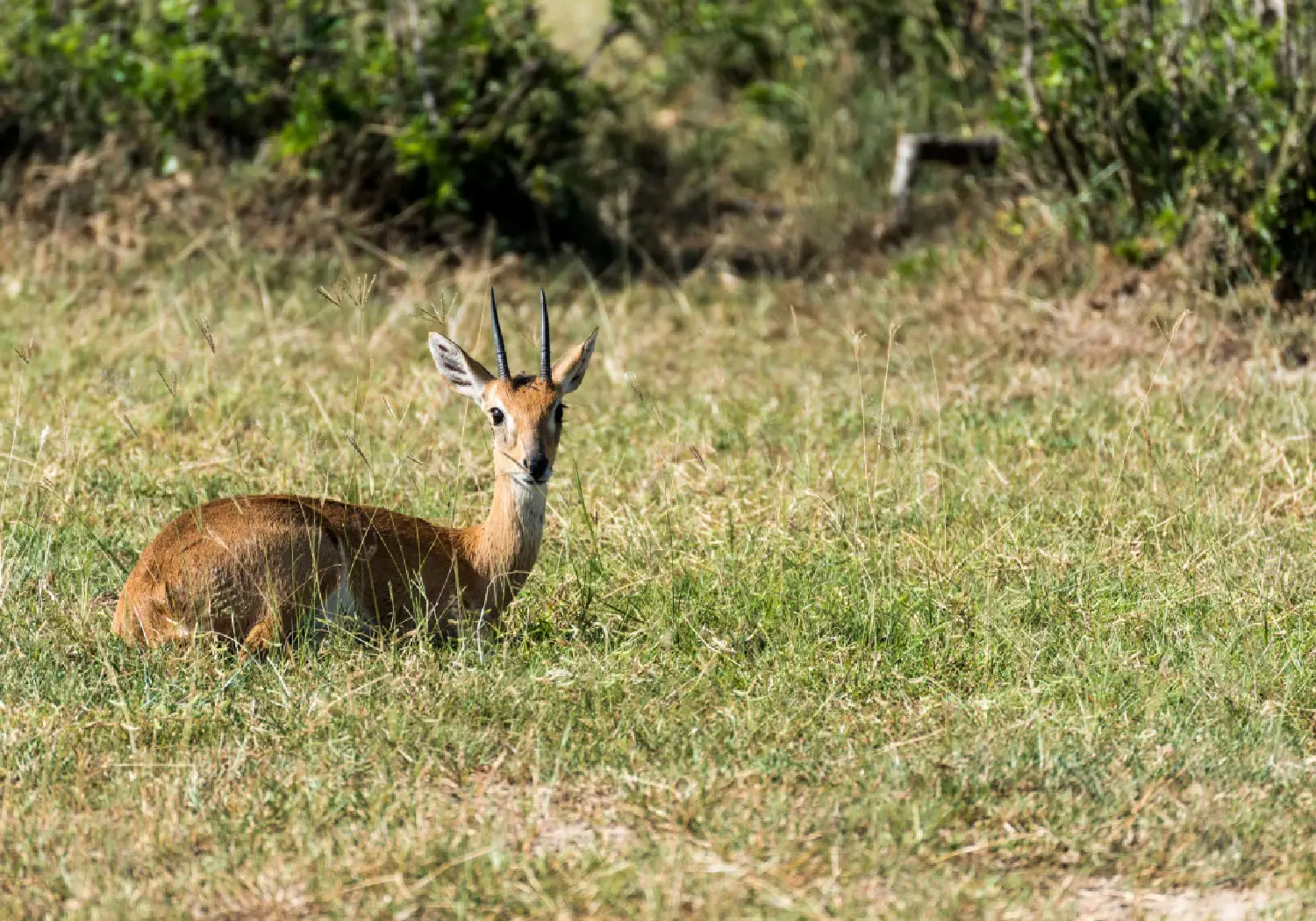
The common reedbuck (Redunca arundinum), also called the southern reedbuck, is a medium-sized, fawn-coloured antelope that lives beside rivers, floodplains and reed beds. It is famous for the shrill whistle it gives when alarmed and for the bounding, rocking-horse gait it uses to flee, flashing a white tail as it goes. Males carry ridged horns that curve forward at the tips. In Kenya, its close relative the bohor reedbuck fills the same wetland niche.
Quick answer: The common reedbuck is a grass-eating antelope that depends on tall grass and permanent water. It is found across southern Africa and as far north as southern Tanzania. In Kenya, you are most likely to see the closely related bohor reedbuck in places like the Masai Mara, Lake Nakuru and Nairobi National Park. Sightings are never guaranteed.
What Does a Common Reedbuck Look Like?
The common reedbuck is a neat, medium-sized antelope with a grey-fawn coat, a paler belly and a white underside to its bushy tail. A bare, dark patch of skin sits just below each ear, which is a scent gland. Only males carry horns. These are ridged and curve forward, reaching about 40 cm or more. Females are smaller and hornless.
Where Do Common Reedbuck Live?
Reedbuck are tied to water and cover. They live on floodplains, marshes, river valleys and damp grassland, where tall grass lets them hide and feed. They rarely wander far from a permanent water source, and they avoid dry, open country with short grass.
That dependence on wet grassland makes them sensitive to drainage, farming and overgrazing. Browse our guide to Kenya’s national parks and reserves to see where these wetland and grassland habitats still thrive.
Common Reedbuck vs Bohor Reedbuck: What Will You See in Kenya?
This is the question many visitors ask. The two animals look similar, but their ranges differ.
- Common (southern) reedbuck: found in southern Africa and southern Tanzania. It is the larger of the two, with grey-fawn colouring.
- Bohor reedbuck: found in a belt of wet grassland across East and Central Africa, including parts of Kenya. It is generally smaller, with a more yellowish coat.
- Mountain reedbuck: a third relative that lives on rocky, grassy hillsides.
If you are on a Kenya safari, ask your guide to point out reedbuck in marshy corners, and let them tell you which species you are looking at.
What Do Common Reedbuck Eat?
Reedbuck are grazers. They feed mostly on grass, selecting fresh green shoots, and they drink regularly. They tend to feed in the cooler hours of morning and evening, then lie up in tall grass or reeds through the heat of the day.
Common Reedbuck Behaviour
Reedbuck live alone, in pairs or in small family groups. Males hold territories, and a pair often stays close together.
The Whistle and the Bounce
When alarmed, a reedbuck gives a sharp whistle, often through its nostrils, then flees with a rocking, bounding gait that shows off its white tail. Sometimes it freezes and relies on the tall grass to hide it.
Breeding
Females give birth to a single calf after a long pregnancy of around seven to eight months. The calf is hidden in dense grass for its first weeks, and its mother visits to nurse it.
Is the Common Reedbuck Endangered?
The common reedbuck is listed as Least Concern on the IUCN Red List, but it is declining in parts of its range. Loss of wetlands, conversion of grassland to farms and hunting are the main pressures. You can explore where observers have recorded reedbuck on iNaturalist.
Protecting wetlands and river corridors helps many other species. Learn more about conservation-based safaris in Kenya.
How to See Reedbuck on Safari in Kenya
Reedbuck are easy to overlook, so a few tactics help.
Scan the wet grassland
Look along rivers, marsh edges and tall-grass clearings.
- Masai Mara: riverside and marshy grassland. See our Masai Mara safaris.
- Lake Nakuru: grassy shorelines and wet patches. See our Lake Nakuru National Park page.
- Nairobi National Park: valley grassland and dams. Try our Nairobi National Park private 4x4 safari.
Go early and late
Morning and evening light brings reedbuck out to feed. Ask your guide to stop at wet grassland edges and scan slowly.
Build a route with variety
The 7-day Kenya Elephants, Lakes and Masai Mara safari crosses lakes, wetlands and plains. You can also browse Kenya wildlife safaris.
Travel in the dry season
Animals gather near water and the grass is shorter, so viewing is easier. The drier months are generally June to October and January to February. See our best time to visit Kenya guide.
Photograph the whistle
A reedbuck pausing in golden light, ears alert, is a lovely frame. Bring a long lens and stay quiet. Our photographic safaris in Kenya are built for moments like this.
Responsible Wildlife Viewing
Keep your distance, switch off the engine and avoid sudden movements. A calm reedbuck will stay in view, while an alarmed one drops into the grass and disappears.
Frequently Asked Questions About the Common Reedbuck
What is a common reedbuck?
A medium-sized, grey-fawn antelope that lives in tall grass near water in southern and parts of eastern Africa. It is also called the southern reedbuck.
Are there reedbuck in Kenya?
Yes, but the species you are most likely to see is the bohor reedbuck, a close relative, in wet grassland areas such as the Masai Mara, Lake Nakuru and Nairobi National Park.
Why is it called a reedbuck?
Because it lives in and around reeds and tall grass beside water.
What do reedbuck eat?
Mostly grass, especially fresh green shoots near water.
Why do reedbuck whistle?
The whistle is an alarm signal that warns other animals of danger and often accompanies a bounding escape.
What is the difference between a reedbuck and an impala?
Reedbuck are stockier, with forward-curving horns and a bare scent patch below the ear. Impala are more slender and leap high. Male impala have long, lyre-shaped horns.
Is the common reedbuck endangered?
No. It is listed as Least Concern, though it is declining in places because of wetland loss and hunting.
When is the best time to see reedbuck?
Dawn and dusk. The dry months, June to October and January to February, help because animals gather near water.
Plan Your Wetland and Grassland Safari in Kenya
Want to explore the marshes and grasslands where reedbuck, hippos and waterbirds gather? Olengugih Safaris can design a private, flexible Kenya itinerary through the Mara, Nakuru, Nairobi and beyond. Start planning your safari or contact our team for a free quote.
Interesting facts and identification clues
Interesting Facts About the Common Reedbuck
- The reedbuck gets its name from the reed beds and tall grass where it hides and feeds.
- When alarmed, it gives a shrill whistle that carries across the wetland.
- It flees with a rocking, bounding gait and flashes the white underside of its tail.
- Only males carry horns, and these curve forward at the tips.
- A bare dark patch of skin below each ear is a scent gland used for communication.
- It rarely strays far from water, which is why it is such a good indicator of healthy wetlands.
Content reviewed 16 Oct 2026