About the Mountain Gorilla
Mountain Gorilla
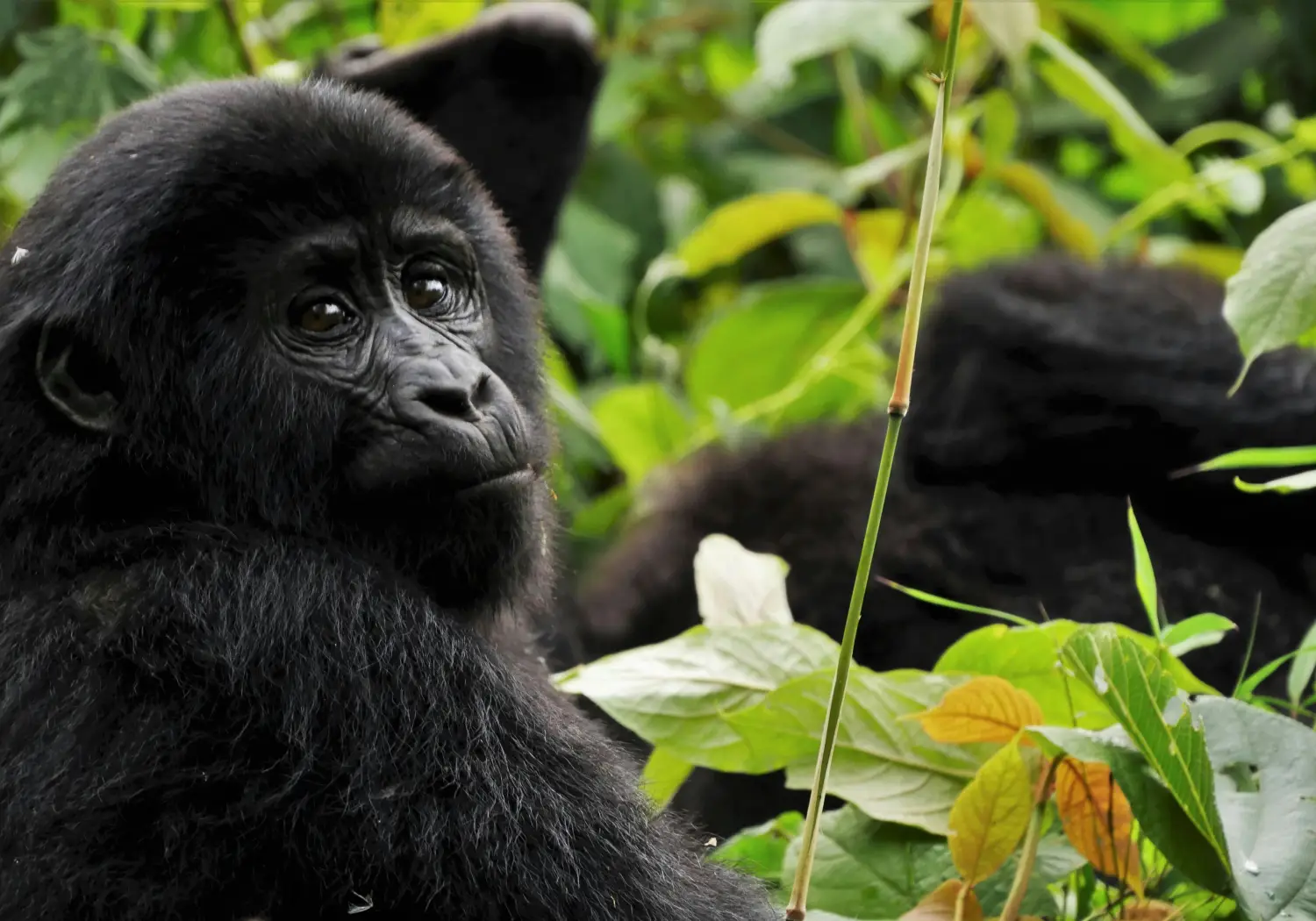
Known for their powerful build, expressive faces, intelligence, and close family bonds, mountain gorillas (Gorilla beringei beringei) are among Africa’s most remarkable great apes. They live in the misty highland forests of Uganda, Rwanda, and the Democratic Republic of Congo. Unlike traditional safari wildlife, mountain gorillas are encountered on foot, making a trekking experience especially immersive.
Scientific Name: Gorilla beringei beringei
Common Name: Mountain Gorilla
Family: Hominidae
Diet: Herbivorous
Habitat: Montane forest, bamboo forest, and highland vegetation
Activity: Mainly active during the day
Social Structure: Family groups led by a dominant silverback
Mountain Gorilla Behavior
Mountain gorillas live in close-knit family groups usually led by a dominant silverback. Groups can include adult females, younger males, juveniles, and infants. The silverback protects the family, settles conflicts, and helps determine where the group feeds and rests.
Gorillas communicate through vocalisations, body movements, facial expressions, chest beating, and physical contact. Young gorillas are particularly playful, often climbing, wrestling, and interacting with other family members.
Mountain Gorilla Diet
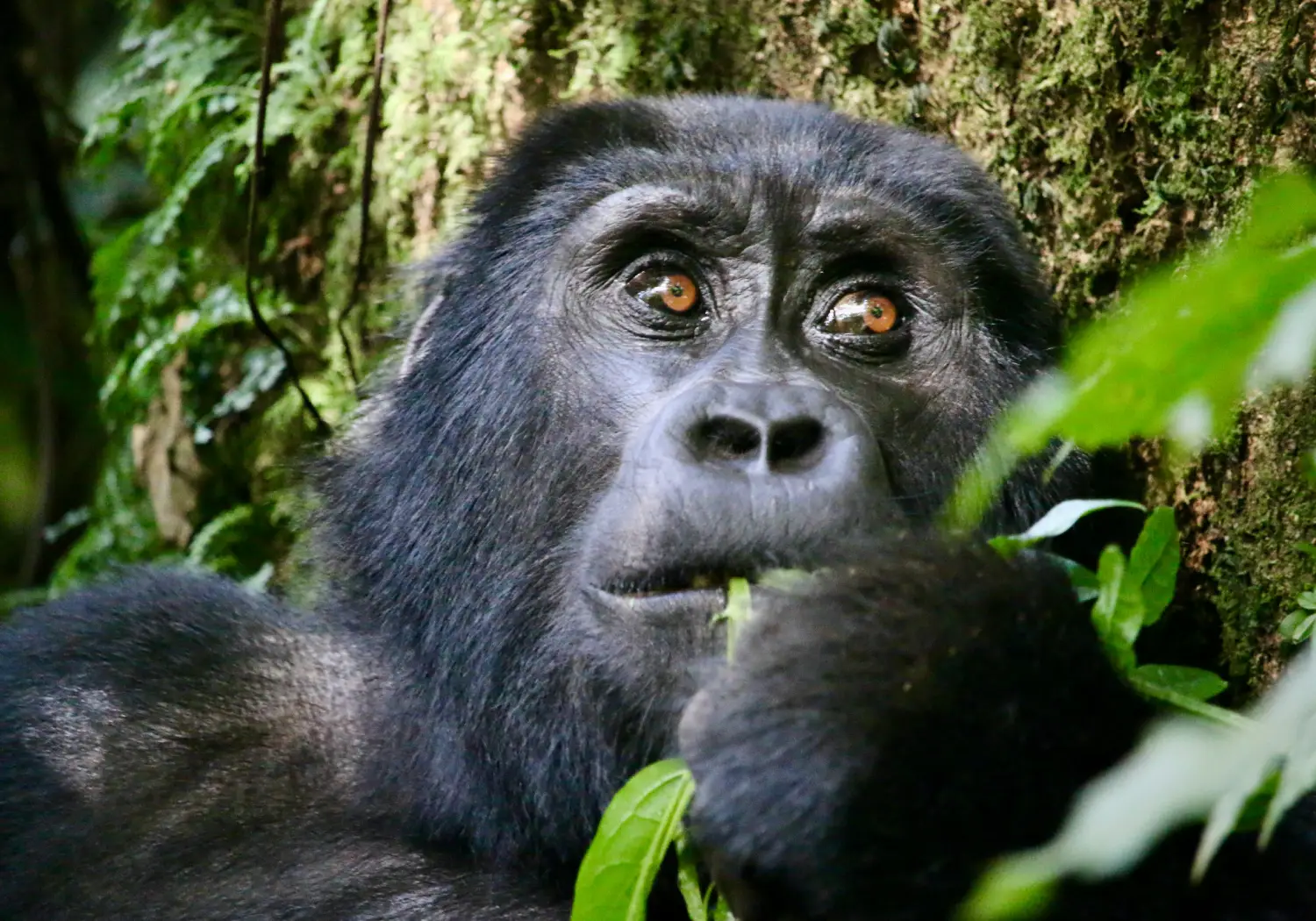
Mountain gorillas are primarily herbivores, feeding on leaves, stems, shoots, roots, flowers, bark, and other vegetation. Bamboo shoots can also form an important part of their diet in suitable areas.
They spend much of the day feeding and moving through the forest in search of fresh vegetation. Their powerful jaws and teeth allow them to process tough plant material efficiently.
Mountain Gorilla Habitat
Mountain gorillas inhabit high-altitude forests, bamboo zones, and volcanic mountain slopes. Their remaining populations are found in the Virunga Massif and the Bwindi Forest region.
Where to See Mountain Gorillas
In Uganda, mountain gorillas can be seen in Bwindi Impenetrable National Park and Mgahinga Gorilla National Park. Rwanda offers gorilla trekking in Volcanoes National Park, while Virunga National Park in the Democratic Republic of Congo provides habitat for gorillas.
Gorilla Trekking
Gorilla trekking involves hiking through dense forest with trained guides and trackers to locate a habituated gorilla family. Treks can take several hours depending on where the animals have moved, while steep and muddy trails can make the journey physically demanding.
Once the family is located, visitors can observe natural behaviours such as feeding, grooming, resting, and playing while following ranger instructions.
Conservation Status
The mountain gorilla is classified as Endangered. Protected forests, conservation programs, research, veterinary support, and carefully managed tourism all contribute to protecting the species and its habitat.
Why Mountain Gorillas Are Special
Mountain gorillas combine strength, intelligence, complex social behavior, and remarkable family relationships. Encountering them in their natural forest habitat offers a deeply personal wildlife experience that cannot be replicated from a safari vehicle.
For travellers seeking an extraordinary African adventure, a mountain gorilla trek provides the chance to step into the rainforest and witness one of the world's most fascinating great apes at close range.
Plan a Mountain Gorilla Safari
A mountain gorilla safari combines wildlife, rainforest adventure, conservation, and unforgettable encounters with one of the world's most fascinating great apes. Uganda offers exceptional trekking opportunities in Bwindi Impenetrable National Park and Mgahinga Gorilla National Park, while Rwanda and the Democratic Republic of Congo provide additional opportunities within the Virunga region.
With an experienced guide, appropriate trekking equipment, and respect for the animals and their habitat, a gorilla trek becomes far more than a wildlife sighting. It is a chance to step into the forest, witness the lives of a remarkable family group, and experience one of Africa's most extraordinary conservation success stories.
Interesting facts and identification clues
- Nearly human DNA — Mountain gorillas share around 98% of their DNA with humans.
- Unique nose patterns — Every gorilla has a distinctive nose pattern used for identification.
- Silverback leadership — A dominant silverback protects and guides the family group.
- Vegetation specialists — Gorillas spend much of their day feeding on leaves, stems, shoots, and roots.
- Playful youngsters — Young gorillas wrestle, climb, and chase each other while developing social skills.
Content reviewed 29 Sep 2026