Best Places for Horse Riding Safaris in Kenya
By Olengugih Safaris | Kenya safari planning guide | Updated 18 October 2026
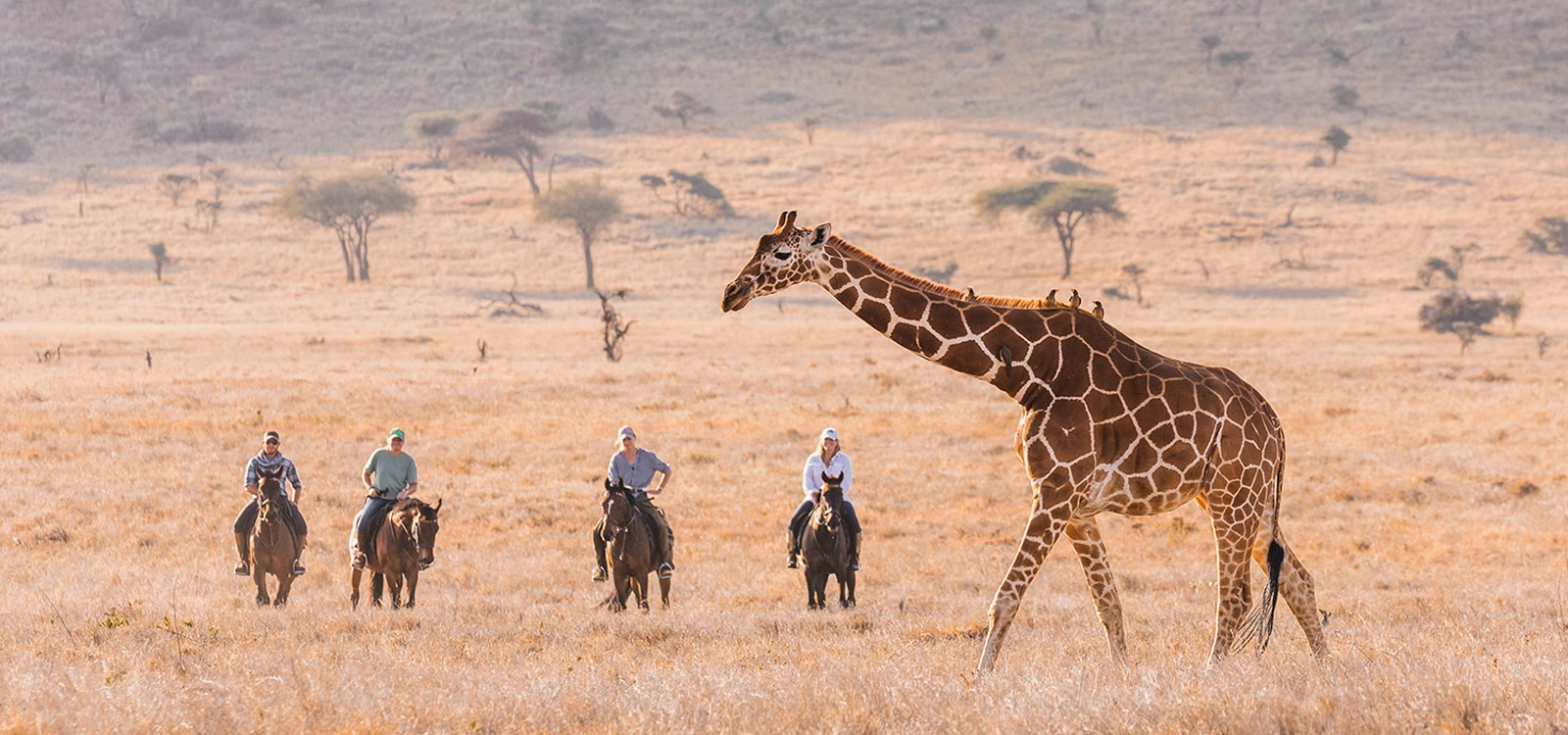
Quick answer: The best places for horse riding safaris in Kenya are the private conservancies around the Masai Mara, the Laikipia Plateau, the Chyulu Hills, the Amboseli ecosystem and the Kenyan coast. The Mara is best for big herds and the Great Migration. Laikipia is best for rhino country, big skies and riders of all levels. The Chyulu Hills offer misty forests and volcanic craters. Amboseli gives you Mount Kilimanjaro as a backdrop. The coast adds beach and forest rides.
Why the place matters on a horse safari
On a standard safari, the park decides what you see. On a horse safari, the landscape decides how you ride. Open plains allow long canters. Hills and forests call for a slower, more careful pace.
Wildlife changes from place to place, too. Some areas are full of zebra and giraffe. Others hold rhino, wild dog or elephants in thick woodland. For this reason, choosing the right region matters as much as choosing the right operator.
This guide compares Kenya's best riding areas. It covers the scenery, wildlife, riding level and the best time to go.
Quick comparison of Kenya's best horse riding areas
Area | Landscape | Wildlife highlights | Typical rider level | Best for |
|---|---|---|---|---|
Masai Mara conservancies | Rolling savannah, rivers, escarpments | Zebra, wildebeest, giraffe, elephants, big cats | Confident, intermediate and above | Migration season, big herds |
Laikipia Plateau | Highlands, rocky hills, forest, Mount Kenya views | Elephants, giraffe, zebra, black rhino, wild dog | Beginner to advanced, depending on the lodge | Variety, conservation, all levels |
Lewa to Laikipia expeditions | Plains, forest, rivers, plateau | Big Five and northern species | Experienced | Long journeys on horseback |
Chyulu Hills | Mist forests, craters, lava tubes, savannah | Giraffe, elephants, impala, gazelle | Novice to confident | Scenery and luxury lodge stays |
Amboseli ecosystem | Open plains, acacia, Kilimanjaro views | Elephants, plains game | Confident | Photography and big views |
Kenyan coast | Beach, Kaya forests | Birds, monkeys, coastal life | Beginner | Relaxed rides after a safari |
1. Masai Mara conservancies
Multi-day horse riding in the Mara does not take place inside the main national reserve. It takes place in the private conservancies that border it. These conservancies limit vehicles and beds, so the grasslands feel open and quiet. Five conservancies matter most for riders.
Mara North Conservancy. Mara North lies on the north-western edge of the Mara. It protects land that migrating wildlife uses. It is the main base for multi-day riding safaris. Riders cross the Koiyaki Plain and follow the Olare Orok stream and the Mara River. Mobile tented camps move with the ride.
Olare Motorogi Conservancy. This conservancy runs along the northern edge of the reserve. It protects the lower Olare Orok River and its riverine forest. Predators and grazers are well balanced, and riders may spot African wild dog or rhino. Stables sit on its border, and guests staying nearby can book guided half-day rides.
Mara Naboisho Conservancy. Naboisho lies on the north-eastern side of the reserve. It is the second-largest conservancy in the Mara ecosystem. Riders can take full-day rides across the savannah as well as shorter morning and evening rides.
Ol Kinyei Conservancy. Ol Kinyei is reached by a short flight to the Siana airstrip. Some multi-day riding safaris begin here. It gives riders their first look at big-game country before they move on to Naboisho and Mara North.
Lemek Conservancy. Lemek has riverine forest and open plains. Mobile safaris often begin here, with a first day of gentle riding before the route continues to Mara North.
Who it suits. Confident riders who are comfortable at all paces and in a group. Full riding days cover about 20 to 30 km, and most days last four to seven hours.
2. The Laikipia Plateau
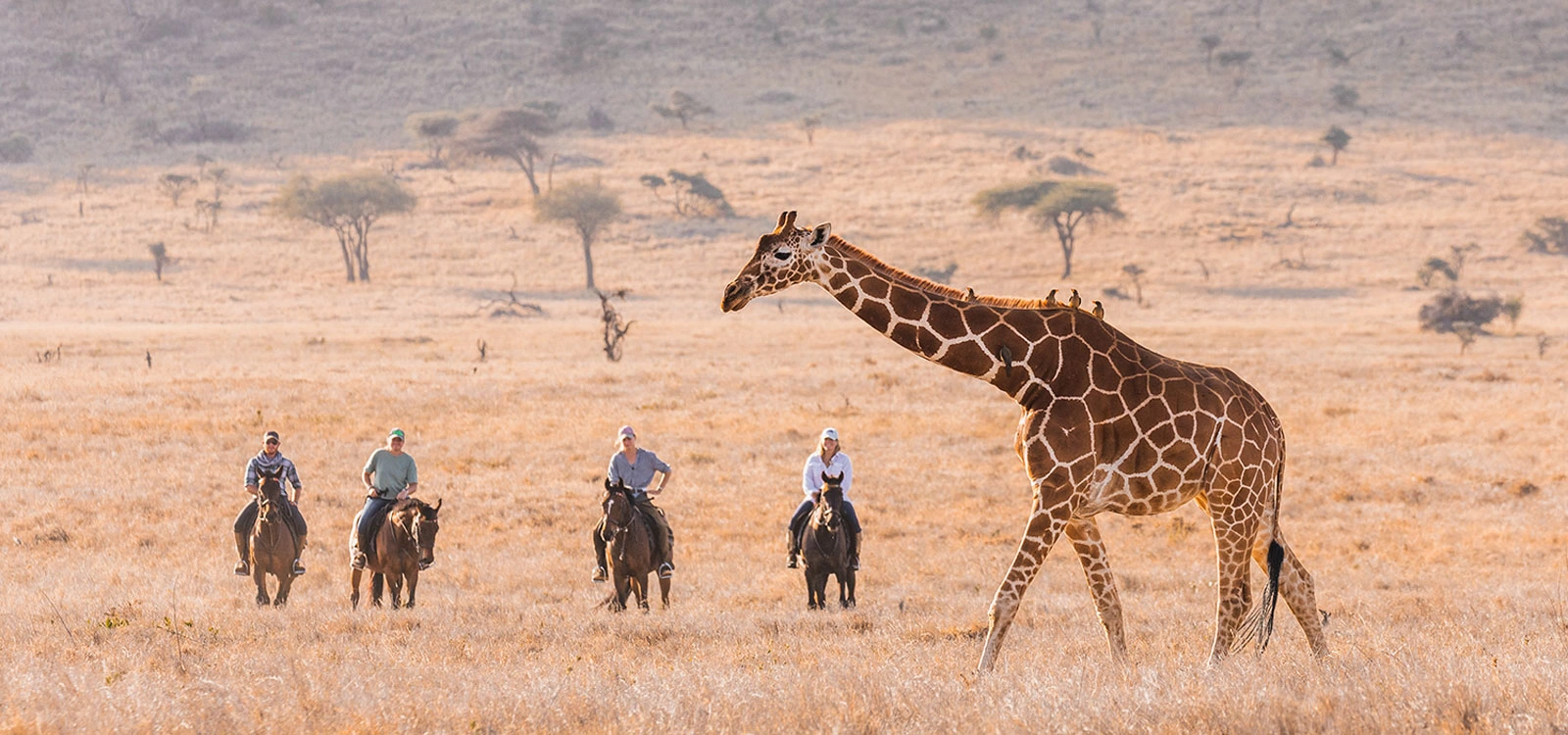
Laikipia is a high plateau of open ranches and rolling hills with very little fencing. Elephants, giraffes, zebras and rhinos share the land. Horses move easily across this open ground. As a result, Laikipia is the top choice for dedicated riders and multi-day trips. Five conservancies and ranches stand out.
Borana Conservancy. Borana has the strongest riding focus in Kenya. It runs two stables, one for beginners and one for advanced riders. Mixed groups can therefore ride together, each at their own level. Borana is part of the Lewa–Borana landscape, one of Africa's most successful rhino conservation projects. Riders have a real chance of riding near rhino. Borana Lodge offers a comfortable base.
Lewa Wildlife Conservancy. Lewa is a leading conservation landscape that shares an unfenced boundary with Borana. Its rolling hills suit riding. Camel treks are also offered from Lewa Wilderness. Many riders combine Lewa and Borana in one trip.
Sosian Ranch. Sosian breeds its own horses, including thoroughbreds and Ethiopian horses. It is known for strong riding. Guests report more frequent elephant encounters here than at most other riding lodges.
Ol Jogi Conservancy. Ol Jogi is a private wilderness that offers riding among its activities. Its privacy suits small groups who want a quiet ride.
Loisaba Conservancy. Loisaba keeps a stable of more than 20 horses and ponies. Rides run in the morning and evening, last one to three hours and take up to six riders. Beginners can start on relaxed ponies in an enclosed paddock before riding out. The horses stay calm near wildlife. Loisaba also offers guided camel rides and escorted mountain biking. Guests fill in a questionnaire so guides can match the right horse.
Who it suits. Riders of every level. Choose Laikipia if your group mixes beginners and experienced riders, or if some travellers will not ride.
3. The Chyulu Hills
Chyulu Hills lies within a spectacular volcanic landscape between the Amboseli and Tsavo West ecosystems. It offers a distinctive setting for horseback safaris in Kenya.
The landscape. Expect rolling volcanic hills, forested slopes, open plains and remarkable lava caves. On clear days, Mount Kilimanjaro provides a dramatic backdrop to the surrounding wilderness.
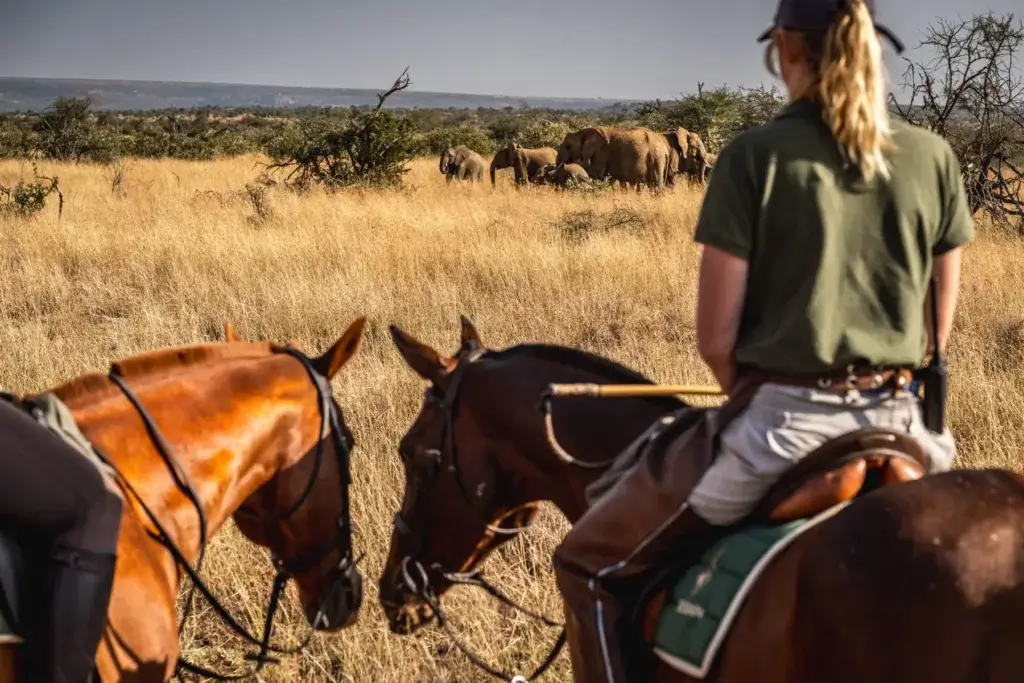
The wildlife. You may encounter elephants, giraffes, impalas, gazelles and other wildlife across the wider ecosystem. However, sightings depend on the route, season and local conditions. Guides select riding routes with wildlife safety in mind.
The riding. Ol Donyo Lodge offers horseback riding across open plains and the surrounding volcanic landscape. Less experienced riders can enjoy gentle rides, while confident riders can choose longer outings at faster paces. All riders undergo an assessment before setting out. Ride options depend on experience and current arrangements.
Accommodation and activities. Ol Donyo Lodge sits within a vast private wilderness of approximately 275,000 acres. Guests can combine horseback riding with game drives, guided walks and mountain biking. This makes the area appealing to couples and groups with different interests.
Who it suits. Chyulu Hills suits couples and groups seeking dramatic scenery, luxury accommodation and varied wildlife experiences.
Important: Confirm the minimum riding age, experience requirements, ride duration and availability directly with the lodge before publishing these as guaranteed inclusions.
Which place is right for you?
- You want the Great Migration: choose the Masai Mara conservancies, from July to October.
- You are a beginner or ride at mixed levels: choose Laikipia or the Chyulu Hills.
- You want a long expedition: choose a Lewa to Laikipia ride.
- You love dramatic scenery: choose the Chyulu Hills.
- You want Kilimanjaro views: choose the Amboseli ecosystem.
- You want a gentle finish: add a coastal ride.
- You travel with non-riders: choose a lodge-based stay in Laikipia or the Chyulu Hills.
- You want luxury: choose a private ranch lodge with a pool, spa and guided activities.
Best time to ride in each area
The drier months suit most riding. Ground is firmer and wildlife gathers near water.
Area | Best months | Notes |
|---|---|---|
Masai Mara conservancies | July to October, January to March | Some operators do not run Mara rides in April, May and November |
Laikipia | July to October, January to March | Cool, dry and clear |
Lewa to Laikipia | Dry months | Rivers and forests are easier to cross |
Chyulu Hills | June to October, January to February | Mist is more common in the wetter months |
Amboseli ecosystem | June to October, January to February | Kilimanjaro is clearest in the early morning |
Coast | Drier months | Avoid the heavy April and May rains |
Peak months fill early. Book riding safaris well ahead, especially for July to October.
What to expect on a horse riding safari
- Time in the saddle: usually four to seven hours a day on multi-day rides.
- Horses: well-schooled safari horses, often thoroughbred crosses, used to wildlife.
- Camps: mobile tented camps with comfortable beds and safari-style showers, or lodge-based stays.
- Guides: experienced riding and safari guides lead every ride.
- Equipment: tack is usually supplied. Bring your own riding boots, half chaps and clothing.
- Non-riders: welcome on many trips, with game drives and walks.
Tips for choosing the right place
- Be honest about your riding level. It keeps you and the horses safe.
- Match the region to your goal. Pick the Mara for herds and Laikipia for variety.
- Allow at least five nights for a mobile safari.
- Check weight and age limits before you book.
- Combine areas. A ride in Laikipia followed by a few days in the Mara works well.
- Add a rest day. Even confident riders enjoy a break from the saddle.
- Check your insurance. Make sure it covers horse riding.
Frequently asked questions
What is the best place for a horse riding safari in Kenya? The Masai Mara conservancies and the Laikipia Plateau are the most popular. The Chyulu Hills and the Amboseli ecosystem are excellent for scenery.
Can you ride horses in the Masai Mara National Reserve? No. Riding takes place in the private conservancies and ranches around the reserve.
Which area is best for beginners? Laikipia and the Chyulu Hills. Some lodges there cater for beginners, and novice rides are planned on open plains.
Where can I ride with Mount Kenya in view? On the Laikipia Plateau, on the foothills and plains north of the mountain.
Where can I ride with Kilimanjaro in view? In the Amboseli ecosystem and the Chyulu Hills.
Can I see the Great Migration on horseback? Yes. In the Mara conservancies, from about July to October, though timing varies each year.
What wildlife can I see from horseback? Zebra, giraffe, wildebeest, elephants, antelope and, in some areas, black rhino and wild dog. Predators are usually viewed from a safe distance.
How long are the rides? Most rides last four to seven hours on multi-day trips. Short rides of two to three hours are also available.
Can non-riders come along? Yes, on many trips. They join game drives, bush walks and picnics.
Can I combine a horse safari with a beach holiday? Yes. Many travellers ride in the bush and finish with a few days on the coast.
Plan your horse riding safari in Kenya
Tell us your riding level, travel dates and group size. We will match you with the right area and build a tailored itinerary. Contact Olengugih Safaris for a free quote.