How much does a Kenya safari cost? It is one of the first questions travellers ask us, and it is also one of the most important questions to answer properly before you book. A Kenya safari can be planned at very different price levels, but the cheapest quotation is not always the best value and the most expensive safari is not automatically the right safari for you.
At Olengugih Safaris, we prefer to help you understand why a safari costs what it does. When we prepare a safari, we are combining accommodation, national park or reserve fees, a safari vehicle, fuel, a professional driver-guide, meals, transfers, game drives and sometimes domestic flights. Your dates, group size, rooming arrangement and choice of destinations can change the final figure considerably.
This guide is designed to help you compare Kenya safari prices confidently. We will take you through budget, mid-range and luxury safaris, private versus shared travel, vehicle costs, accommodation, park fees, meals, domestic flights, guiding, tips and the items that are normally included or excluded. We will also show practical planning figures for 3-day, 5-day, 7-day and 10-day safaris.
If you already know roughly how long you want to travel, you can also browse our Kenya safari packages and compare the route, duration and accommodation options while using this guide to understand the cost behind each journey.
Kenya safari cost at a glance
There is no official single price for a Kenya safari, but current market averages give us a useful starting point. SafariBookings currently estimates average Kenya safari costs of about USD 200 per person per day for a group budget safari, USD 300 per person per day for a group mid-range safari and around USD 550 per person per day for a group luxury safari. Its private-safari averages are about USD 250, USD 350 and USD 650 per person per day respectively.
We use those figures only as planning benchmarks. Your actual quotation may be below or above them because Kenya safari pricing is affected by season, destination, accommodation, park fees, transport method and how many people are sharing the vehicle.
| Safari style | Shared safari planning average | Private safari planning average | What usually changes |
|---|---|---|---|
| Budget | About USD 200 pp/day | About USD 250 pp/day | Simple camps or hotels, road travel, practical comfort, fewer premium extras |
| Mid-range | About USD 300 pp/day | About USD 350 pp/day | Comfortable lodges or tented camps, stronger locations and more polished service |
| Luxury | About USD 550 pp/day | About USD 650+ pp/day | Premium camps, exclusive locations, smaller properties, private experiences and often flights |
Planning figures above are based on current Kenya safari cost averages published by SafariBookings. They are not fixed Olengugih Safaris quotations.
What actually determines your Kenya safari price?
When we build your safari, we do not simply multiply the number of days by one fixed rate. We look at the complete trip. A seven-day safari in basic accommodation can cost less than a four-day luxury fly-in safari. Two travellers can also pay more per person than six travellers on the same private road itinerary because the vehicle cost is being divided between fewer people.
The main cost drivers are:
- Travel season: peak wildlife periods, school holidays and Christmas/New Year can increase accommodation prices and availability pressure.
- Destinations: some parks and reserves have higher conservation fees than others.
- Accommodation: a simple camp outside a reserve and a luxury camp in a private conservancy have very different operating costs.
- Private or shared transport: shared safaris divide vehicle and guide costs among several guests.
- Road or air travel: bush flights save time but add airfare and often airstrip transfer costs.
- Number of travellers: a private safari normally becomes better value per person as your group size increases.
- Rooming: solo travellers may pay a single-room supplement, while two adults sharing usually receive a per-person sharing rate.
- Activities: balloon safaris, boat trips, conservancy activities, cultural visits and special excursions may be additional.
That is why we encourage you to compare the contents of a Kenya safari booking, not only the total figure at the bottom of the quotation.
How much does a budget Kenya safari cost?
A budget safari is for the traveller who wants to spend more of the budget on the wildlife experience and less on luxury accommodation. In practical terms, this can mean staying in a simple tented camp, hotel or lodge outside the park boundary, travelling by road and sharing the safari vehicle with other guests.
Current Kenya market averages place a group budget safari around USD 200 per person per day, although individual packages can start lower or go higher depending on the route and season. We advise travellers not to judge a budget safari only by the room. The more important questions are whether the vehicle is appropriate for the route, the itinerary gives enough time for game viewing, the guide is experienced, the park fees are accounted for and the accommodation is clean and correctly located for the programme.
For example, a shared 3 Day Masai Mara Group Joining Safari allows the vehicle and guide cost to be distributed among several travellers. That can make the Masai Mara accessible without paying the full cost of a private Land Cruiser.
Budget travel works particularly well for solo travellers, couples and friends who are comfortable following a common group schedule. It is also a sensible option if your priority is wildlife photography and game-drive time rather than luxury facilities at the lodge.
How much does a mid-range Kenya safari cost?
For many of our guests, mid-range is the most balanced safari style. You still focus on wildlife, but your accommodation normally provides a more comfortable room or tent, private bathroom, dependable meals, better common areas and a more established safari setting.
A useful planning average is around USD 300 per person per day for a group mid-range safari and around USD 350 for a private one, before allowing for unusually expensive dates or properties.
Mid-range does not mean that every night has to be at exactly the same standard. When we design a longer itinerary, we can mix carefully chosen properties. You may prefer a simpler lodge for a one-night transfer stop and spend more on the two or three nights where location matters most.
This is one reason routes such as Masai Mara, Lake Nakuru and Lake Naivasha can be planned at several price points without changing the core journey.
How much does a luxury Kenya safari cost?
Luxury safari pricing is driven by much more than a bigger room. Premium camps may have only a small number of suites, highly personalized service, exceptional wildlife locations, private decks, plunge pools, fine dining, smaller game-drive groups and access to private conservancies or concession areas.
A current planning average is around USD 550 per person per day for a group luxury safari and around USD 650 or more for a private safari. At the top end, it is completely possible for a Kenya safari to exceed USD 1,000 per person per day.
Luxury travel can also include scheduled bush flights rather than long road transfers. This increases the cost but saves valuable time. For a traveller with only five days in Kenya, flying directly to the Masai Mara may be worth more than spending most of the first and last days on the road.
When you ask us for a luxury itinerary, we therefore look at the whole experience: location, privacy, logistics, service level and how much safari time you gain from the extra spend.
Private safari versus shared safari: which should you choose?
This is one of the biggest decisions affecting the final Kenya safari cost.
Shared or group joining safari
On a group joining safari, you share the vehicle with other confirmed travellers who are following the same route. The major advantage is cost. Fuel, vehicle usage and the driver-guide are divided among several guests.
We normally recommend a shared safari when:
- you are travelling alone or as a couple and want to keep the total cost down;
- you are comfortable meeting other travellers;
- you do not need a completely flexible daily schedule;
- you want a shorter safari such as three to six days;
- your preferred route is one of the popular circuits with regular departures.
You can see examples in our 4 Day Masai Mara & Lake Nakuru Group Joining Safari and 6 Day Masai Mara, Lake Nakuru & Amboseli Group Safari.
Private safari
On a private safari, the vehicle and guide are reserved for your booking. You decide the pace within the practical limits of park rules and travel times. A private safari is particularly useful for families, photographers, honeymooners, multi-generational groups and travellers with specific wildlife interests.
Private travel costs more for one or two people because you are carrying the vehicle cost yourselves. But as your own group becomes larger, the difference per person can narrow significantly. Six friends sharing one private vehicle, for example, can sometimes achieve very good value compared with purchasing six separate seats on different products.
When you enquire with us, tell us your exact group size. We can then compare the economics of private and shared travel rather than assuming one option is automatically cheaper.
How safari vehicle costs affect your quotation
The safari vehicle is one of the most important fixed costs in a road safari. A proper safari Land Cruiser is not simply an ordinary rental car. It normally has a pop-up roof, modified suspension, extra luggage capacity and equipment designed for repeated use on rough park roads.
Current Kenya vehicle-hire listings show that a chauffeur-driven customized safari Land Cruiser can commonly be advertised from roughly USD 175 to USD 300 per vehicle per day, depending on what is included. Some rates include the driver-guide but exclude fuel, while others package fuel and driver allowances into the daily rate. You can see current examples from Ubuntu Logistics and other specialist safari-vehicle providers.
When we cost your safari, the vehicle figure can include much more than the visible daily hire price:
- fuel for long inter-park transfers;
- driver-guide time and allowances;
- the driver-guide's meals and overnight arrangements;
- commercial vehicle park or reserve charges where applicable;
- airport or hotel pickup;
- game-drive mileage;
- vehicle repositioning before or after the safari;
- maintenance required for repeated travel on rough roads.
This is why comparing an online vehicle rental price directly with a complete safari quotation can be misleading. We prefer to show you what transport is actually included in the full trip.
How accommodation changes the cost of a Kenya safari
Accommodation can be the largest variable after transport and conservation fees. Two guests can follow exactly the same game-drive route and pay very different totals simply because one is staying in a basic camp outside the reserve and the other is in a premium property in a prime wildlife area.
When we help you choose accommodation, we normally look at four things: location, comfort, meal plan and value for the route.
Budget camps and hotels
These keep the safari affordable. They may be outside the reserve or in gateway towns and generally offer simpler rooms, fewer facilities and a practical meal service. A good budget property should still be clean, safe and suitable for the itinerary.
Mid-range lodges and tented camps
These usually provide private bathrooms, more spacious rooms or tents, landscaped grounds, restaurant facilities and a stronger overall comfort level. Many first-time safari travellers find this category provides the best balance between price and experience.
Luxury camps and lodges
Luxury properties may be in exclusive conservancies or exceptional wildlife locations. They can include highly personalized service, premium food and beverage, private decks, plunge pools and smaller guest numbers. Some also bundle activities that would be extra elsewhere.
We do not recommend choosing accommodation only by the number of stars. On safari, location can be more valuable than decoration. A beautifully furnished hotel that requires a long daily drive to the park gate can reduce your actual wildlife time.
Kenya park fees and conservation charges
Park and reserve fees are a major part of the safari budget and they are easy to underestimate. These charges support protected-area management and conservation and are generally paid for each day or entry period according to the rules of the specific park or reserve.
At the time of our September 2026 review, Kenya Wildlife Service lists non-resident adult conservation fees of USD 90 for Amboseli National Park and USD 90 for Lake Nakuru National Park. The corresponding non-resident child rate is USD 45. Current official rates and visitor guidance are available on the Kenya Wildlife Service website.
The Masai Mara National Reserve is managed separately from KWS parks, so its conservation fees and payment rules must be checked independently. The Mara can also become considerably more expensive in peak migration months because both accommodation demand and reserve costs are higher.
When we prepare your quotation, we recommend that you check whether park fees are:
- already included in the safari price;
- based on your correct residency category;
- calculated for the correct number of park days;
- subject to any announced government or county changes before travel.
A quotation that appears cheaper but leaves several days of park fees unpaid can end up costing more than a quotation that looks slightly higher but is genuinely complete.
Are meals included in a Kenya safari?
On most multi-day road safaris we plan, accommodation is booked on a meal plan suitable for the itinerary. This often means breakfast, lunch and dinner during the safari.
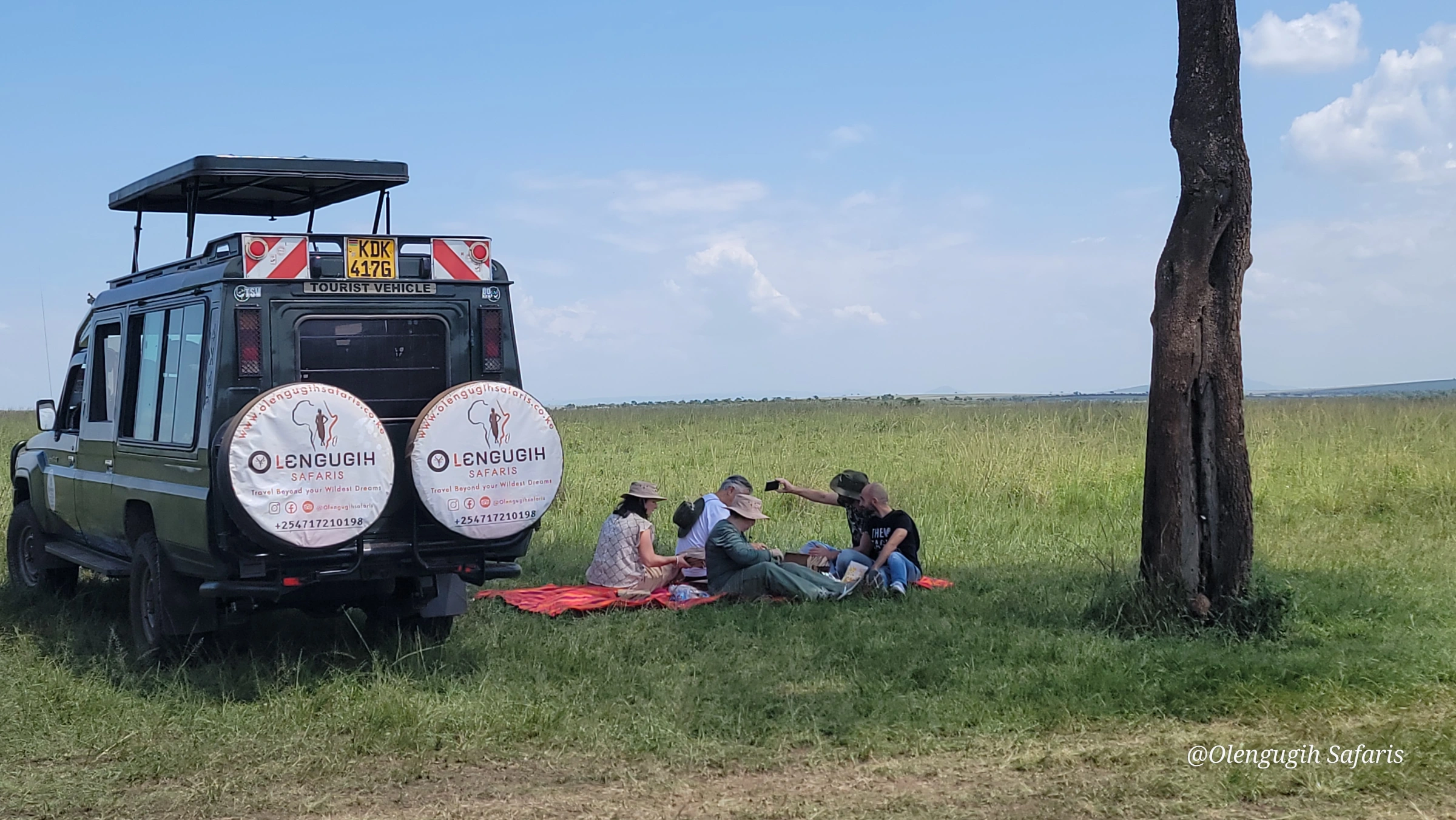
On a full-day game drive, lunch may be provided as a picnic so that you can remain in the wildlife area rather than returning to the lodge in the middle of the day. On transfer days, lunch may be taken at a lodge, restaurant or planned stop depending on the route.
Items that are often not automatically included include:
- alcoholic beverages;
- premium wines or spirits;
- special private dining;
- room-service purchases;
- snacks or drinks bought during road stops.
If you have dietary requirements, tell us before the safari. We can then discuss them with the selected properties instead of waiting until check-in.
How much do domestic safari flights cost?
Flying can make a Kenya safari much more efficient, particularly when your time is limited. Most bush flights serving the Masai Mara and other safari areas depart from Wilson Airport in Nairobi, not Jomo Kenyatta International Airport.
As one current 2026 example, FlyALS publishes an early-bird Wilson to Masai Mara rack fare of USD 220 plus USD 16 tax one way, or USD 380 plus USD 32 tax return. The airline notes that services can call at multiple Mara airstrips and timings may vary according to routing. You can review the current FlyALS 2026 flight schedule and rack rates.
A flight price is not always the full fly-in safari cost. We may also need to allow for:
- hotel-to-Wilson Airport transfer;
- airstrip-to-camp transfer;
- camp game-drive vehicle charges;
- baggage restrictions or excess-baggage costs;
- connecting flights between safari regions.
For that reason, we compare road and air options based on total trip value and time saved, not airfare alone.
What does a professional safari guide add to the cost?
Your driver-guide is one of the most important people on the safari. A good guide does far more than drive between locations. The guide reads tracks, understands animal behaviour, follows park rules, responds to road conditions, manages timing between destinations and positions the vehicle responsibly for wildlife viewing and photography.
In most organized road safaris, the driver-guide is already included in the package price. However, the operator still has to account for the guide's salary or professional fee, meals, accommodation or allowance, park access where applicable and the time involved in a multi-day itinerary.
Specialist private guides, birding experts or dedicated photographic guides can cost more. If a particular style of guiding matters to you, tell us early so that we can budget for the right person instead of treating the guide as an afterthought.
How much should you tip on a Kenya safari?
Tipping is normally not included in the safari price. It is also not a park fee or compulsory government charge. It is a discretionary way of recognizing good service.
For planning purposes, SafariBookings currently suggests around USD 15 per person per day for guides and drivers. Camps and lodges may have their own staff tip box for the wider team.
We recommend treating any tipping figure as guidance rather than a rigid rule. Your group size, the length of the safari and the quality of the service all matter. If you are unsure, ask us before departure and we can explain the usual practice for your itinerary.
What is normally included in a Kenya safari price?
One of the best things you can do before paying a deposit is read the inclusions carefully. When we guide you through a quotation, we want you to understand exactly what the safari price covers.
| Normally included when stated in the itinerary | Often excluded unless specifically added |
|---|---|
| Safari vehicle and scheduled game drives | International flights |
| Professional driver-guide | Kenya eTA / immigration costs |
| Safari accommodation | Travel insurance |
| Meals shown in the itinerary | Tips and gratuities |
| Park or reserve fees where the package says they are included | Alcoholic and premium beverages |
| Drinking water during safari drives where stated | Personal purchases |
| Nairobi pickup and drop-off where stated | Balloon safari unless listed |
| Road transfers between destinations | Optional cultural visits unless listed |
| Domestic flights only on itineraries that specifically include them | Pre- and post-safari Nairobi accommodation unless listed |
If you are comparing two Kenya safari bookings, we suggest putting the quotations side by side and checking every line. A USD 1,300 package that excludes USD 300 of park fees is not cheaper than a USD 1,500 package that already includes the same fees and more services.
Example Kenya safari prices for 3, 5, 7 and 10 days
The table below is a planning tool, not a quotation. We have calculated it from current market daily averages so that you can estimate the size of the budget before choosing the exact route and accommodation. Real safari prices are not perfectly linear because park fees, transfers and accommodation rates differ from day to day.
| Safari length | Budget group planning figure | Mid-range group planning figure | Luxury group planning figure | Budget private planning figure |
|---|---|---|---|---|
| 3 days | About USD 600 pp | About USD 900 pp | About USD 1,650 pp | About USD 750 pp |
| 5 days | About USD 1,000 pp | About USD 1,500 pp | About USD 2,750 pp | About USD 1,250 pp |
| 7 days | About USD 1,400 pp | About USD 2,100 pp | About USD 3,850 pp | About USD 1,750 pp |
| 10 days | About USD 2,000 pp | About USD 3,000 pp | About USD 5,500 pp | About USD 2,500 pp |
These examples use current market averages of approximately USD 200 budget group, USD 300 mid-range group, USD 550 luxury group and USD 250 budget private per person per day. Your actual itinerary can be lower or higher.
What does a 3-day Kenya safari cost?
A three-day safari is one of the most popular options for travellers with limited time. The classic example is Nairobi to the Masai Mara for two nights, then back to Nairobi.
At current market averages, a budget group safari might be planned around USD 600 per person before route-specific adjustments. Our current 3 Day Masai Mara Group Joining Safari is an example of how we simplify the decision: one route and itinerary, with accommodation choices priced separately rather than publishing several almost identical safaris.
For a three-day trip, we normally advise against adding too many destinations. You will get more from two meaningful nights in one wildlife area than from spending most of three days changing parks.
What does a 5-day Kenya safari cost?
Five days gives us more room to combine destinations while still protecting game-drive time. A route such as Masai Mara, Lake Nakuru and Lake Naivasha gives you different landscapes without stretching the itinerary into an exhausting checklist.
A budget group planning figure is around USD 1,000 per person, while mid-range planning begins around USD 1,500 using current market averages. Our 5 Day Masai Mara, Lake Nakuru & Lake Naivasha Group Safari provides a current real-world example of a multi-destination group route.
What does a 7-day Kenya safari cost?
For many first-time visitors, seven days is an excellent safari length. It gives us enough time to combine major wildlife areas without making every morning a checkout day.
A typical seven-day route might include the Masai Mara, Lake Nakuru and Amboseli. A budget shared planning figure is around USD 1,400 per person, while a mid-range group figure is around USD 2,100. Luxury accommodation or flights can lift the figure substantially.
When we design seven days, we focus on balancing transfer time with wildlife time. Adding another destination simply because it fits on a map does not always create a better safari.
What does a 10-day Kenya safari cost?
Ten days gives us the flexibility to build a more complete Kenya circuit. Depending on your interests, we can include the Masai Mara, Amboseli, Samburu, Lake Nakuru, Lake Naivasha, Ol Pejeta or another specialist area while still allowing multiple nights in the strongest locations.
Using current market averages, a budget group planning figure is about USD 2,000 per person, mid-range around USD 3,000 and luxury around USD 5,500. A premium fly-in itinerary can go much higher.
The advantage of ten days is not simply that you can visit more parks. It is that we can slow the journey down, choose better wildlife windows and reduce the feeling of constantly packing and unpacking.
Why the time of year changes Kenya safari prices
Kenya has wildlife throughout the year, but demand is not equal every month. July to October is especially busy in and around the Masai Mara because many travellers come hoping to experience the Great Migration. Christmas and New Year are also high-demand travel periods.
During high season:
- popular lodges sell out earlier;
- room rates can rise significantly;
- some properties apply minimum stays;
- private vehicle and flight availability can tighten;
- the total cost of a Mara-focused safari can be considerably higher.
If your goal is general wildlife rather than a specific migration event, ask us about shoulder and green-season travel. You may find better accommodation value, fewer vehicles in some areas and very attractive landscapes.
How we help you reduce safari cost without spoiling the trip
Reducing cost does not have to mean making the safari poor. The key is to remove expenses that matter less to you without cutting the parts that make the trip work.
When budget is important, these are some of the first options we discuss with our guests:
- Join a shared safari: especially effective for solo travellers and couples.
- Travel by road: use flights only where the time saving genuinely matters.
- Choose accommodation strategically: spend more in the destination where location gives you the most benefit.
- Travel outside peak dates: if your schedule is flexible.
- Stay longer in fewer parks: this can reduce excessive transfer costs and improve the actual safari experience.
- Book the right room configuration: sharing can be much more economical than single occupancy.
- Ask for the complete quotation: hidden park fees and transfers are not savings.
We will never recommend squeezing four major parks into a short trip just so the itinerary looks impressive. Good safari planning is about how much meaningful time you have in each place.
Questions we recommend asking before you book a Kenya safari
Before you pay a deposit, ask the operator these questions. They will tell you more about the value of the package than the headline price alone.
- Which exact lodges or camps are included?
- Is the safari private or shared?
- What vehicle will be used?
- How many guests can be in the safari vehicle?
- Are all park and reserve fees included?
- Which meals are included each day?
- Are domestic flights included or quoted separately?
- Are airport and hotel transfers included?
- What optional activities are excluded?
- Are there single supplements?
- What happens if a lodge is unavailable?
- What government or conservation fee changes can alter the final price?
- What is the cancellation and payment policy?
At Olengugih Safaris, we want you to understand the answers before you travel. A safari is a significant purchase, and clear planning protects both your budget and your experience.
Kenya safari cost FAQs
How much does a Kenya safari cost per day?
As a practical 2026 planning benchmark, current market averages are about USD 200 per person per day for a group budget safari, USD 300 for group mid-range and USD 550 for group luxury. Private-safari averages are higher because the vehicle and guide are shared among fewer travellers.
What is the cheapest way to go on safari in Kenya?
For most travellers, the lowest-cost organized option is a shared road safari using budget accommodation. The shared vehicle is the key saving because fuel, guiding and transport are divided among several guests.
Is a private Kenya safari worth the extra cost?
It can be, particularly if you value flexibility, photography time, privacy or family convenience. The cost difference also becomes smaller per person when several friends or family members share the same private vehicle.
Are park fees included in Kenya safari packages?
They often are, but never assume. We recommend checking the inclusions line by line. KWS also notes that package tours commonly incorporate park entry fees, but each operator and product must state its own inclusions clearly.
Do safari prices include international flights?
Normally no. International flights are usually separate. Domestic bush flights are included only when the specific safari itinerary says they are included.
Are children cheaper on safari?
Often, but child pricing is not one universal percentage. Park-fee age bands, lodge child policies, room configuration and whether a child needs a separate seat or bed all affect the price. We prefer to quote families using the children's actual ages.
Why does a solo safari cost more?
A solo traveller may have to pay a single-room supplement, and on a private safari the vehicle cost is carried by one person. A group joining safari can reduce the transport portion significantly for a solo guest.
Should I pay more for a 4x4 Land Cruiser?
It depends on the itinerary and season. A 4x4 Land Cruiser is valuable on rough routes and is our preferred safari format for many multi-park journeys. The important point is to know exactly what vehicle is promised in your booking.
How far in advance should I book?
For peak-season travel, especially July to October in the Masai Mara and Christmas/New Year, we recommend planning well ahead because the most suitable properties and room categories can sell out. Outside peak periods, there may be more flexibility.
Our advice: compare value, not only the lowest price
The best safari is not necessarily the cheapest safari. It is the one where the itinerary, vehicle, guide, accommodation and conservation costs are balanced around what you actually want to experience.
If wildlife is your priority, we may advise you to choose a simpler room and protect your game-drive time. If you have only a few days, we may recommend a flight so that you spend less time on the road. If you are travelling with five or six people, we may show you that a private vehicle is better value than you expected.
That is how we approach Kenya safari bookings: first understand the traveller, then build the right route and explain the cost honestly.
Start by exploring our Kenya safaris, read more about destinations such as Masai Mara, Amboseli, Lake Nakuru and Lake Naivasha, then send us your dates and group size. We can help you compare shared and private options and build a safari budget around the experience you want.
Useful external resources for checking current safari costs
Safari prices, park fees and flight schedules can change. We therefore recommend checking current information at the time you book. Useful sources include:
- Kenya Wildlife Service for official KWS park information and current conservation fees;
- SafariBookings Kenya safari cost guide for broad market pricing comparisons;
- FlyALS 2026 schedule and rack rates for one current example of domestic safari-flight pricing.
Last reviewed by Olengugih Safaris: 24 September 2026. All example prices in this guide are planning figures unless they appear on a specific Olengugih Safaris package page. Final rates depend on travel dates, availability, rooming, park-fee changes and the confirmed itinerary.