Why the 4x4 Safari Jeep Is the Best Choice for a Kenya Safari
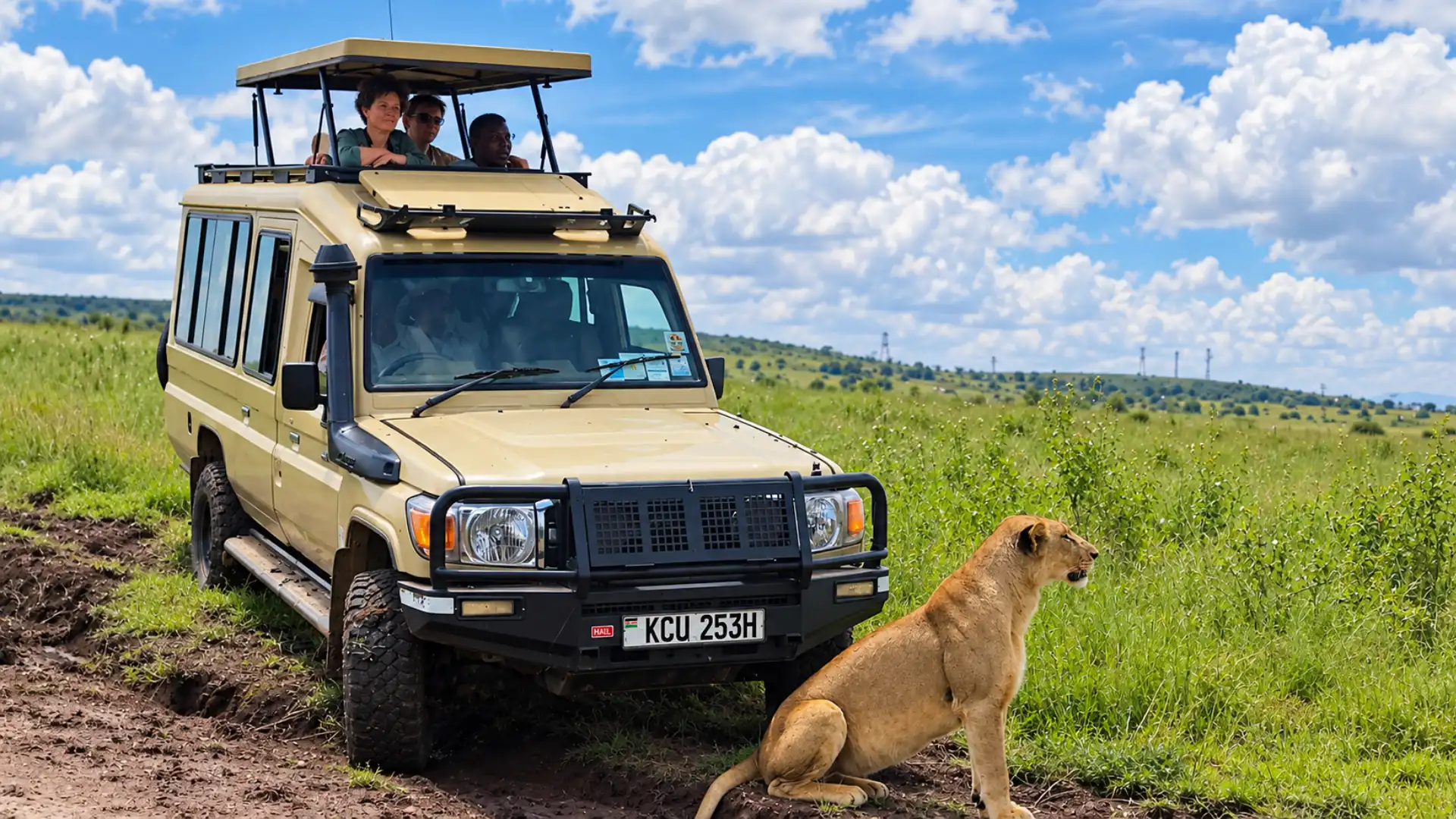
The 4x4 safari jeep is the best vehicle for a Kenya safari. It handles rough roads, gives a high view and keeps you safe near wildlife.
Kenya's parks have rocky tracks, deep mud and river drifts. A normal car cannot cope with them. A 4x4 can reach the best viewing spots in any season.
Olengugih Safaris uses 4x4 safari jeeps on its game drives. This guide explains why, and what to look for.
Last updated October 2026. Vehicle details can change, so confirm when you book.
4x4 safari jeep in Kenya at a glance
Question | Answer |
|---|---|
What is it? | A four-wheel-drive vehicle fitted with a pop-up roof for game drives |
Why use it? | It copes with mud, rocks, steep banks and river drifts |
Typical seating | Usually six or seven guests, each with a window seat |
View | Roof hatch gives a 360° view for wildlife and photos |
Best parks | Masai Mara, Amboseli, Tsavo, Samburu, Laikipia and Nairobi National Park |
Best seasons | All year, and essential in the rainy months |
Private option | Yes. Your group has the whole vehicle |
Safe for children | Yes, with seat belts and a guide on board |
Why choose a 4x4 safari jeep for your Kenya safari?
Benefit | What it means for you |
|---|---|
Off-road power | Four-wheel drive pulls you through mud, sand, rocks and steep banks |
Better wildlife viewing | You sit high, so you see over grass and bush |
Reach remote areas | You can follow tracks that ordinary vehicles cannot use |
Comfort on rough tracks | Strong suspension softens bumps and reduces fatigue |
Built for long journeys | Extra fuel, spare tyres and recovery gear are carried |
360° pop-up roof | You stand up for open views and clean photos |
Safety | A sturdy body and an expert driver-guide keep you secure |
Off-road performance
Four-wheel drive sends power to all wheels. Low range gives extra pulling power on slow, difficult ground. This matters in the Masai Mara after rain, when black cotton soil turns to thick mud.
Wildlife viewing
Height is a big advantage. From a raised seat you can spot a lion in long grass. You also see animals earlier and from further away.
Reaching remote areas
Many of the best sightings are away from main roads. A 4x4 lets your guide take quieter tracks. That often means fewer vehicles and more time with the animals.
Kenya's roads and terrain: where a 4x4 matters most
Roads inside Kenya's parks are mostly unpaved. Conditions change with the season. A 4x4 gives you a safety margin everywhere.
Park or area | Typical terrain | Why a 4x4 helps |
|---|---|---|
Masai Mara | Open plains, black cotton soil, river crossings | Mud after rain, steep banks and drifts |
Dusty flats, swamp edges, volcanic rock | Dust, soft ground and rough tracks | |
Tsavo East and West | Red dust, lava rock, thick bush | Long distances and rough tracks |
Samburu | Dry riverbeds, sand and rocky hills | Sandy tracks and dry river crossings |
Laikipia conservancies | Rolling hills and rocky tracks | Steep tracks and remote sightings |
Lakeshore tracks and forest roads | Muddy lake edges in the wet season | |
Nairobi National Park | Murram roads, hills and valleys | Slippery tracks after rain |
Rain changes everything. A dry track can become a mud trap within hours. Most guides carry recovery gear, but a 4x4 keeps you moving.
In the dry months, dust and rocks are the main challenge. A strong vehicle protects your comfort and your schedule.
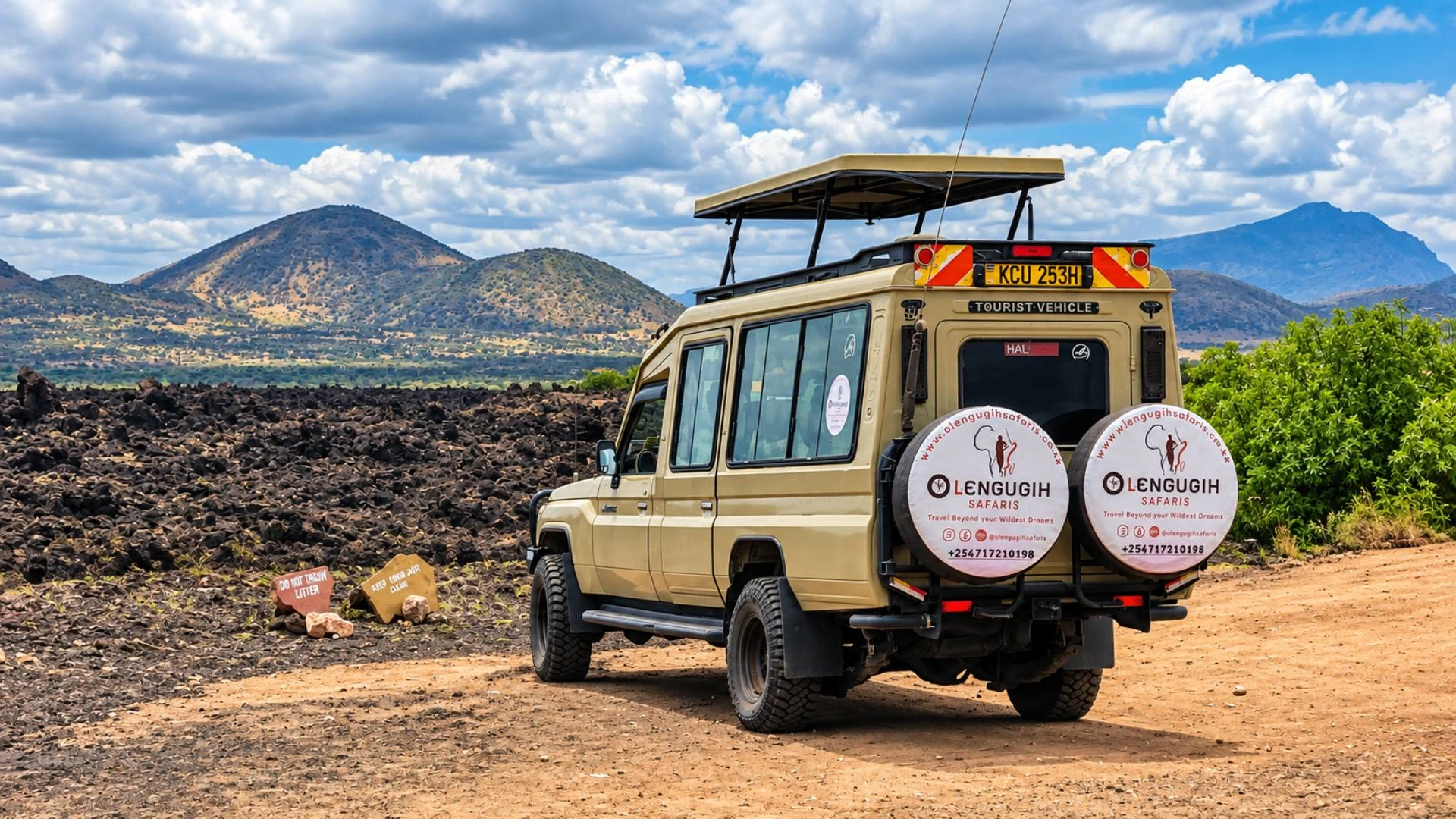
The pop-up roof: the best seat for wildlife and photography
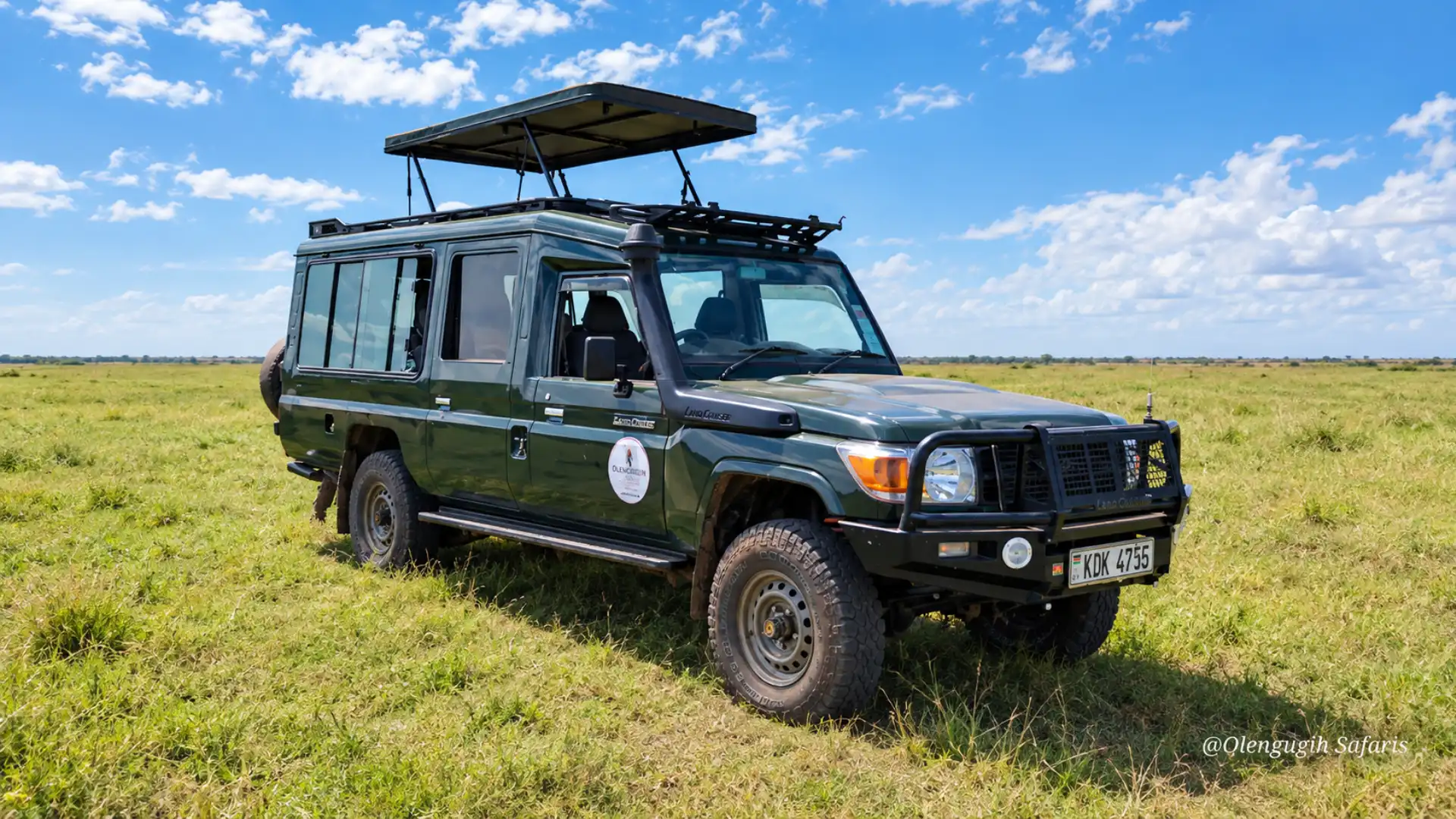
A pop-up roof is the most useful feature of a safari jeep. It lifts open so you can stand and look out.
- Panoramic views. You can look in every direction without leaving the vehicle.
- Cleaner photos. You shoot over the window frame, with no glass or metal in the way.
- Shade and shelter. Close the roof in rain or strong sun.
- Easy sharing. Everyone gets a good view, whatever their height.
- Quiet viewing. The vehicle stays still while you watch the animals.
Photography tips
- Rest your camera on a bean bag or folded jacket on the roof edge.
- Ask your driver to turn the engine off for steady shots.
- Keep a spare lens cloth for dust.
- Shoot from the shaded side in the middle of the day.
Always stay inside the vehicle in the park. Do not stand on seats or lean out. Your guide will explain the rules for each park.
Comfort, safety and reliability on a Kenya safari
Game drives can last four to eight hours. Comfort matters, and so does safety.
Comfort
- Suspension. Heavy-duty suspension softens the bumps on rough tracks.
- Seats. Raised, padded seats give a good view and support.
- Cool air. The roof hatch and windows let fresh air in.
- Extras. Many jeeps carry a car fridge, drinking water and charging points.
Safety
- Strong build. A solid frame and tough tyres handle the tracks.
- Expert guides. Drivers know the parks, the animals and the weather.
- Wildlife distance. Guides keep a safe space from big animals.
- Radio or phone contact. Many guides stay in touch with other vehicles and camps.
Reliability
Remote parks are far from garages. Operators carry spare tyres, tools, extra fuel and recovery gear. They service vehicles often. This keeps delays rare and your safari on schedule.
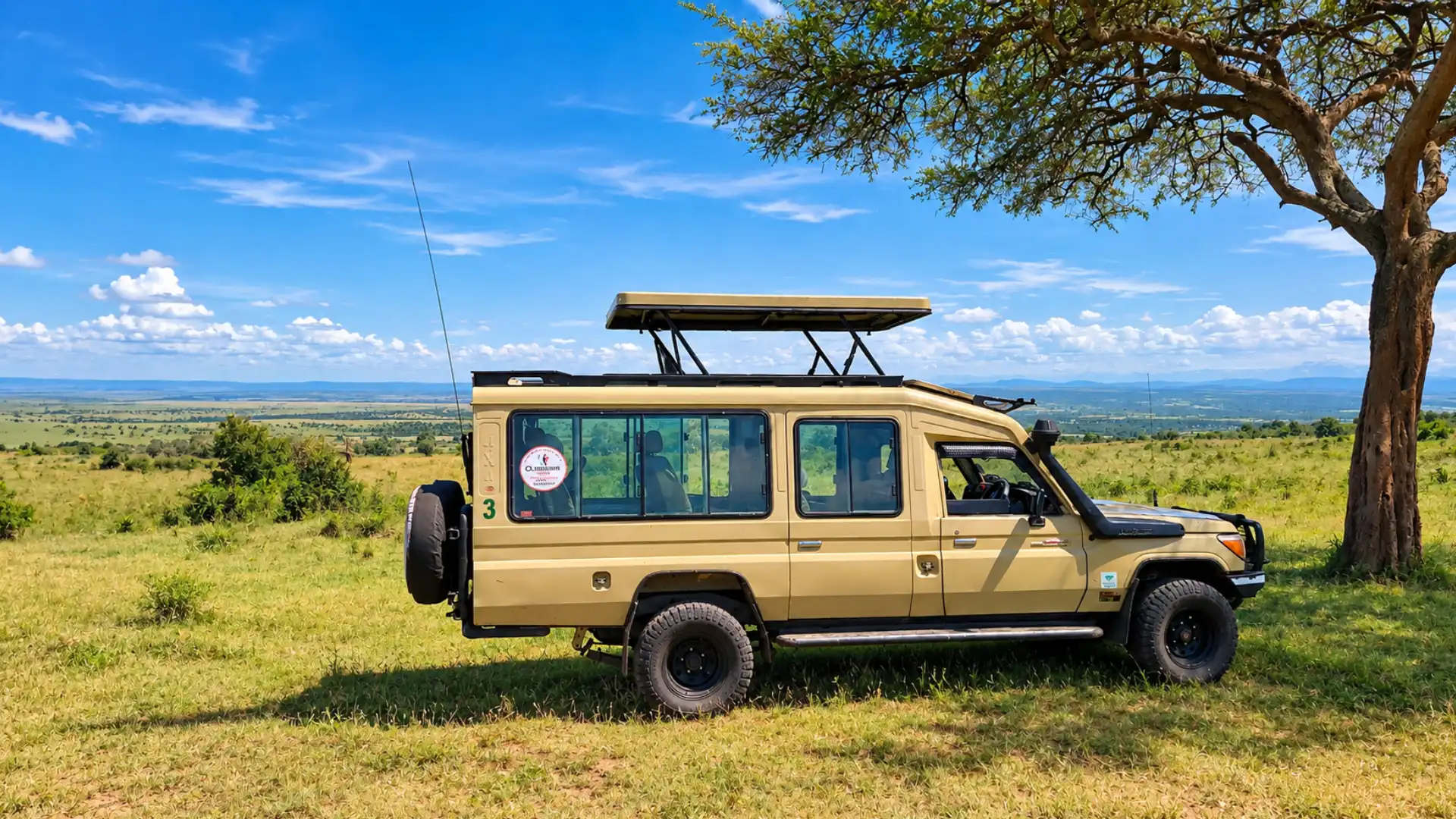
4x4 safari jeep vs safari van vs other vehicles
Some Kenya tours use a pop-up safari van instead of a jeep. Both can work well. The right choice depends on the roads and your plans.
Feature | 4x4 safari jeep | Safari van (2WD) |
|---|---|---|
Drive | Four-wheel drive | Two-wheel drive |
Rough roads and mud | Very good | Limited, and risky in wet weather |
Remote areas | Best choice | Less suited |
Ground clearance | High | Lower |
Roof hatch | Yes | Yes |
Seats | Usually six or seven | Often six to eight |
Cost | Usually higher | Usually lower |
Best for | Mara, Amboseli, Tsavo, Samburu, wet season | Dry season and easy park roads |
A 4x4 costs more to buy and run, so the tour price may be higher. It also gets you to more places and stays safer when the weather changes.
Ask your operator which vehicle is on your itinerary. Also ask whether it has four-wheel drive. Never assume that a pop-up roof means a 4x4.
What to expect inside our 4x4 safari jeep
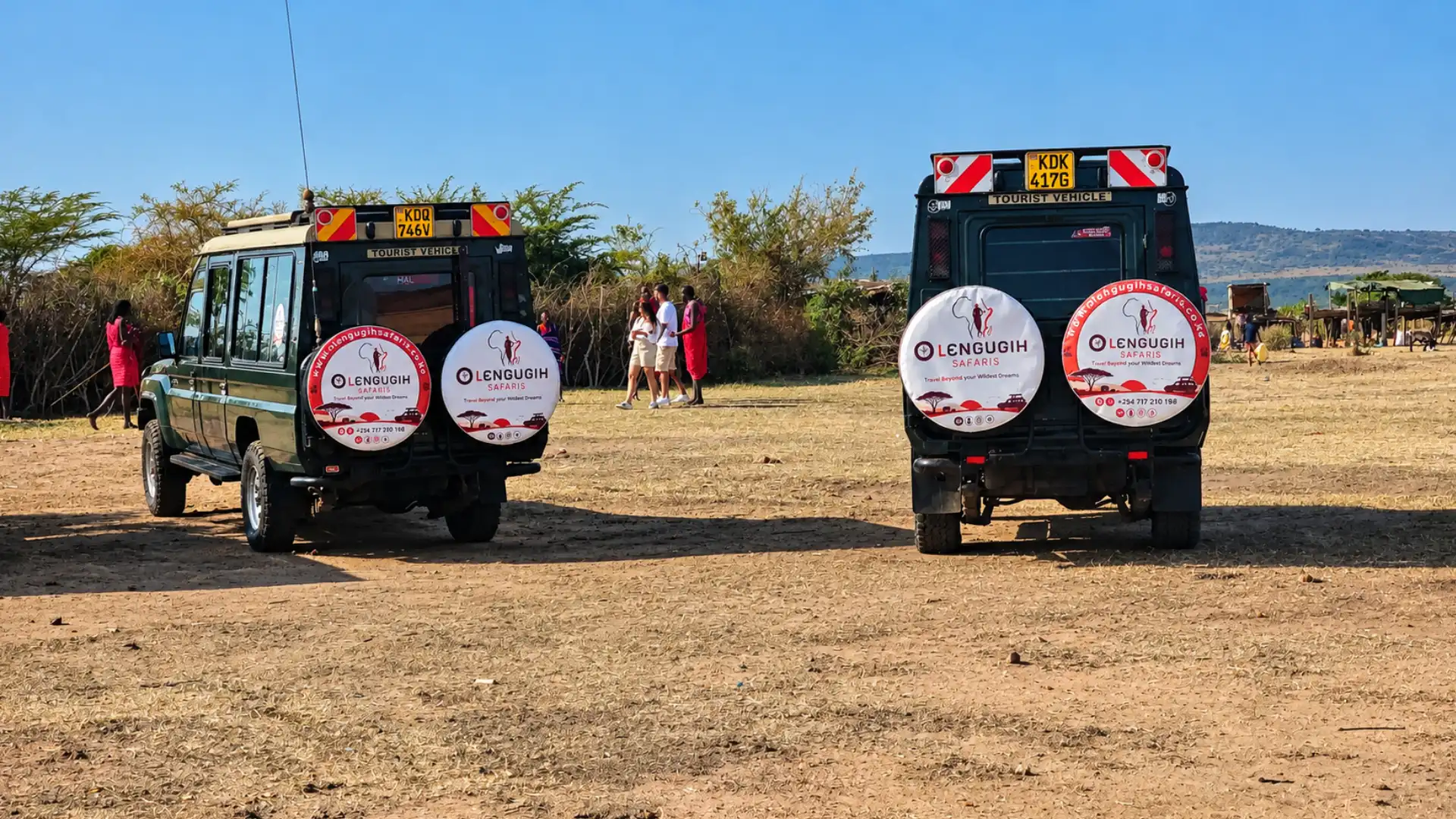
Olengugih Safaris uses 4x4 safari jeeps for its game drives and tours.
Feature | What you get |
|---|---|
Pop-up roof | A roof hatch for standing views and photography |
Window seats | A seat by a window for every guest |
Seat belts | Fitted for all passengers |
Drinking water | Bottled water on every drive |
Car refrigerator | A fridge for cold drinks, water and snacks |
Binoculars | Shared pairs on board |
Charging | A way to charge phones and cameras |
Guide | An experienced English-speaking driver-guide |
Recovery kit | Spare tyres, tools and basic recovery gear |
Features can differ by tour and vehicle. Please confirm your jeep when you book.
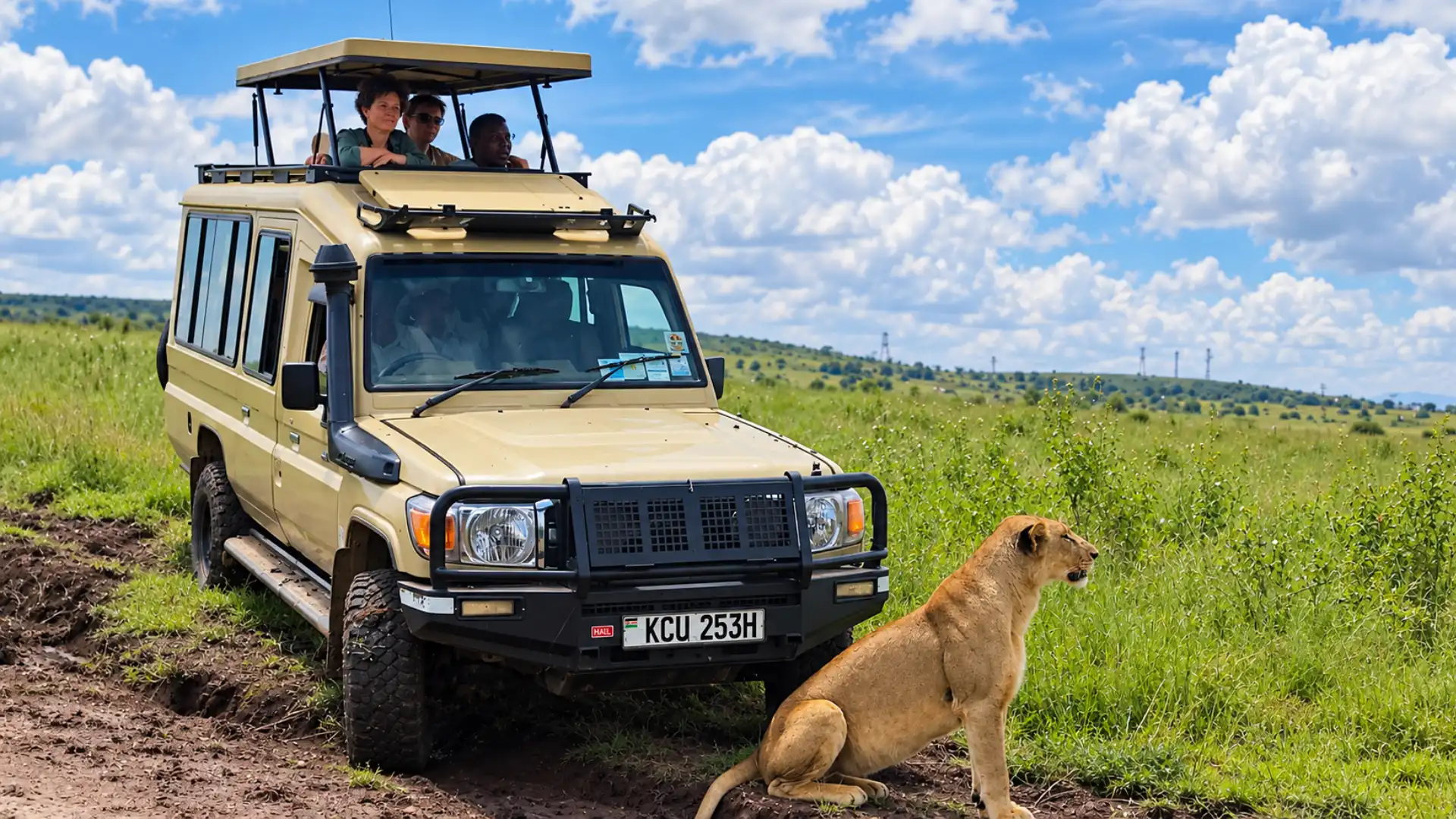
Private jeep or shared jeep?
You can book a whole vehicle or a seat in a shared one.
Option | Best for | Main benefit |
|---|---|---|
Private 4x4 jeep | Couples, families, photographers | Your own pace, stops and schedule |
Shared 4x4 jeep | Solo travellers, budget trips | Lower cost per person |
A private jeep lets you stay longer with a lion or leave early. You choose the stops. Photographers often prefer this.
A shared jeep splits the cost. You may meet other travellers and make new friends. Stops are agreed by the group.
Ask us about both options. We will suggest the best fit for your trip.
Questions to ask any operator about the vehicle
Use this checklist before you book any Kenya safari.
- Is the vehicle four-wheel drive?
- Does it have a pop-up roof?
- How many guests share one vehicle?
- Does every guest get a window seat?
- Is it private or shared?
- Does the driver-guide speak good English?
- Is there drinking water, and a way to charge devices?
- What happens if the vehicle breaks down?
- Is the vehicle licensed and insured for tourist use?
Frequently asked questions
Why is a 4x4 safari jeep best for Kenya?
Kenya's park roads are rough, muddy or dusty. A 4x4 handles all of them. It also gives a high view for wildlife.
Do I need a 4x4 for a safari in Kenya?
For most parks, yes. A 4x4 is safest in the Masai Mara, Amboseli, Tsavo and Samburu. It is essential in the rainy season.
What is a 4x4 safari jeep?
It is a four-wheel-drive vehicle fitted for game drives. It has a pop-up roof, raised seats and extra space for gear.
What is a pop-up roof?
It is a roof that lifts open. You can stand up and see in every direction. You can close it in rain or strong sun.
How many people fit in a safari jeep?
Most seat six or seven guests. Many operators give each guest a window seat. Confirm the number with your operator.
Is a 4x4 safari jeep comfortable?
Yes. Strong suspension, raised seats and fresh air help on long drives. Rough tracks can still be bumpy.
Is a safari jeep safe?
Yes, with an experienced driver-guide who follows park rules. Stay inside the vehicle and keep your voice low near animals.
Is a 4x4 better than a safari van?
A 4x4 is better on rough roads, mud and remote areas. A van can suit dry season trips on easy roads.
Can a 4x4 cross rivers?
It can cross shallow, safe drifts when the driver-guide chooses a good spot. Guides avoid deep or fast water.
Is a private 4x4 jeep worth it?
Yes, if you want your own pace and stops. Photographers and families often prefer this.
Can I stand up in the jeep?
Yes, through the roof hatch. Stay low and hold on when the vehicle moves. Follow your guide's advice.
What should I bring on a 4x4 safari?
Bring neutral clothes, a jacket, sunscreen, a hat and a camera. A scarf helps with dust.
Book a safari in a 4x4 jeep with Olengugih Safaris
Olengugih Safaris is a Kenya-based safari operator. We plan private and shared safaris in 4x4 jeeps across Kenya. Tell us your dates and group size, and we will suggest the best plan.
Contact Olengugih Safaris to plan your Kenya safari.