
Can I Do a Kenya Safari During the Rainy Season?
Yes, you can do a Kenya safari in the rainy season, and for many travellers it is a good idea. The best choice is the short rains in November and early December. Expect lower prices, green landscapes, fewer vehicles and strong birding. The trade-offs are muddy roads, thicker bush and some closed lodges. The long rains (April to May) are harder.
Kenya rainy season safari at a glance
- Short rains: November to early December
- Long rains: late March or April to May, sometimes into early June
- Rain pattern: often a heavy shower for under an hour, with sun before and after
- Main benefits: lower rates, fewer visitors, green scenery, dramatic skies, birding
- Main drawbacks: muddy roads, thicker vegetation, hazy views, some lodge closures
- Best rainy-season choice: the short rains, in November and early December
- Best suited for: budget-minded travellers, photographers, birders and repeat visitors
- Better to avoid if: it is your first and only safari, or you must see Mount Kilimanjaro from Amboseli
When is the rainy season in Kenya?
Kenya has two rainy seasons, the long rains and the short rains. The dates are a guide, not a promise. Weather can shift from year to year, and high ground can see rain at almost any time.
Season | Typical months | What to expect |
|---|---|---|
Short rains | November to early December | Short, heavy showers. Lighter than the long rains. |
Short dry season | Mid-December to March | Hot and mostly dry. |
Long rains | Late March or April to May, sometimes early June | The wettest period. Roads can be poor and some camps close. |
Long dry season | June to October | Cooler and dry. The busiest and priciest months. |
Most rain falls in short bursts. A shower often lasts 30 minutes to an hour, then the ground dries quickly. Many days stay bright between showers.
Benefits of a rainy season safari in Kenya
The rainy season is often called the green season. It suits travellers who value value, quiet and scenery.
- Lower prices: many lodges and camps cut their rates in the low season. The long rains offer the deepest savings.
- Fewer visitors: you share sightings with fewer vehicles. Game drives feel calmer.
- Green scenery: the plains turn bright green and wildflowers appear. The landscape looks fresh and soft.
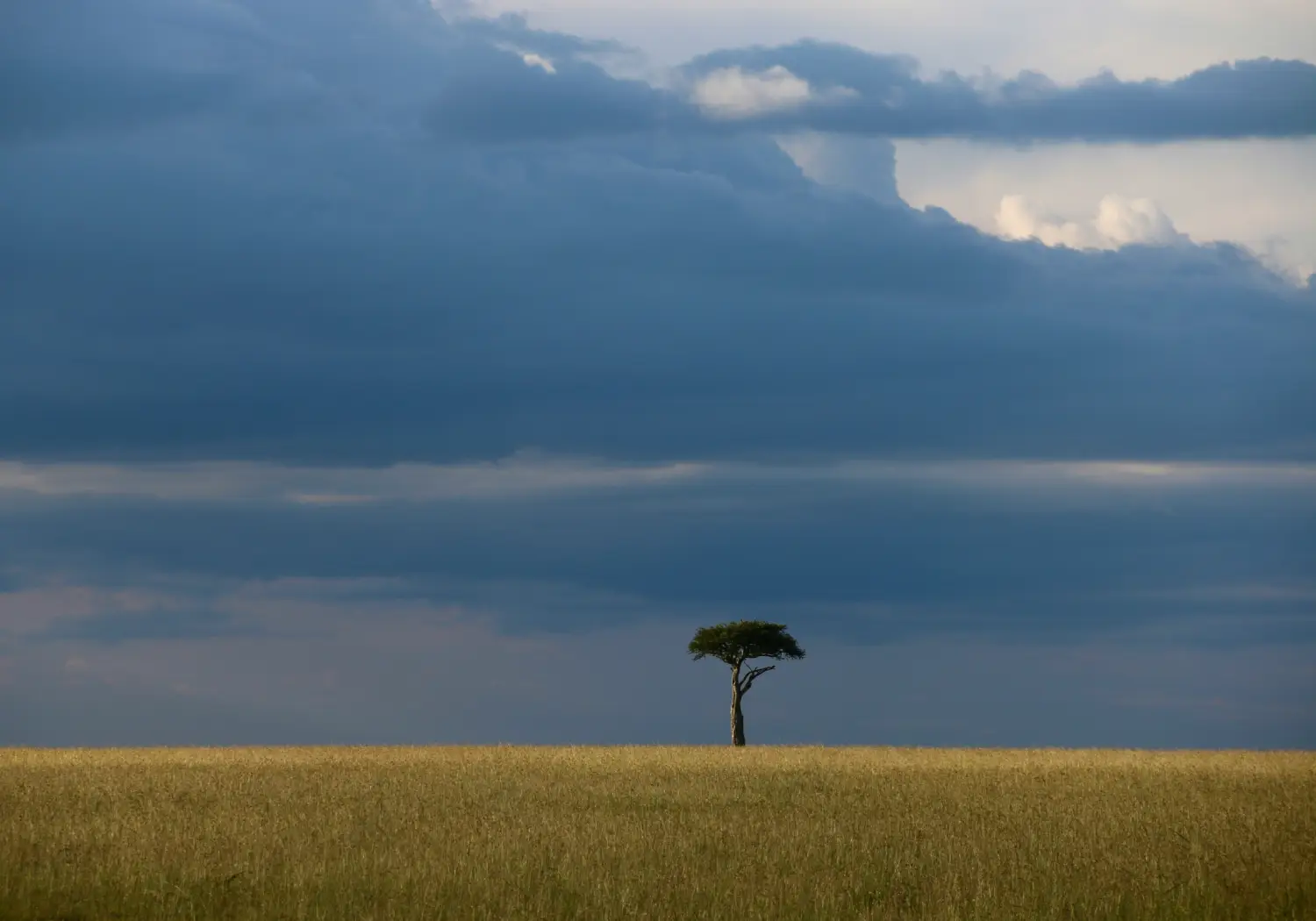
- Amazing photography light: photography lighting tends to be amazing in the rainy season. Towering clouds, dramatic skies and clear air after rain give photographers soft, rich light.
- Birding: many migrant birds are present, and breeding plumage is on show. Birding is strong from October to March.
- Young animals: many species give birth in the wetter months, so you may see calves and fawns.
- Cooler air: temperatures drop once the rains start, which makes walks and rides more comfortable.
If you ride or walk on safari, the cooler air is a real plus. It is also a good time to enjoy a conservancy with few other guests.
Drawbacks of a rainy season safari and how to handle them
The rainy season has real downsides. Most can be managed with good planning.
- Muddy roads: in the long rains, some park roads become hard to drive. Some parks restrict access. Choose a 4x4 vehicle and an experienced guide.
- Thicker vegetation: tall grass and full bushes hide animals. Sightings can take more patience. Pick areas with open plains.
- Hazy or cloudy views: cloud can hide Mount Kenya and Mount Kilimanjaro. Plan these views for the dry months.
- Lodge closures: a few camps close for the long rains. Check that your lodge is open before you book.
- Dispersed animals: water is everywhere, so animals do not gather at rivers and waterholes. You may drive further to find them.
- Wet weather: a shower can interrupt a drive. Bring a light waterproof layer and allow flexible plans.
- Cooler mornings: open vehicles feel cold at higher altitudes. Pack layers.
The long rains are the toughest period. If this is your first safari, we usually suggest the dry months or the short rains.
Rainy season safari by destination
Rain affects each region differently. Here is how the main areas compare.
Destination | In the rainy season | Our view |
|---|---|---|
Green plains, fewer vehicles and lower rates. Mud can slow game drives. | Good in the short rains. Tougher in the long rains. | |
Amboseli | Cloud and haze can hide Mount Kilimanjaro. | Better in the dry months. |
Tsavo East and West | Lush and quiet, but animals spread out in thick bush. | Possible, with an experienced guide. |
Laikipia and Borana | Fresh grass, cooler air and few visitors. Good for walking and riding. | A strong rainy season choice. |
Hot, dry country that greens up briefly. Wildlife is more spread out. | Reasonable in the short rains. | |
Kenya coast | The heaviest rain falls from April to June. Seas can be cloudy. | Avoid the long rains. October to March is better. |
High-altitude areas such as Laikipia and the Mara can be cold in the early morning. Pack warm layers for open game drives.
Rainy season and the Great Migration
The Great Migration is the main reason many people book the Masai Mara. Herds of wildebeest usually enter Kenya from the Serengeti between July and August. Some arrive as early as June. Most stay until October, and a few linger into November.
This means the short rains overlap only with the tail end of the migration. The long rains fall well before it, so they are a poor choice if the migration is your goal. The river crossings are best seen from August to October.
If you want the migration, book the dry season. If you want the Mara with fewer people and lower rates, the short rains can work well.
Who should go in the rainy season, and who should wait?
A rainy season safari suits you if you:
- Want lower rates and quiet game drives
- Love birds, photography and green landscapes
- Have been on safari before
- Prefer walking, riding or time on a private conservancy
- Can stay flexible with plans
Wait for the dry season if you:
- Are planning your first and only safari
- Want to see the Great Migration river crossings
- Must see Mount Kilimanjaro from Amboseli
- Dislike mud, cold mornings or changing plans
- Plan a beach holiday on the coast in April to June
What to pack for a rainy season safari
- A light waterproof jacket
- Warm layers for cool mornings and evenings
- Closed shoes or boots that can get muddy
- A hat, sun cream and sunglasses, as the sun is strong between showers
- Insect repellent
- A dry bag or plastic bags to protect your camera and phone
- Binoculars for birding
Tips for a rainy season safari
- Choose November or early December over April and May
- Confirm that your lodge and park roads are open
- Book a 4x4 vehicle and an experienced local guide
- Keep one or two spare days in your plans
- Ask about lower rates and special offers
Frequently asked questions
Is it OK to go on safari in Kenya during the rainy season? Yes. Many travellers enjoy the green season for lower prices, fewer vehicles and strong birding. The short rains are easier than the long rains.
When is the rainy season in Kenya? The long rains fall from late March or April to May, sometimes into early June. The short rains fall in November and early December.
Which rainy season is better for safari? The short rains. They are lighter, and roads and parks are easier to use than in the long rains.
Does it rain all day in Kenya during the rainy season? Usually not. Rain often comes as a heavy shower that lasts under an hour. Many days stay bright between showers.
Will I still see animals in the rainy season? Yes. You will still see wildlife. However, thick vegetation and spread-out animals can make sightings harder than in the dry season.
Is a Kenya safari cheaper in the rainy season? Often yes. Many lodges lower their rates in the low season. Rates vary, so ask for a quote for your dates.
Can I see the Great Migration in the rainy season? Not at its best. The herds are in Kenya from about July to October, so the migration does not match the rainy months.
Do lodges close in the rainy season? Some do, mainly during the long rains. Always confirm that your lodge is open.
What should I pack? Pack a light waterproof jacket, warm layers, closed shoes and a dry bag for your camera.
Is the rainy season good for horse riding safaris? It can be. The cooler air and green landscape suit riding. Muddy ground can limit some rides, so ask your operator about conditions.
Plan your rainy season safari with Olengugih Safaris
Tell us your dates, budget and interests. We will tell you honestly whether the rainy season suits your trip. We will suggest the best parks and lodges for your dates, and send you a free quote.