
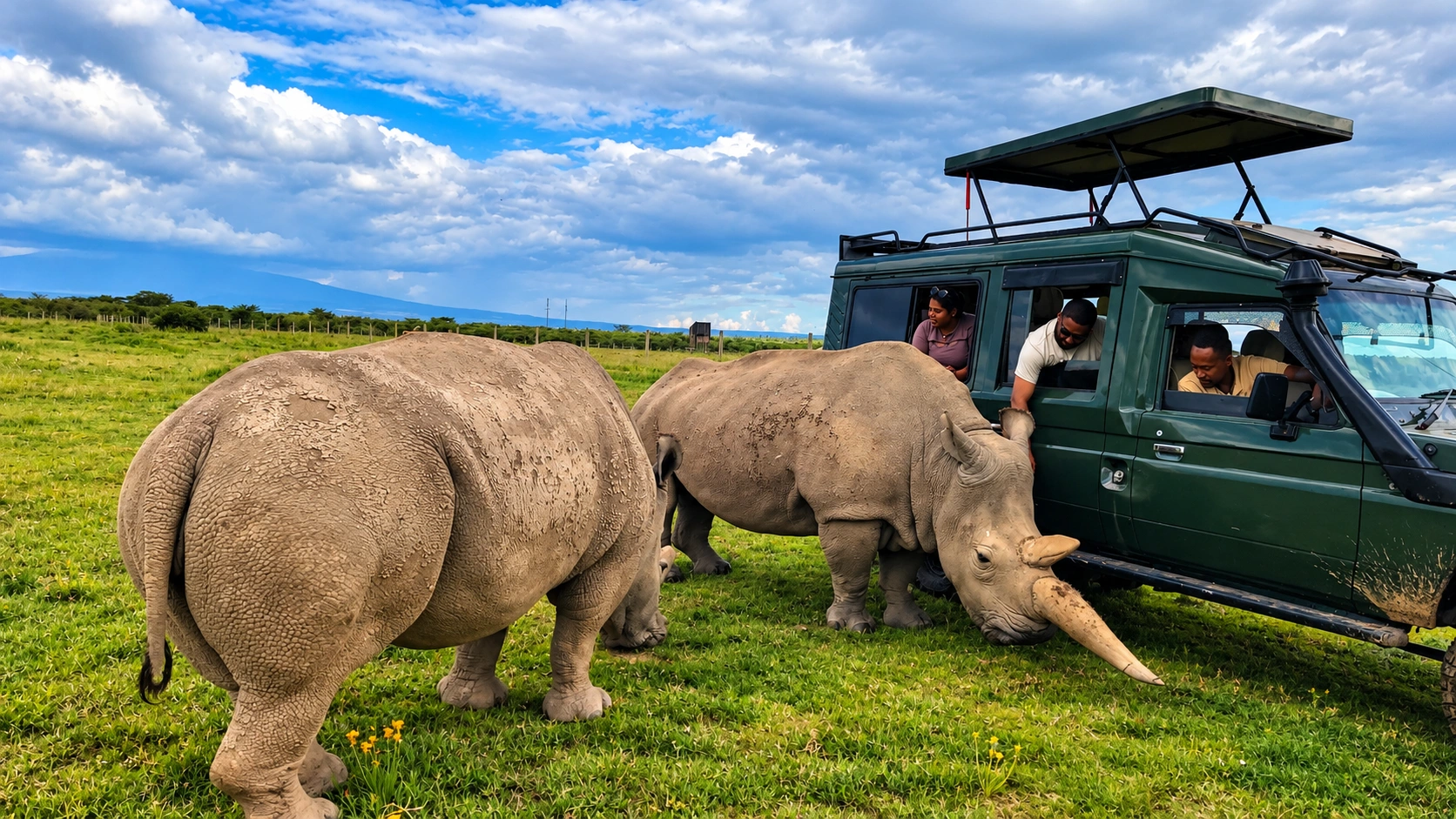
Saving the Northern White Rhino: A Race Against Time
Scientists are saving the northern white rhino with IVF. Only two females remain, Najin and Fatu, at Ol Pejeta Conservancy in Kenya. Eggs from Fatu are fertilised with stored sperm, and embryos are frozen. Southern white rhinos then act as surrogate mothers. No northern white calf has been born yet, but the science is advancing.
Last updated: October 2026.
Saving the northern white rhino: key facts
- Rhinos left: Two females, Najin and Fatu
- Where they live: Ol Pejeta Conservancy, Laikipia, Kenya
- Why they cannot breed naturally: No male is left, and neither female can carry a pregnancy
- Last male: Sudan, who died on 19 March 2018
- Main method: IVF, with southern white rhinos as surrogates
- Embryos stored: 39 pure northern white embryos, as of April 2026
- Lead team: The BioRescue consortium
- Status: No northern white calf has been born yet
The last two survivors
The future of the northern white rhino hangs by a thread. Only two remain, Najin and Fatu. Both are female. With no males left, natural breeding is impossible.
In 2009, four northern white rhinos moved from a Czech zoo to Ol Pejeta Conservancy in Kenya. Two were males and two were females. Conservationists hoped the natural habitat would encourage breeding. It did not work.
Suni died of natural causes in 2014. Sudan, the last male, died in 2018 from age-related complications. His death left Najin and Fatu as the last of their kind.
Neither female can carry a pregnancy. Fatu has a uterine problem that stops an embryo attaching. Her mother, Najin, has weak hind legs that make pregnancy too risky.
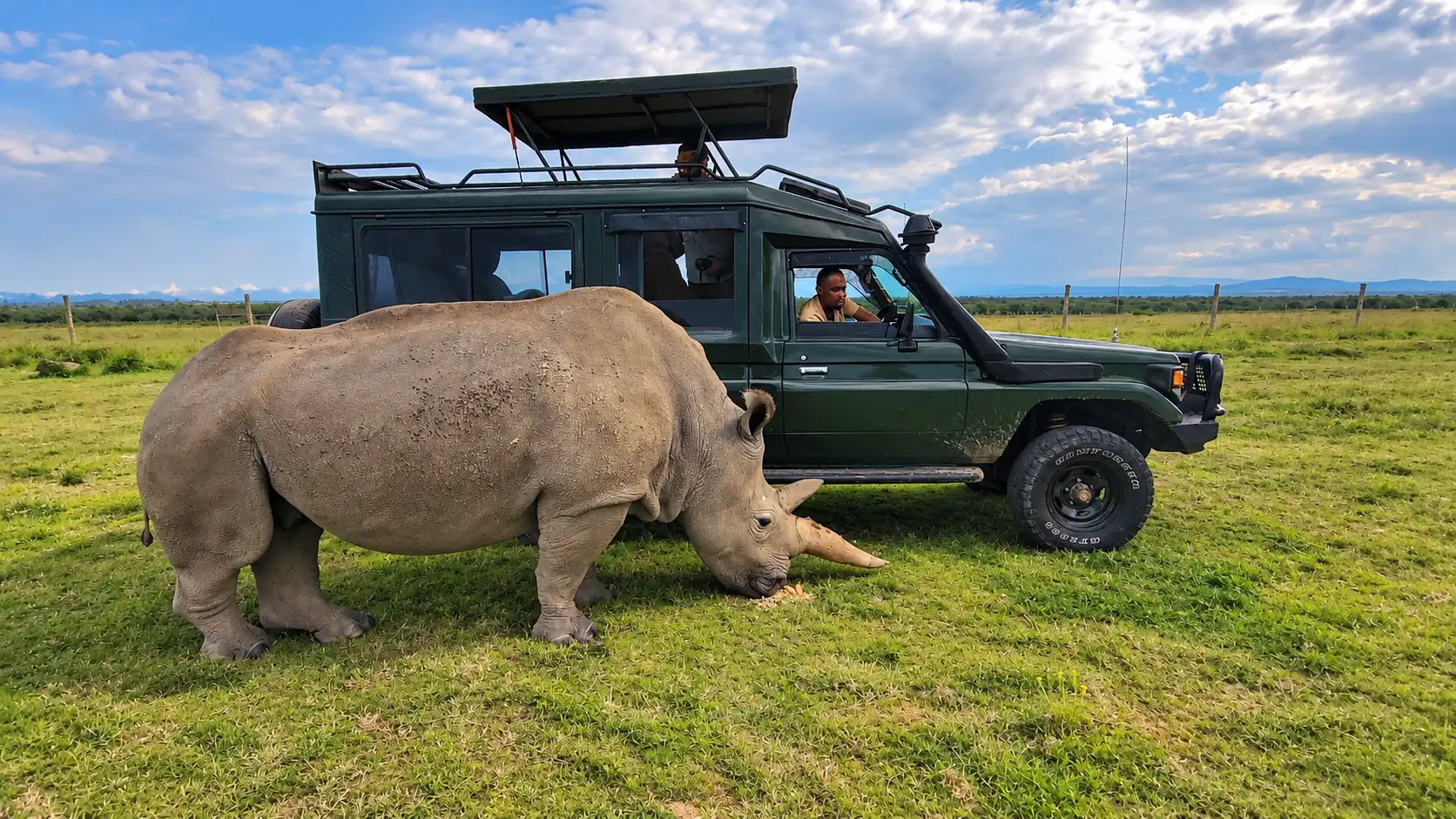
Collecting eggs and sperm
Scientists have kept sperm from northern white males, including Sudan and Suni. Early attempts at artificial insemination failed. IVF became the next step, which needs eggs from the two females.
Collecting rhino eggs is extremely difficult. The ovaries sit deep inside the body, about 1.5 metres from the exit. Dr Thomas Hildebrandt designed a special tool for the task. It is a long tube with a delicate needle, passed through the rectum. A vet guides it with ultrasound.
In 2019, the team collected eggs from Najin and Fatu for the first time. The procedure has since been repeated several times, mostly with Fatu. Najin's weak legs make the procedure unsafe for her.
Creating viable embryos
Once collected, the eggs go to a laboratory in Italy. Dr Cesare Galli leads the work there. He had already made embryos from southern white rhinos. He used similar methods for the northern white eggs.
Each egg is fertilised with stored sperm. The team uses a fine needle to place a single sperm into the egg. The embryos are then frozen. The first northern white rhino embryos appeared in 2019.
The embryo count has grown steadily. There were 30 frozen embryos in January 2024. By April 2026, the team had 39 pure northern white embryos. They are stored in Germany and Italy.
Finding surrogates and implanting embryos
Because Najin and Fatu cannot carry a calf, scientists turned to southern white rhinos. They are the closest living relatives. Southern white females at Ol Pejeta act as surrogate mothers.
Implanting an embryo is hard. Scientists lacked key knowledge about rhino reproduction. Rhinos have no regular menstrual cycle. Like cats, they release eggs when they mate. So the timing of implantation is critical.
To solve this, the team brought a sterilised southern white bull, Owuan, to the surrogates. He cannot father calves. His mating behaviour shows when a female is ready. The BioRescue team confirmed his sterilisation in December 2020. Scientists then know the best moment for the transfer.
Where the work stands now
Progress has been real but slow.
- 2023 breakthrough: In September 2023, scientists transferred a southern white rhino embryo into a surrogate named Curra. She became pregnant with a male fetus. It was the first IVF rhino pregnancy. Curra died in November 2023 from an infection, before she could carry the calf to term.
- Northern white transfers: In late 2025, the team made three northern white embryo transfers into surrogates. None led to a long-term pregnancy.
- More embryos: In early 2026, scientists collected eggs from Fatu again. By April 2026, the programme held 39 pure northern white embryos.
- More surrogates: Two more proven southern white females joined as potential surrogates. Six transfers had been completed in total by April 2026.
- New science: Researchers are also exploring ways to create eggs and sperm from preserved skin cells. This could add genetic diversity to the future herd.
No northern white calf has been born yet. Each setback teaches the team something new.
Timeline: the race to save the northern white rhino
Year | Milestone |
|---|---|
2009 | Four northern white rhinos move to Ol Pejeta, Kenya |
2014 | Suni dies of natural causes |
2018 | Sudan, the last male, dies |
2019 | First eggs collected, and first northern white embryos made |
December 2020 | Owuan, the teaser bull, confirmed sterilised |
September 2023 | First rhino IVF embryo transferred into a surrogate, Curra |
January 2024 | The pregnancy is announced, and 30 northern white embryos are stored |
Second half of 2025 | Three northern white embryo transfers, none leading to a long-term pregnancy |
Early 2026 | More eggs collected from Fatu |
April 2026 | 39 embryos stored, six transfers in total, and two more surrogates added |
Why it matters and how you can help
Saving the northern white rhino is more than one subspecies. The methods being tested could help other endangered animals. Rhino poaching remains a threat to all rhino species.
The challenges are big. Embryo transfers still have a low success rate. The future herd would descend from very few animals. Careful protection and funding are essential.
You can help in simple ways:
- Share the story of Najin and Fatu.
- Support conservation groups that protect rhinos.
- Never buy products made from rhino horn.
- Visit Ol Pejeta Conservancy, where park fees support rangers and rhino care.
The fight is far from over. But the science gives real hope. Saving the northern white rhino is a mission the world can still accomplish.
Frequently asked questions
How many northern white rhinos are left?
Two. Najin and Fatu are both female. They live at Ol Pejeta Conservancy in Kenya.
Can the northern white rhino be saved?
Scientists believe so. They use IVF, stored sperm and southern white rhino surrogates. The work is still uncertain.
How are scientists saving the northern white rhino?
They collect eggs from Fatu and fertilise them with stored sperm. Embryos are frozen, then transferred into surrogates.
Why can Najin and Fatu not have calves?
Fatu has a uterine problem. Najin has weak hind legs. Neither can safely carry a pregnancy.
Why are southern white rhinos used as surrogates?
They are the closest living relatives. They are also healthy and plentiful.
How many northern white rhino embryos exist?
As of April 2026, there were 39 pure northern white rhino embryos.
Has a northern white rhino calf been born through IVF?
Not yet. In 2023, a southern white embryo reached a fetus stage, but the surrogate died of infection.
What is BioRescue?
BioRescue is an international team of scientists. It leads the IVF work to save the northern white rhino.
When did the last male northern white rhino die?
Sudan died on 19 March 2018 at Ol Pejeta Conservancy.
Why did northern white rhinos disappear?
Poaching for rhino horn drove the collapse. War and weak protection made it worse.
Can you see the northern white rhinos?
Yes, with pre-arranged visits to Ol Pejeta Conservancy. Their keepers guide you into the enclosure.
How can I help save the northern white rhino?
Support conservation groups, visit responsibly and share their story. Never buy rhino horn products.
Visit Ol Pejeta with Olengugih Safaris
Olengugih Safaris is a Kenya-based operator. We can help you plan a safari to Ol Pejeta Conservancy, the home of Najin and Fatu. Contact us with your dates and we will plan your trip.
Sources
- Leibniz Institute for Zoo and Wildlife Research, BioRescue news release, 22 April 2026
- Fox News, First-ever successful IVF pregnancy in rhinos, 25 January 2024 (Curra, 30 embryos)