The Nairobi City Safari: Nairobi National Park
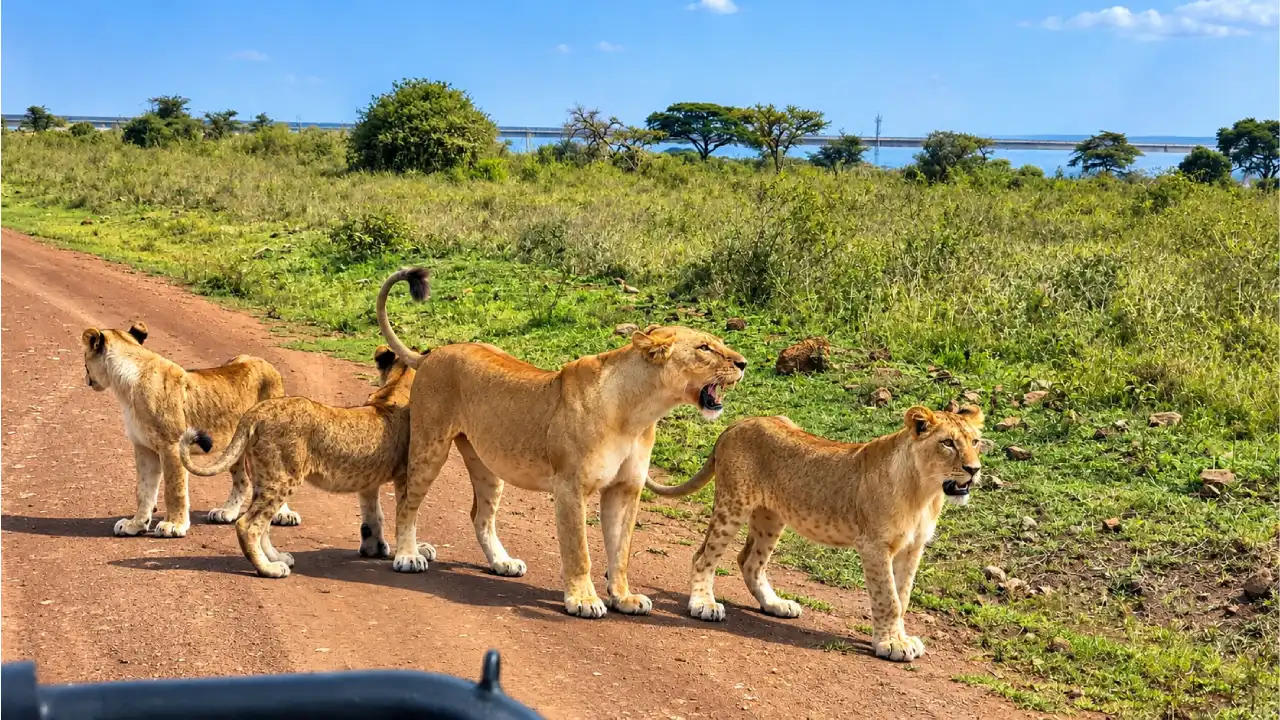
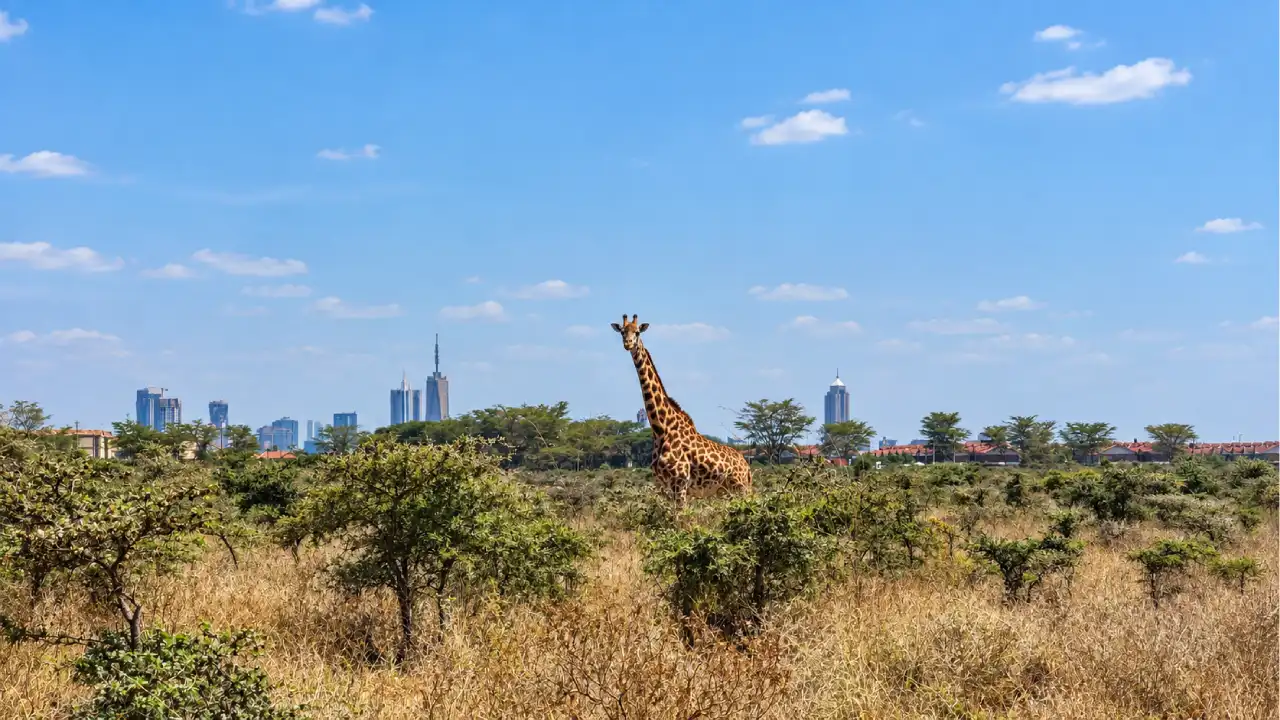
The Nairobi City Safari is a game drive in Nairobi National Park, 7 km from the city centre. It is the only national park next to a capital city. You can see lions, rhinos, giraffes and 400 bird species with the skyline behind them. Most visitors go as a half-day trip.
Last updated: October 2026
Nairobi National Park at a glance
- Established: 16 December 1946, Kenya's first national park
- Location: 7 km south of Nairobi city centre, off Lang'ata Road
- Size: About 117 square km
- Managed by: Kenya Wildlife Service (KWS)
- Opening hours: 6:00 am to 7:00 pm daily
- Big Five: Four of the five, with no elephants
- Birds: More than 400 species recorded
- Famous for: Black rhinos, lions and city skyline views
- Entry fee (non-resident adult): USD 80 from October 2025
- Trip length: Three hours to a full morning or afternoon
What is the Nairobi City Safari?
Jambo! The Nairobi City Safari is a wildlife drive inside Nairobi National Park. Wide grass plains and scattered acacia bush stretch out below the city's tall buildings. Few places in the world offer this view.
The park lies 7 km south of the city. It is fenced on three sides. The southern boundary is open, so wildlife can move between the park and the Kitengela Plains. KWS protects the whole area.
What you will see on the city safari
The park is small, yet wildlife is plentiful. A typical drive includes:
- Predators: Lions, leopards, cheetahs and hyenas
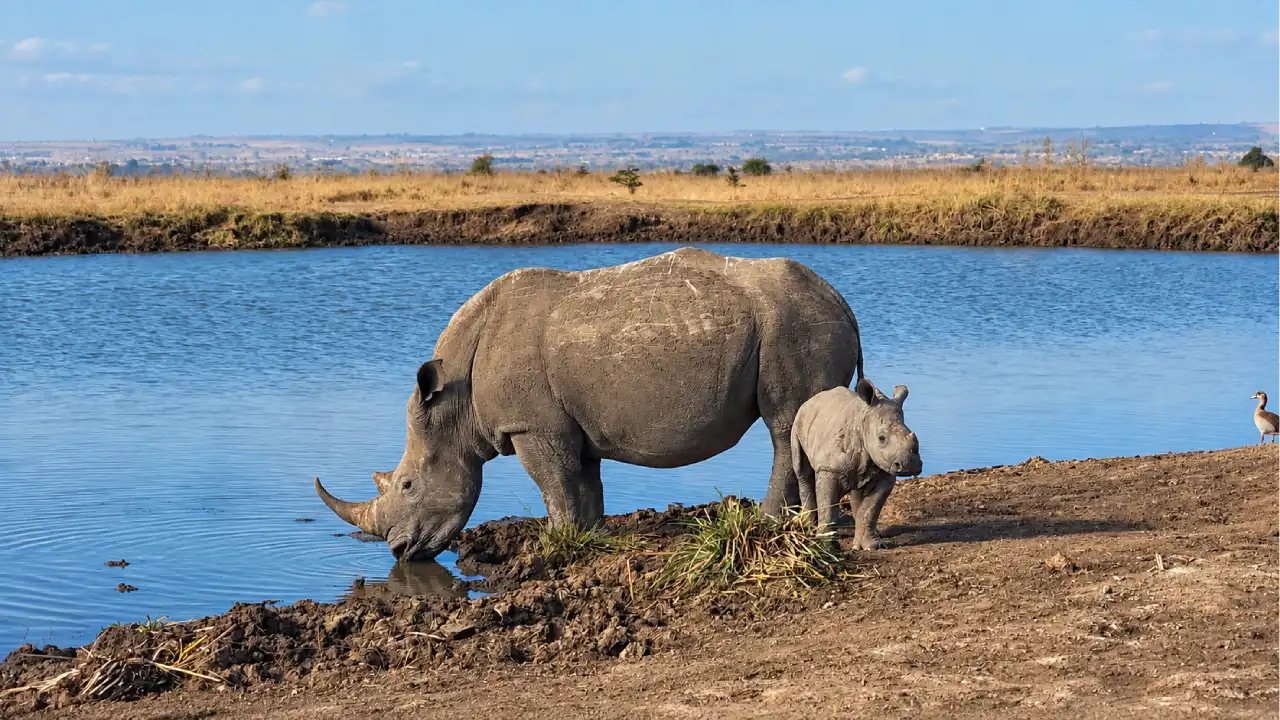
- Rhinos: Endangered black rhinos, plus some white rhinos
- Large animals: Giraffes, buffaloes and zebras
- Plains game: Elands, hartebeests, impalas, wildebeests, and Thomson's and Grant's gazelles
- Birds: Crowned cranes, ostriches, vultures, ground hornbills and guinea fowl
Elephants are absent from the park. You can still meet orphaned elephants at the nearby David Sheldrick Wildlife Trust nursery.
Kifaru Ark: a rhino sanctuary
Nairobi National Park is nicknamed "Kifaru Ark". Kifaru means rhino in Swahili. The park protects more than 50 endangered black rhinos. This makes it one of Africa's most successful rhino conservation areas.
Other things to do
The park also offers picnic sites, campsites and hiking trails. Some sites host bush dinners, team building, weddings and film shoots. Ask KWS for approval and current rules before you plan an event.
How to get to Nairobi National Park
Nairobi National Park lies 7 km south of the city centre, along Lang'ata Road. It opens from 6:00 am to 7:00 pm for citizens, residents and non-residents.
By road
- Taxi or ride-hailing: Use Uber, Bolt or a taxi from the city centre
- Matatu or bus: Cheapest option, but you must arrange a game drive vehicle separately
- Boda boda: Fine for reaching the gate, not for the game drive
- Self-drive: A 4x4 is best, especially after rain
- Safari vehicle with driver-guide: Easiest option for first-time visitors
By air
International visitors arrive at Jomo Kenyatta International Airport (JKIA). Wilson Airport handles domestic and charter flights. The park is a short drive from both.
Park gates
The park has seven gates, and two are for KWS staff only. The main gate is on Lang'ata Road, beside KWS headquarters. Other gates include Maasai Gate, Mbagathi Gate and Banda Gate. Mbagathi and Banda are service gates.
Nairobi National Park entry fees
KWS raised its conservation fees on 1 October 2025. These are the current rates per person per day.
- East African citizen: Adult KES 1,000, child KES 500
- Kenya resident: Adult KES 1,350, child KES 675
- African citizen (non-resident): Adult USD 40, child USD 20
- Non-resident: Adult USD 80, child USD 40
Children under five enter free. KWS counts a child as aged five to under 18. Students must be 23 or younger and visit under a documented school arrangement.
Vehicle fees
Private vehicles also pay a daily fee at the gate:
- Fewer than 6 seats: KES 600
- 6 to 12 seats: KES 1,500
- 13 to 24 seats: KES 3,000
- 25 to 44 seats: KES 4,500
- 45 seats or more: KES 5,000
How to pay
Entry fees are paid online through the eCitizen platform. You can use M-Pesa or a Visa card. KWS has stated that cash is not accepted at the gate. Rules change, so confirm the payment method before you travel.
How much does a Nairobi National Park safari cost?
The cost depends on how you travel. Your total includes transport, entry fees, meals, drinks and personal items.
Safari options
- Join a KWS shuttle: The cheapest way to see the park, when a tour is running
- Private game drive: Hire a safari van or a 4x4 with a driver-guide
- Self-drive: Pay entry fees and the vehicle fee, then follow park roads
- Guided half-day tour: Hotel pickup, game drive and a nearby stop
Operators often charge about USD 150 for a van. A six-seat Land Cruiser is about USD 200. These rates often cover around five hours. Prices vary by operator and season.
What to carry
Bring binoculars, a camera, a hat, sunglasses and sunscreen. Pack a picnic and water for the day. Wear neutral colours and closed shoes.
Attractions near the Nairobi City Safari
Add one of these short stops to your game drive.
Nairobi Safari Walk
The Safari Walk is an elevated wooden boardwalk. It gives close views of animals and previews Kenya's other parks. Guides share facts about the wildlife as you walk.
Nairobi Animal Orphanage
The orphanage cares for endangered, fragile and sick wild animals. Carers and vets feed and treat them. Animals are kept in secure enclosures, so you can watch their behaviour up close. An adoption programme helps support their care.
David Sheldrick Wildlife Trust elephant nursery
The nursery rescues orphaned baby elephants. Visitors watch keepers feed, water and bathe the calves. Calves are raised on milk until they are two to three years old. They then move to Tsavo East National Park to return to the wild.
Ivory Burning Site Monument
This historic site lies inside the park. It marks Kenya's stand against the ivory trade. A short trek leads to the monument.
Hippo Pool
At the Hippo Pool, you can take a short guided walk. Look for hippos, crocodiles and birds along the water.
Giraffe Centre
The Giraffe Centre is close to the park. Many tours add it after a morning or afternoon game drive.
Food and souvenirs
- Kifaru shop: Buy gifts and see park maps beside the main gate
- The Club House: An affordable place for African dishes, about 1 km from the main gate
- Sebastian Café: Another casual stop for meals and drinks near the entrance
Nairobi City Safari itinerary
Most tours follow one of two schedules. Pick the one that fits your day.
Morning game drive
The morning drive starts early with hotel pickup around 6:00 am. Dawn is a lively time for wildlife. Your guide searches the plains for big cats, rhinos and large herbivores as the sun rises.
The drive lasts five to six hours. It includes stops at the Ivory Burning Site Monument and the Hippo Pool. You leave the park between 12:00 and 1:00 pm. Many guests then visit the David Sheldrick elephant nursery or the Giraffe Centre. You return to your hotel by about 1:00 pm.
Afternoon game drive
The afternoon drive begins with hotel pickup around 1:00 pm. Your guide crosses grassland and acacia woodland in search of lions and cheetahs. You stop at the Ivory Burning Site Monument and the Hippo Pool.
You leave the park around 6:00 pm, with sunset photos on the way. You can visit the Giraffe Centre if time allows. You return to your hotel by about 6:30 pm.
Which should you choose?
- Morning drive: Cooler weather and active wildlife
- Afternoon drive: Golden light and sunset photos
- Both: Choose one drive, then add a nearby stop
Planning your Nairobi City Safari
Seasons in brief
You can visit all year. The dry months make animals easier to spot because they gather at water points. In the rainy season, tall grass can hide wildlife. Long rains can make murram roads muddy.
Pros and cons
Pros
- Good wildlife viewing with most classic safari animals
- Easy half-day or full-day trip from Nairobi
- Photos of animals against the city skyline
- High density of black rhinos
- Nearby animal orphanage and elephant nursery
Cons
- The city backdrop reduces the wilderness feel
- No elephants in the park
- Only one lodge inside the park
Park rules
- Do not litter
- Do not feed or harass the animals
- Do not leave your vehicle
- Never drive off the designated roads
- Stay inside the vehicle when animals are close
Where to stay
Nairobi has many hotels and guesthouses. Pick a base near Lang'ata Road for faster access to the main gate. Ask your tour operator for current options.
Nairobi City Safari: frequently asked questions
What is the Nairobi City Safari?
It is a game drive in Nairobi National Park, 7 km from the city centre. You see wildlife with the Nairobi skyline behind you.
How far is Nairobi National Park from the city centre?
The park is about 7 km south of the centre. The drive to the main gate usually takes 20 to 40 minutes, depending on traffic.
What are the opening hours?
The park opens from 6:00 am to 7:00 pm daily. Plan to leave the park before closing time.
How much is the entry fee?
Since October 2025, a non-resident adult pays USD 80. An East African citizen adult pays KES 1,000. Child rates are half. Vehicle fees are extra.
How do I pay for park entry?
KWS uses the eCitizen platform for online payment. M-Pesa and Visa cards are accepted. Confirm the current rules before you travel.
How long does the Nairobi City Safari take?
A game drive takes three to six hours. Most tours are half-day trips with hotel pickup and drop-off.
How much does a Nairobi City Safari cost?
Costs vary by transport, group size and extras. Operators often charge about USD 150 for a van. Entry fees are paid separately unless included.
Can I do a self-drive safari in Nairobi National Park?
Yes. Use a 4x4 and stay on designated roads. You pay entry fees plus a vehicle fee at the gate.
Can I see rhinos in Nairobi National Park?
Yes. The park protects more than 50 endangered black rhinos. Sightings are common but never guaranteed.
Can I visit the elephant nursery on the same day?
Yes. Many morning tours add the David Sheldrick elephant nursery. Book ahead, since visiting slots are limited.
Is the Nairobi City Safari worth it?
Yes, especially for short layovers. It is quick, easy and close to hotels. Nowhere else offers this wildlife close to a capital.
Is Nairobi National Park safe for visitors?
Yes, when you follow park rules. Stay in your vehicle near animals. Use a licensed guide or reputable operator.
Book your Nairobi City Safari with Olengugih Safaris
Ready to see Nairobi National Park? Olengugih Safaris runs half-day and full-day city safaris with hotel pickup. Our guides know the park roads and the best spots for rhinos and lions. Tell us your dates, and we will plan your day.
About the writer
Written by Kelvin Ngugi, safari specialist and guide at Olengugih Safaris. Kelvin has received numerous reviews for this tour on GetYourGuide. He guides the Nairobi City Safari and knows the park well.
Sources
- Kenya Wildlife Service, Conservation Fees (effective October 2025)
- Kenya Wildlife Service, Nairobi National Park
- David Sheldrick Wildlife Trust, Nairobi elephant nursery