About the Thomson's Gazelle
Thomson's gazelle (Eudorcas thomsonii), known to guides as the "tommy", is a small, graceful gazelle with a sandy coat, a bold black stripe along each side and a black tail that flicks almost constantly. It is the most common gazelle of the Serengeti–Mara plains and a favourite prey of the cheetah. In Swahili it is called swala tomi. Kenya's 2021 national wildlife census counted 18,277 Thomson's gazelles.
Quick answer: Thomson's gazelle is a small grazing gazelle of the open, short-grass plains of Kenya and Tanzania. In Kenya, look for it in the Masai Mara, Amboseli and Nairobi National Park, usually in herds and often alongside Grant's gazelle. Sightings are never guaranteed.
What Does a Thomson's Gazelle Look Like?
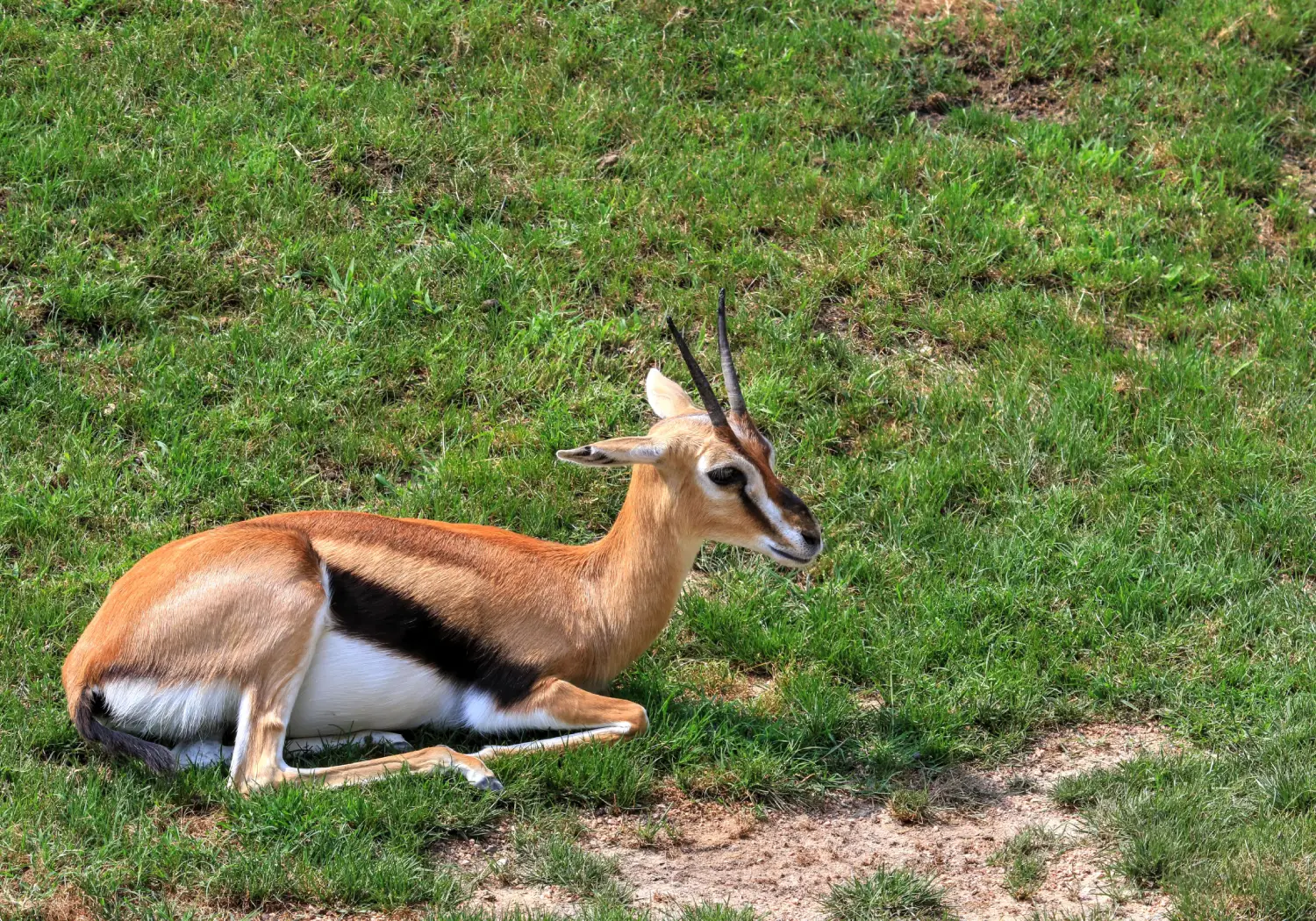
Thomson's gazelle is small and neat, with a sandy-fawn back, a white belly and a broad black stripe running along each flank between the two. White rings circle the eyes, and a dark stripe runs from each eye down to the muzzle. The white rump patch stops below the base of the short black tail, which the gazelle flicks almost all the time.
Both sexes carry horns. A male's horns are long, heavily ringed and curve back with slightly forward-pointing tips. A female's horns are short, thin and smooth, and are sometimes broken or missing.
Thomson's Gazelle vs Grant's Gazelle: How to Tell Them Apart
The two gazelles often graze side by side, so this is one of the first things guides teach.
- Size: Thomson's gazelle is much smaller; Grant's gazelle is taller and heavier.
- Side stripe: Thomson's has a bold black stripe along each side. Grant's usually has none, or only a faint one.
- Rump: on a Thomson's, the white rump patch stops below the tail. On a Grant's, the white extends above the tail.
- Tail: Thomson's gazelles flick their black tails almost nonstop.
- Horns: Grant's males carry much longer, heavier, lyre-shaped horns.
Read our full Grant's gazelle profile for more.
Where Do Thomson's Gazelles Live?
Thomson's gazelles live on open, short-grass plains and savanna, where they can see predators coming. They avoid long grass and thick bush. Their range is small for such a well-known animal: mainly southern Kenya and northern Tanzania. The largest population moves with the seasons through the Serengeti–Mara ecosystem.
Browse our wildlife guide and Kenya destinations to see where these plains are found.
What Do Thomson's Gazelles Eat?
Thomson's gazelles are grazers. They have a narrower snout than other gazelles, which lets them pick out the freshest, most nutritious grass shoots. They often follow larger grazers such as zebra and wildebeest, which crop the tall grass and expose the young shoots underneath. In the dry season they add leaves, herbs and seeds. They get much of their water from their food and can go long periods without drinking.
Thomson's Gazelle Behaviour
Thomson's gazelles live in herds that range from a few animals to several hundred, gathering in much bigger numbers in the rains. Females and young form nursery herds, young males form bachelor groups, and mature males hold small territories that they mark with dung, urine and scent from glands near the eyes.
Speed and Stotting
Thomson's gazelles can run at around 65 km/h and turn sharply in a zigzag, which helps them outlast a cheetah's short sprint. When they spot a predator, they often stott: bouncing high on stiff legs to show the hunter they are fit and hard to catch.
Many Predators
Cheetahs are their main predator. Lions, leopards, wild dogs, hyenas, jackals, eagles and baboons also take them, especially young fawns.
Breeding
Females usually give birth to a single fawn after a pregnancy of about five and a half to six months. The fawn lies hidden and still in the grass for its first weeks while the mother grazes nearby. Females can give birth twice a year when conditions are good.
Is Thomson's Gazelle Endangered?
Not endangered, but declining. Thomson's gazelle has been listed as Near Threatened on the IUCN Red List, and its numbers have fallen sharply over recent decades. The largest population, in the Serengeti–Mara ecosystem, has been put at about 174,000. In Kenya's Masai Mara, numbers fell from about 20,000 in 1977 to about 8,100 by 2007. Kenya's 2021 census counted 18,277 nationwide.
The main pressures are bushmeat poaching, the loss of open plains to farms, fences and settlement, and competition with livestock for grazing. You can explore recorded sightings on iNaturalist.
Community conservancies that keep the plains open help Thomson's gazelles and the cheetahs that depend on them. Learn more about our conservation-based safaris in Kenya.
How to See Thomson's Gazelle on Safari in Kenya
Thomson's gazelles are easy to see on Kenya's short-grass plains, often in mixed herds with Grant's gazelles, zebras and wildebeest.
Scan the Short-Grass Plains
- Masai Mara and its conservancies: large herds on the open grassland, and the best place to watch cheetahs hunting them. See our Masai Mara National Reserve guide, or conservancies such as Naboisho and Olare Motorogi.
- Amboseli: dry, open plains with Kilimanjaro behind. See our Amboseli National Park guide or the 3-day private Amboseli safari from Nairobi.
- Nairobi National Park: the open southern plains, just outside the city. Try our Nairobi National Park private 4x4 safari.
- Serengeti (Tanzania): huge herds on the southern plains, especially in the wet season. See our Serengeti National Park guide.
Watch Through the Day
Thomson's gazelles graze through much of the day, so you can see them on any game drive. Early morning is best for watching cheetahs hunt.
Build a Route With Variety
The 7 Day Kenya Elephants, Lakes and Masai Mara Safari covers Amboseli and the Mara, two of the best places for Thomson's gazelle. For a short trip, try the 3 Day Masai Mara Family Wildlife Adventure. You can also browse our Kenya wildlife safaris.
Travel in the Dry Season
Short grass makes herds easy to spot. The drier months are generally June to October and January to February. Travelling in the wet months instead? Read Can I do a Kenya safari during the rainy season?
Photograph the Stott
A gazelle bouncing high in a stott, or a herd turning together as a cheetah approaches, makes a dramatic photo. Use a fast shutter speed and keep both eyes open. Our photographic safaris in Kenya are built for moments like this.
Responsible Wildlife Viewing
Keep your distance, switch off the engine and avoid sudden movements. During a cheetah hunt, stay well back and never block the cat's line of sight. If you find a fawn lying alone in the grass, leave it be: its mother is nearby.
Frequently Asked Questions About Thomson's Gazelle
What is a Thomson's gazelle?
A small East African gazelle with a sandy coat, a bold black side stripe, a white belly and a flicking black tail. Its scientific name is Eudorcas thomsonii.
How fast is a Thomson's gazelle?
Around 65 km/h. It cannot outrun a cheetah's top speed, but it can turn sharply and keep running longer than a cheetah can sprint.
How big is a Thomson's gazelle?
Adults stand about 55–82 cm at the shoulder and weigh roughly 15–35 kg, with males heavier.
Do female Thomson's gazelles have horns?
Yes, but they are short, thin and sometimes broken or missing. Males have long, ringed horns.
What is the difference between Thomson's and Grant's gazelle?
Thomson's gazelle is smaller, has a bold black side stripe and a constantly flicking tail, and its white rump stops below the tail. Grant's gazelle is bigger, with longer horns and white above the tail.
What eats Thomson's gazelles?
Cheetahs most of all, plus lions, leopards, wild dogs, hyenas, jackals, eagles and baboons.
Where can I see Thomson's gazelle in Kenya?
Try the Masai Mara and its conservancies, Amboseli and Nairobi National Park. Sightings are never guaranteed.
Is Thomson's gazelle endangered?
No, but it has been listed as Near Threatened and its numbers are falling.
Plan Your Kenya Plains Safari
Want to watch gazelles, zebras and the cheetahs that hunt them? Olengugih Safaris can design a private, flexible Kenya itinerary through the Mara, Amboseli, Nairobi and beyond. Start planning your safari or contact our team for a free quote.
Interesting facts and identification clues
- Thomson's gazelle is named after the Scottish explorer Joseph Thomson, who travelled through Maasai country in the 1880s.
- Its black tail almost never stops flicking, even while it grazes.
- It is the cheetah's favourite prey on the Serengeti–Mara plains.
- When it spots a predator, it often bounces high on stiff legs, a display known as stotting.
- Its narrow snout lets it pick out the freshest grass shoots.
- A courting male sometimes performs a stiff-legged march known as a drumroll.
Content reviewed 19 Oct 2026