About the Bushbuck
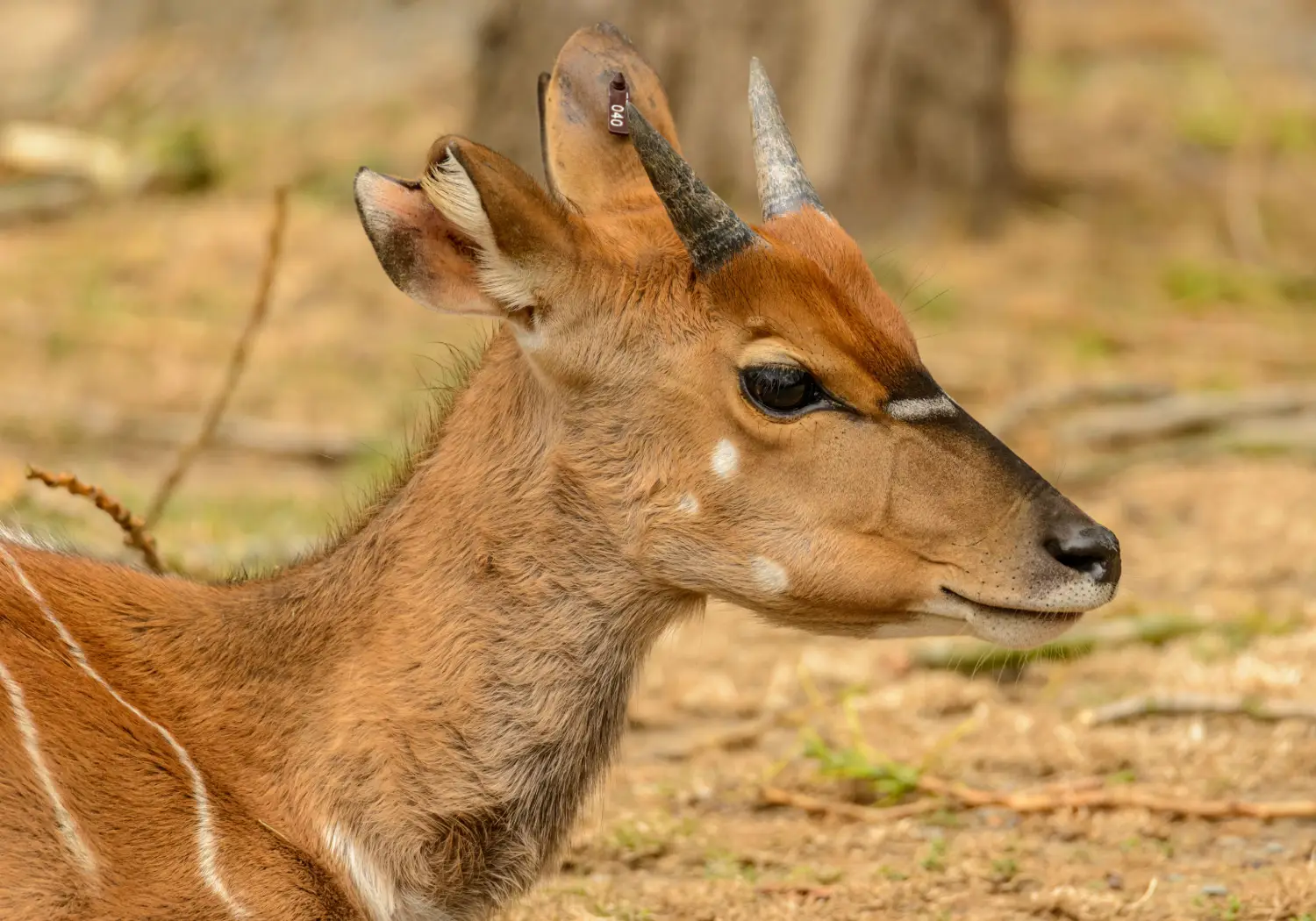
The bushbuck (Tragelaphus scriptus) is a small, graceful antelope with a chestnut to tawny coat marked by white spots and stripes, a white patch on the throat and, in males, short spiralled horns. It lives in thick cover near water and slips into the shadows at the slightest disturbance, so seeing one is always a small thrill. Close relatives of the kudu and nyala, bushbuck are common across sub-Saharan Africa, yet they are among the hardest antelopes to photograph, which makes them a favourite for patient safari-goers.
Quick answer: The bushbuck is a solitary, secretive antelope found along forest edges, riverbanks and thick bush across most of sub-Saharan Africa. In Kenya, you can look for it in places such as the Masai Mara, Nairobi National Park, Lake Nakuru and the Aberdares, usually at dawn and dusk.
What Does a Bushbuck Look Like?
Bushbuck are easy to recognise once you know what to look for. The coat is chestnut to tawny, with white spots on the flanks, a few white stripes and white patches on the throat and cheeks. Eastern and southern animals tend to be yellowish with relatively few markings, while northern and western animals are more reddish with stripes and spots. Both sexes darken with age.
Males stand roughly 70-100 cm at the shoulder and weigh about 40-80 kg, noticeably larger than females. Only males carry horns, which are fairly straight, slightly spiralled and up to about half a metre long.
Where Do Bushbuck Live?
Bushbuck need cover. They are found wherever there is dense vegetation, from forest edges and riverine woodland to thick scrub, and they can live from near sea level up to mountain forests. Water is important, so you will usually find them close to rivers, streams and wetlands.
In Kenya, that means the riverine forests of the Mara, the woodland around Lake Nakuru, forest patches in Nairobi National Park, and the montane forests of the Aberdares and Mount Kenya. Browse our guide to Kenya’s national parks and reserves to see more of these habitats.
What Do Bushbuck Eat?
Bushbuck are browsers. They feed mostly on leaves, shoots, herbs, flowers, twigs and fruit, with leguminous herbs and shrubs making up much of the diet in many areas. Grass makes up only a small share. They often feed at the forest edge at dawn and dusk and move deeper into cover to rest during the day.
Bushbuck Behaviour
The bushbuck is the least social of the African antelopes and is generally solitary. Males and females usually live alone or in small groups, and unlike many antelopes, bushbuck are not territorial, so several animals may share the same patch of good habitat.
Staying Hidden
When alarmed, a bushbuck freezes or creeps away through thick cover, and it will often bark loudly if it feels threatened, a sound that surprises many first-time visitors. It is also an excellent swimmer and a strong jumper, which helps it escape predators such as leopards.
Breeding
Females give birth to a single calf after a pregnancy of about six to seven months. The calf is hidden in thick cover for its first weeks, with the mother returning to feed it, which keeps it safe from predators.
Is the Bushbuck Endangered?
No. The bushbuck is widespread and is considered Least Concern, but it is not free from pressure. The main threat is habitat loss as agriculture, settlements and roads expand, and in some areas bushbuck are hunted for meat and skins.
Because they depend on forest edges and riverbanks, protecting those habitats helps many other species too. Learn more about conservation-based safaris in Kenya.
How to See Bushbuck on Safari in Kenya
Bushbuck are shy, so a good sighting is a matter of timing, patience and a sharp-eyed guide. Here is how to improve your chances.
Look at forest edges and rivers
Focus on the places where thick cover meets open ground, such as riverbanks, forest margins and woodland clearings.
- Masai Mara: look in the riverine thickets along the rivers.
- Nairobi National Park: forest patches and valleys on the western side. Try our Nairobi National Park private 4x4 safari or the Nairobi Park, Sheldrick and Giraffe Centre day tour.
- Lake Nakuru: the woodland and bush around the lake.
- Aberdares and Mount Kenya: forest tracks, where bushbuck share the forest with elephants, buffalo and rare species.
Go early and late
Dawn and dusk are the times when bushbuck step out to feed. Ask your guide to arrive early at forest edges and wait quietly.
Build a route with several habitats
The 7-day Kenya Elephants, Lakes and Masai Mara safari passes through lakes, woodland and open plains, giving you more chances to spot forest-edge species. You can also browse Kenya wildlife safaris, or look at birding safaris in Kenya, which often spend time in the same forest edges.
Travel in the dry season
Dry months, generally June to October and January to February, thin out the undergrowth and make animals easier to see near water. See our best time to visit Kenya guide.
Photograph with patience
A bushbuck at the edge of the forest in soft morning light is a rewarding shot, but you will need a long lens, a quiet vehicle and patience. Our photographic safaris in Kenya are designed with this in mind.
Responsible Wildlife Viewing
Keep your voice low and your engine off when you spot a bushbuck. Avoid sudden movements and never try to approach on foot without a guide. A relaxed animal will stay longer and may step into the open.
Frequently Asked Questions About Bushbuck
What is a bushbuck?
A bushbuck is a small, shy antelope with a chestnut to tawny coat marked with white spots and stripes. It lives in thick cover near water across much of sub-Saharan Africa.
Where can I see bushbuck in Kenya?
Look in the riverine forests of the Masai Mara, Nairobi National Park, Lake Nakuru, and forest areas in the Aberdares and Mount Kenya. Sightings are never guaranteed.
Do female bushbuck have horns?
No. Only males have horns.
What do bushbuck eat?
They browse on leaves, shoots, herbs, twigs, flowers and fruit, and eat very little grass.
Are bushbuck solitary?
Yes. They are the least social of the African antelopes and are usually found alone.
What is the difference between a bushbuck and a nyala?
Both are spiral-horned antelopes, but the nyala is larger, and males have a shaggy coat and a long mane. Nyalas live in southern Africa, not in Kenya.
Are bushbuck endangered?
No. The species is widespread and listed as Least Concern, though habitat loss and hunting are local threats.
When is the best time to see bushbuck?
Early morning and late afternoon, when they move to the forest edges to feed. The dry months, June to October and January to February, offer easier viewing.
Plan Your Forest and Riverbank Safari in Kenya
Want to explore the forest edges where bushbuck, bongo and elephants share the shade? Olengugih Safaris can design a private, flexible Kenya itinerary through the Mara, Nakuru, Nairobi and the mountain forests. Start planning your safari or contact our team for a free quote.
Interesting facts and identification clues
Interesting Facts About the Bushbuck
- The bushbuck is the least social of Africa’s antelopes and usually lives alone.
- Only males carry horns, and they are short, nearly straight and twisted once.
- Bushbuck are strong swimmers and will cross rivers to escape danger.
- A bushbuck can clear a fence about two metres high with ease.
- When frightened, a bushbuck often barks loudly, a sound that surprises many first-time visitors.
- The coat colour changes by region, with eastern and southern animals yellowish and northern and western animals reddish and heavily marked.
Content reviewed 16 Oct 2026