About the Cape Clawless Otter
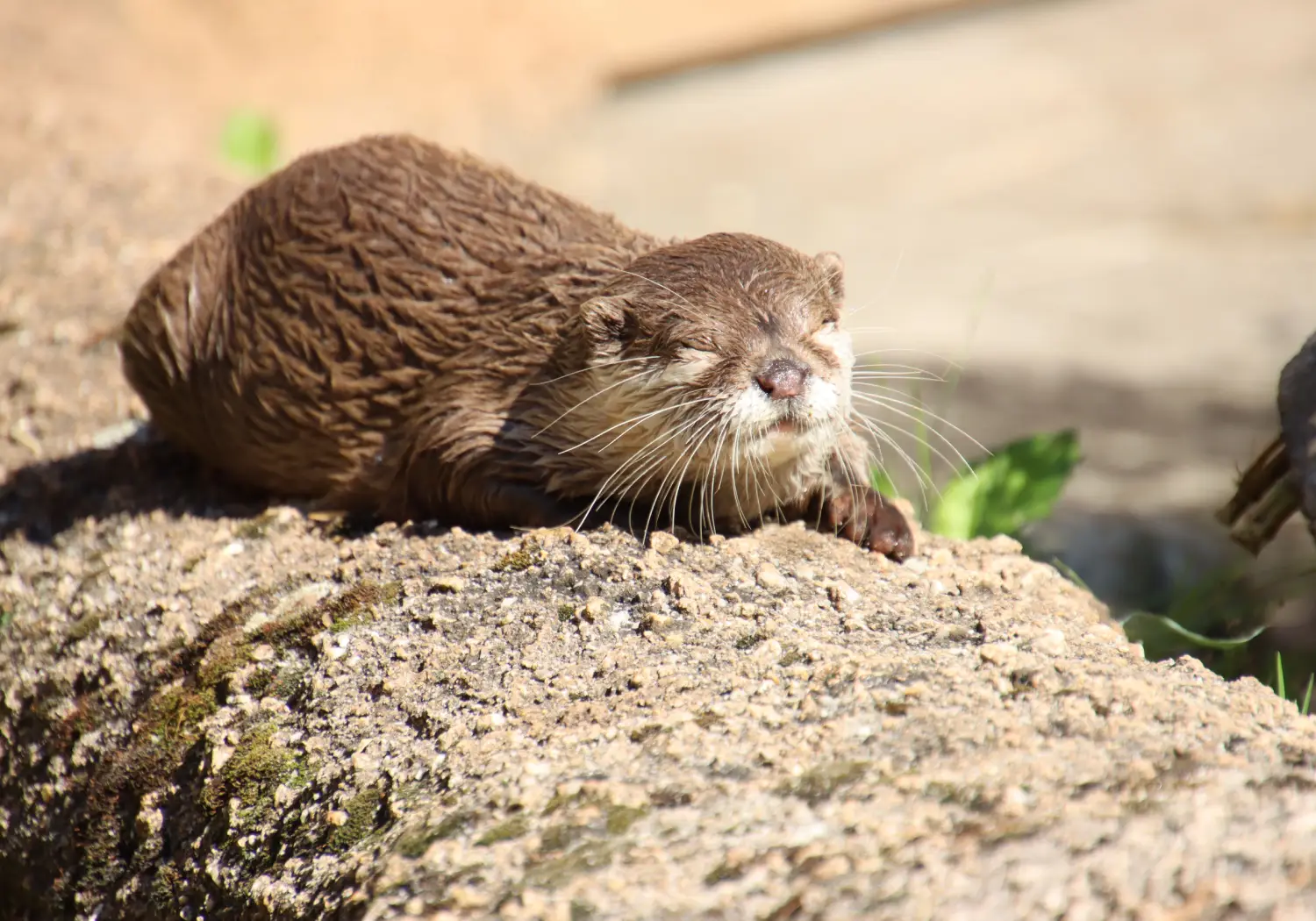
The Cape clawless otter, more widely called the African clawless otter (Aonyx capensis), is Africa's most widespread otter and one of the largest freshwater otters in the world. It has thick, glossy chestnut-brown fur, a white or cream chin, throat and cheeks, long whiskers and a thick, tapering tail. Its name comes from its front paws: they have no claws and no webbing, just nimble, sensitive fingers that it uses like hands to feel under rocks and in mud for crabs, frogs and fish. It is listed as Near Threatened.
Quick answer: The Cape clawless otter lives along rivers, lakes, dams, swamps and coastlines across much of sub-Saharan Africa. In Kenya, one of the best places to see it is Lake Naivasha, especially in the early morning and late afternoon. It also lives along rivers in the Masai Mara, the Aberdares and Mount Kenya. Sightings are never guaranteed.
What Does a Cape Clawless Otter Look Like?
The Cape clawless otter is a big, powerful otter with a long body, short legs and a thick, muscular tail that tapers to a point. Its dense fur is a rich chestnut to dark brown, with silky underparts, and the chin, throat, cheeks and upper chest are white or cream. It has a broad, flat head, small ears and long, stiff whiskers that help it detect prey in murky water.
Its most remarkable feature is its front paws. Unlike most otters, they have no claws and no webbing, just long, flexible fingers that work much like human hands. The hind feet are partly webbed and carry small claws on some toes. Its cheek teeth are broad and strong for crushing crab shells.
Cape Clawless Otter vs Other Kenyan Look-Alikes
Otters and other water-loving carnivores can be confused at a glance.
- Cape clawless otter: large and chestnut-brown, with a white chin and throat; clawless, unwebbed front paws.
- Spotted-necked otter: smaller and darker, with creamy blotches on the throat and webbed, clawed feet. It prefers clear, open water, such as parts of Lake Victoria.
- Marsh mongoose: shaggy and dark brown, with a pointed muzzle and no white throat; swims but spends more time on land.
Where Do Cape Clawless Otters Live?
Cape clawless otters are the most widely distributed otters in Africa. They range from Senegal and Guinea in the west to Ethiopia in the east and south to South Africa's Western Cape. They live wherever there is permanent fresh water: rivers, streams, lakes, dams, swamps and estuaries, and even rocky coastlines where they can rinse off in fresh water. They have been recorded from sea level to about 3,000 m.
In Kenya, they live along rivers and lakes from the coast to the highlands. Browse our wildlife guide and Great Lakes of Kenya to see where these habitats are found.
What Do Cape Clawless Otters Eat?
Crabs are their favourite food, and their strong teeth are built for crushing shells. They also catch fish, frogs, insects, worms and, occasionally, water birds. They hunt by sight in clear water and by touch and whiskers in murky water, feeling under rocks and in mud with their fingers. A 2025 study cited by Wikipedia found their diet can shift with the seasons and with human pressures such as fishing.
Cape Clawless Otter Behaviour
Cape clawless otters are usually solitary or live in pairs, though family groups of up to about five are sometimes seen. They are most active at dawn, dusk and night, but are also seen by day where they are undisturbed.
Hands-On Hunters
An otter often floats on its back or sits on a rock to eat, holding a crab in its paws and crunching through the shell.
Playful and Curious
Otters are inquisitive and playful, and young ones are often seen chasing, wrestling and sliding along banks.
Dens and Latrines
They rest in burrows, rock crevices and dense reedbeds near water. They leave their droppings, full of crab shell fragments, at regular latrine sites on rocks and banks.
Predators
Adult otters have few predators, but Nile crocodiles, pythons, leopards and large eagles can take them, especially the young.
Breeding
Litters usually have two to three cubs, born in a den. The mother raises them, and the cubs stay with her for up to a year while they learn to swim and hunt.
Is the Cape Clawless Otter Endangered?
It is listed as Near Threatened on the IUCN Red List, and its population is decreasing. The World Land Trust explains that, despite its wide range, the main threat is the degradation of the freshwater habitats it depends on. Pollution, dams, sand and gravel mining, the clearing of riverbank vegetation, overfishing (which reduces its food), drowning in fishing nets, and killing by fish farmers all take a toll. The IUCN Otter Specialist Group and its African Otter Network work to study and protect Africa's otters. You can explore recorded sightings on iNaturalist.
Protecting Kenya's rivers, wetlands and lakeshores helps otters and many other species. Learn more with our conservation-based safaris in Kenya.
How to See Cape Clawless Otters in Kenya
Otters are shy and mostly active at dawn, dusk and night, so sightings take patience. Quiet water edges early in the morning give the best chance.
Where to Look
- Lake Naivasha: one of the best places in Kenya. Otters are sometimes seen from boats, along the papyrus fringes and from lakeshore lodges early in the morning. See our Lake Naivasha guide.
- Masai Mara: pools and rocky stretches of the Mara and Talek rivers. See our Masai Mara National Reserve guide.
- Aberdares and Mount Kenya: clear mountain streams and dams, and floodlit waterholes at the forest lodges. See our Aberdare National Park and Mount Kenya National Park guides.
- Lake Nakuru and Western Kenya: streams and lake edges, including Lake Nakuru and the rivers around Kakamega Forest.
Take a Boat Ride at Dawn
An early boat trip on Lake Naivasha gives a chance of seeing otters along with hippos, fish eagles and other water birds.
Look for Signs
Check rocks and banks for otter droppings full of crushed crab shells, and for footprints in the mud. Signs like these show otters are using the area.
Build a Route With Variety
The 7 Day Kenya Elephants, Lakes and Masai Mara Safari includes Lake Naivasha and the Mara. You can also browse our Kenya wildlife safaris.
Travel in the Dry Season
Water levels are lower and wildlife gathers near permanent water. The drier months are generally June to October and January to February. Travelling in the wet months instead? Read Can I do a Kenya safari during the rainy season?
Responsible Wildlife Viewing
Keep your voice low and your distance from the water's edge when you spot an otter. On boat trips, ask the driver to cut the engine and drift rather than approach directly. Never feed otters, and don't leave litter or fishing line near water, which can entangle them.
Frequently Asked Questions About the Cape Clawless Otter
What is a Cape clawless otter?
A large African otter with chestnut fur, a white chin and throat, and clawless front paws. Its scientific name is Aonyx capensis, and it is also called the African clawless otter.
Why is it called clawless?
Its front paws have no claws, just long, flexible fingers it uses to feel for and grab prey.
How big is a Cape clawless otter?
About 1.1–1.6 m long including the tail, and about 10–21 kg.
What do Cape clawless otters eat?
Mainly crabs, plus fish, frogs, insects and worms.
Where can I see otters in Kenya?
Lake Naivasha is one of the best places. They also live along rivers in the Masai Mara, the Aberdares and Mount Kenya. Sightings are never guaranteed.
Is the Cape clawless otter endangered?
It is listed as Near Threatened and its numbers are falling, mainly because of damage to rivers and wetlands.
Plan Your Kenya Lakes Safari
Want to look for otters, hippos and fish eagles on Lake Naivasha, then head to the Mara for the big cats? Olengugih Safaris can design a private, flexible itinerary through Kenya's lakes, rivers and parks. Start planning your safari or contact our team for a free quote.
Sources
- Near Threatened status, chestnut fur, the meaning of "aonyx", habitats, diet, the 2025 diet study and predators: Wikipedia: African clawless otter
- Weight of 10–21 kg, length of 1.2–1.5 m, white-to-cream face, clawless and unwebbed feet, most widespread African otter, and "Near Threatened and decreasing": World Land Trust
- Size up to 1.6 m and 22 kg, hunting by sight and whiskers, family groups of up to five, litters of up to three: International Otter Survival Fund
- Molars built for crushing crabs and the name "white-cheeked otter": IUCN Otter Specialist Group
- IUCN assessment date (2020) and the Kenyan subspecies A. c. hindei: SeaLifeBase
- Upper elevation limit, crepuscular habits, predators and threats: Animal Diversity Web: Aonyx
Interesting facts and identification clues
Interesting Facts About the Cape Clawless Otter
Its front paws have no claws or webbing, and work almost like human hands.
It is the most widespread otter in Africa.
Its broad teeth are built for crushing crab shells.
Its scientific name, Aonyx, means "without claws" in Greek.
It has long, stiff whiskers that help it find prey in murky water.
On rocky coasts, it often rinses its fur in fresh water after swimming in the sea.
Content reviewed 27 Oct 2026