About the Greater Kudu
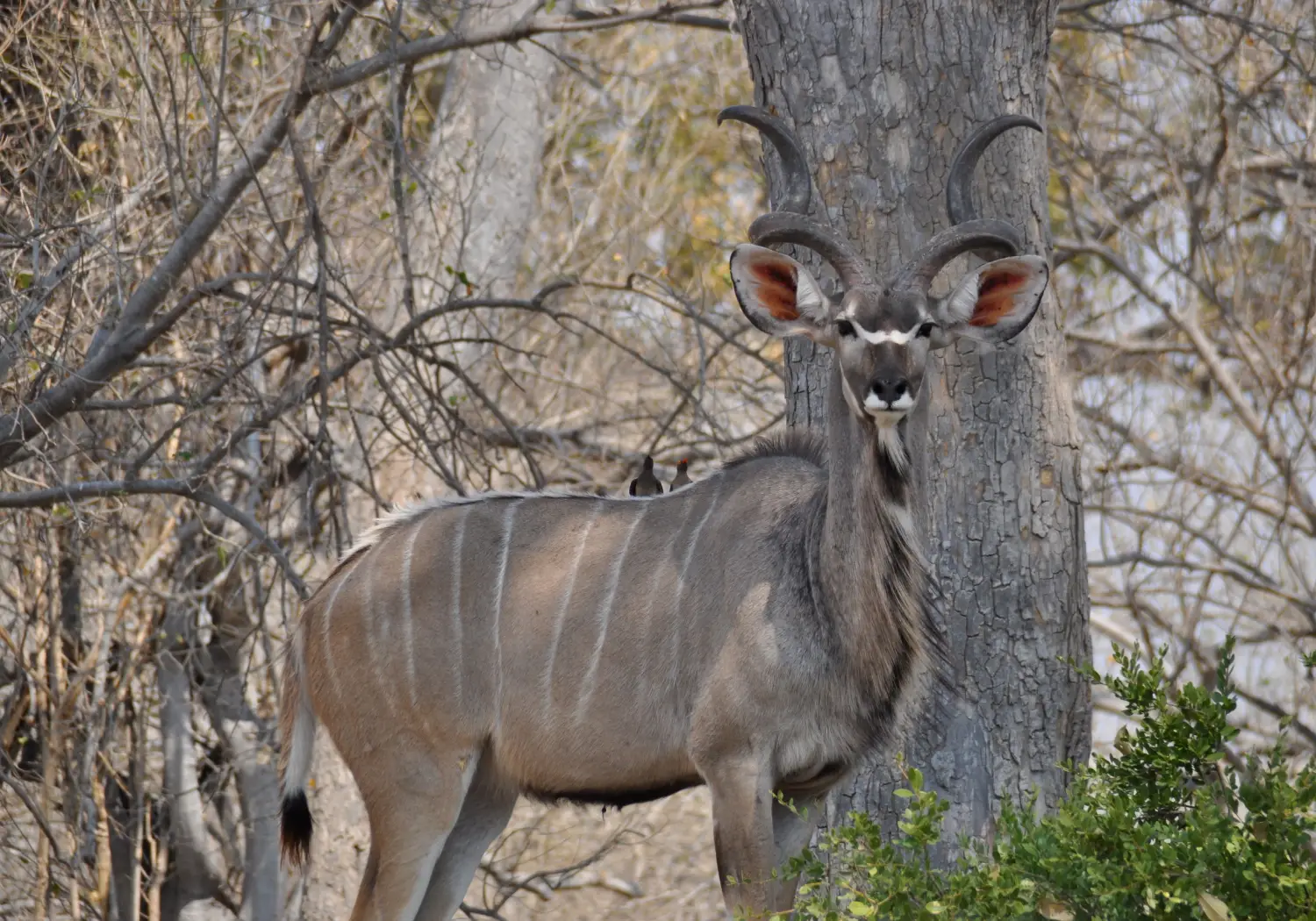
The greater kudu (Tragelaphus strepsiceros) is one of Africa's tallest and most striking antelopes. Bulls stand up to about 1.5 m at the shoulder and carry spiralling horns that can reach about 1.4 m long, with two and a half twists. Its grey-brown coat is marked with thin white stripes, and it has huge, rounded ears. Shy and well camouflaged in thick bush, it is often called the "grey ghost". After the eland, it is the second-largest antelope in Africa.
Quick answer: The greater kudu lives in woodland and thick bush across eastern and southern Africa. In Kenya it is rare and patchily spread. Your best chances are around Lake Bogoria, on the slopes of Marsabit and occasionally in Samburu. Uganda's Kidepo Valley and southern Tanzania's parks are more reliable. Sightings are never guaranteed.
What Does a Greater Kudu Look Like?
The greater kudu is tall and long-legged, with a slightly humped shoulder and a narrow body. Its coat ranges from blue-grey to reddish-brown, with six to ten thin white stripes down each side. A white chevron runs between the eyes, white spots mark the cheeks, and the ears are very large and rounded. Bulls are greyer and much heavier than cows, with a fringe of long hair along the throat.
Only males carry horns. They begin to grow at about a year old, make their first twist at around two years and reach two and a half twists by about six years. Fully grown horns typically measure around 1.2 m and can reach about 1.4 m or more along the curve.
Greater Kudu vs Lesser Kudu: How to Tell Them Apart
Kenya has both kudu species, and the lesser kudu is more often seen.
- Size: the greater kudu is far bigger; a lesser kudu bull weighs under about 110 kg.
- Stripes: greater kudus have 6–10 white stripes; lesser kudus have 11–15.
- Throat: greater kudu bulls have a throat mane. Lesser kudus have no mane, but have two distinct white patches on the throat.
- Horns: a greater kudu bull's horns are much longer and more widely spiralled.
- Where in Kenya: lesser kudus live in dry bush such as Tsavo, Samburu and Meru. Greater kudus are mostly found in hilly, wooded areas such as Lake Bogoria and Marsabit.
Where Do Greater Kudus Live?
Greater kudus need cover. They live in woodland, thick bush, rocky hills and riverine thickets, from lowlands up to about 2,400 m. They avoid open grassland and dense forest. Their range runs from Ethiopia and Sudan through East Africa to South Africa, but they have disappeared from many northern areas, including much of Kenya.
In Kenya, Lake Bogoria National Reserve is listed as a critical habitat for the species, and the slopes around Marsabit are another stronghold. Browse our wildlife guide and Kenya reserves to see where this kind of country is found.
What Do Greater Kudus Eat?
Greater kudus are browsers. They eat leaves, shoots, herbs, flowers, fruit and seed pods, and switch between plants with the seasons. Their height lets them reach high branches, and bulls sometimes use their horns to break branches down. They drink when water is available but can survive dry periods on the moisture in their food.
Greater Kudu Behaviour
Females and young live in small groups, usually up to about ten animals. Adult males live alone or in small bachelor groups, joining the females in the breeding season. Greater kudus are not territorial but keep to familiar home areas.
The Grey Ghost
When alarmed, a kudu often freezes and then slips quietly into cover, its stripes breaking up its outline. If it must run, it lifts its head so its long horns lie back along its shoulders. It can clear obstacles over 2 m high, and it gives one of the loudest barks of any antelope.
Rivals and Locked Horns
Bulls show off by standing side-on to look as big as possible. Fights involve locking horns and twisting. Occasionally two bulls lock horns so tightly that they cannot separate, and both die.
Predators
Lions, wild dogs and spotted hyenas hunt adult kudus, while leopards and cheetahs take calves and younger animals.
Breeding
Females give birth to a single calf after a pregnancy of about eight months (around 240 days). The calf stays hidden in cover for about two weeks, with the mother returning to suckle it, before it joins the group.
Is the Greater Kudu Endangered?
Not globally. The greater kudu is listed as Least Concern on the IUCN Red List, with a population estimated at about 482,000, most of it in southern Africa. In the north of its range, including Kenya, it has disappeared from large areas and is now rare. Habitat loss to farming and settlement, overgrazing by livestock, poaching for meat and horns, and diseases caught from cattle are the main threats.
At Lake Bogoria, the community group Friends of Nature Bogoria works with the reserve to count and monitor the local kudu population. They also encourage people to use wooden carvings in traditional ceremonies instead of kudu horns. You can explore recorded sightings on iNaturalist.
Learn how your trip can support wildlife with our conservation-based safaris in Kenya.
How to See Greater Kudu on Safari in Kenya
Seeing a greater kudu in Kenya takes patience and a little luck. Plan for it as a special sighting rather than a guarantee.
Where to Look
- Lake Bogoria National Reserve: the wooded southern end of the reserve and the slopes below the escarpment. Kudus are shy and rarely seen, so go with a local guide from the gate. See our Lake Bogoria National Reserve guide.
- Marsabit National Park: the forested and bushy slopes of Mount Marsabit, a remote northern park best suited to adventurous trips. See our Marsabit National Park guide.
- Samburu: occasional sightings of bulls in the bush. Here you are more likely to meet the lesser kudu. See our Samburu National Reserve guide.
- Beyond Kenya: Uganda's Kidepo Valley National Park and southern Tanzania's parks give better odds. Ask us about our multi-country safaris.
Go Early and Late
Kudus browse mostly in the early morning and late afternoon and rest in thick cover at midday. Scan the edges of thickets slowly, and look for the tell-tale large ears or a pale chevron on the face.
Pair It With Flamingos
Lake Bogoria is also one of Kenya's top flamingo lakes, with hot springs and geysers along the shore. Combine a kudu search with flamingos and Lake Nakuru on a Rift Valley trip. See our birding safaris in Kenya and Kenya wildlife safaris.
Travel in the Dry Season
The bush thins out and animals are easier to spot. The drier months are generally June to October and January to February. Travelling in the wet months instead? Read Can I do a Kenya safari during the rainy season?
Photograph the Horns
A kudu bull turning his head, horns spiralling against the bush, is one of Africa's great wildlife portraits. Bring a long lens and stay still. Our photographic safaris in Kenya are built for moments like this.
Responsible Wildlife Viewing
Kudus are among the shyest antelopes, so keep your distance, switch off the engine and stay quiet. On foot at Lake Bogoria, walk with a guide and never try to get closer once a kudu has seen you. Never buy kudu horn products.
Frequently Asked Questions About the Greater Kudu
What is a greater kudu?
A large, white-striped antelope of eastern and southern Africa, famous for the male's long spiral horns. Its scientific name is Tragelaphus strepsiceros.
How big is a greater kudu?
About 1–1.5 m at the shoulder. Males weigh about 190–315 kg and females about 120–215 kg.
How long are kudu horns?
Typically around 1.2 m, and up to about 1.4 m or more along the curve, with about two and a half twists.
Do female kudus have horns?
No. Only males carry horns.
What is the difference between greater and lesser kudu?
The greater kudu is much bigger, has fewer white stripes (6–10) and a throat mane on males. The lesser kudu is smaller, has 11–15 stripes and two white throat patches.
Can you see greater kudu in Kenya?
Yes, but it is rare. The best places are Lake Bogoria National Reserve and Marsabit National Park, with occasional sightings in Samburu. Sightings are never guaranteed.
What do greater kudus eat?
Leaves, shoots, herbs, flowers, fruit and seed pods.
Is the greater kudu endangered?
Not globally. It is listed as Least Concern, but it is rare and declining in Kenya.
Plan Your Rift Valley and Northern Kenya Safari
Want to search for greater kudu, see flamingos at Lake Bogoria and explore Kenya's wilder corners? Olengugih Safaris can design a private, flexible itinerary through the Rift Valley, Samburu, Marsabit and beyond. Start planning your safari or contact our team for a free quote.
Interesting facts and identification clues
Interesting Facts About the Greater Kudu
A mature bull's horns make about two and a half full twists.
The greater kudu is the second-largest antelope in Africa, after the eland.
It is often called the grey ghost because it melts so easily into the bush.
It can jump over obstacles more than two metres high.
Kudu horns have long been used as musical and ceremonial horns across Africa.
Two bulls sometimes lock horns so tightly that they cannot pull apart.
Content reviewed 19 Oct 2026