About the Klipspringer
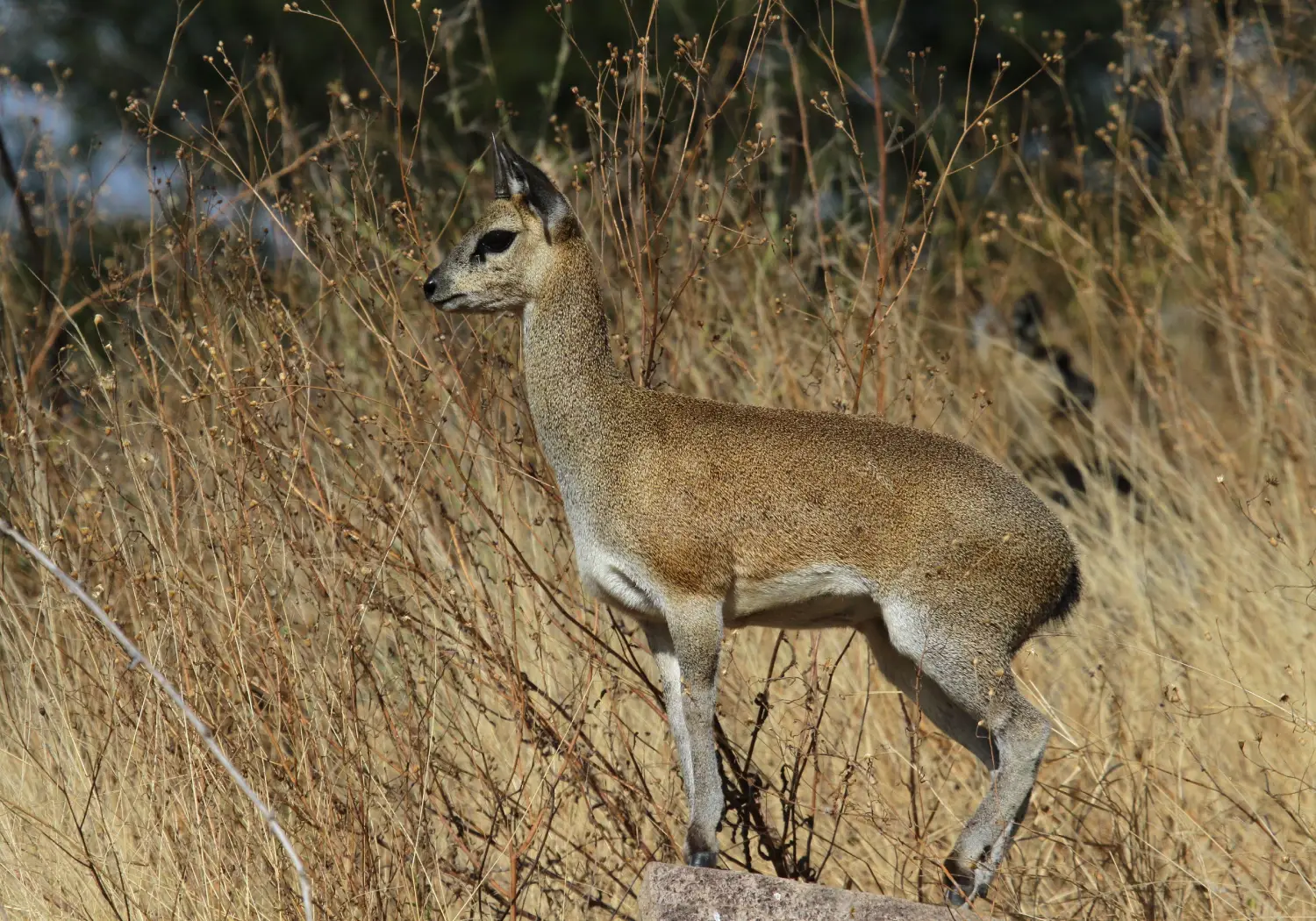
The klipspringer (Oreotragus oreotragus) is a small, stocky antelope that lives on cliffs, rocky hills and kopjes. Its name means "rock jumper" in Afrikaans, and it earns it. It stands on the very tips of its small, cylindrical hooves and can bound up near-vertical rock and land all four feet on a ledge the size of a coin. Its thick, speckled olive-yellow coat blends into the rocks. Klipspringers live in pairs that usually stay together for life.
Quick answer: The klipspringer is a small, rock-dwelling antelope found in rocky country across eastern and southern Africa. In Kenya, look for pairs standing on boulders and cliffs in Tsavo West, Tsavo East, Hell's Gate, Lake Nakuru and the Chyulu Hills. They are most active in the early morning and late afternoon. Sightings are never guaranteed.
What Does a Klipspringer Look Like?
The klipspringer is compact and sturdy, with a short body, powerful hindquarters and a short neck. Its coat is thick and coarse, made of stiff, hollow hairs that lie like a mat over the body. The colour is yellowish-olive speckled with brown or grey, fading to white underneath, so it blends neatly into lichen-covered rock. A dark scent gland sits in front of each eye, and the large ears are lined with dark stripes.
The horns are short, straight, upright spikes up to about 15 cm long, ringed only near the base. In southern Africa only males carry them. In East Africa, including Kenya, females of the Maasai klipspringer often have horns too. Females are slightly larger and heavier than males.
Built for the Rocks: Hooves and Coat
A few special features make the klipspringer a superb climber.
- Tiptoe hooves: a klipspringer walks on the very tips of its hooves, which wear down into small, round cylinders about the width of a coin. The tips are hard on the outside and slightly rubbery in the centre, giving grip on bare rock.
- Springy legs: strong hind legs launch it up steep faces, and it can land all four feet on a tiny ledge.
- Cushioning coat: the thick, hollow-haired coat insulates against heat and cold, and may help cushion bumps against rock.
Where Do Klipspringers Live?
Klipspringers live wherever there is rock: cliffs, gorges, rocky hillsides, mountain slopes and kopjes, the granite outcrops that rise from the savanna. They are found from sea level to high mountains. Their range is patchy because it follows rocky ground, stretching from Ethiopia and Sudan through East Africa to South Africa. Tsavo is noted for a large population.
Browse our wildlife guide and Kenya national parks to see where this kind of country is found.
What Do Klipspringers Eat?
Klipspringers are browsers. They eat leaves, young shoots, flowers, fruit, seed pods and succulent plants growing among the rocks, and rarely eat grass. They get most of the water they need from their food, so they seldom drink.
Klipspringer Behaviour
Klipspringers live in pairs, often with their latest young, on a territory they defend together. Pairs stay close, usually within a few metres of each other.
Taking Turns on Lookout
While one partner feeds, the other often stands on a high rock keeping watch. When danger appears, they give a loud whistle, often in a duet, and bound up the rocks to safety.
Marking Territory
Both partners mark their territory with dung piles and with scent from the glands in front of their eyes, wiped onto twigs. They also groom each other's faces.
Predators
Leopards, caracals, jackals, spotted hyenas, baboons and large eagles such as the Verreaux's eagle hunt klipspringers, especially the young.
Breeding
Females give birth to a single calf after a pregnancy of about seven months (214–225 days). The newborn weighs about 1 kg and hides among rocks and vegetation for its first weeks. Young males leave their parents before they are a year old.
Is the Klipspringer Endangered?
No. The klipspringer is listed as Least Concern on the IUCN Red List, and it is still found across most of its former range. Because it lives on rocky ground that is hard to farm, its habitat is safer than that of many plains antelopes. Hunting, snaring and disturbance affect it in some areas. You can explore recorded sightings on iNaturalist.
Learn how your trip can support wildlife with our conservation-based safaris in Kenya.
How to See Klipspringer on Safari in Kenya
Klipspringers are easy to miss because they blend into the rock, but once you know where to look, pairs are often in plain view on a boulder.
Scan the Rocks and Cliffs
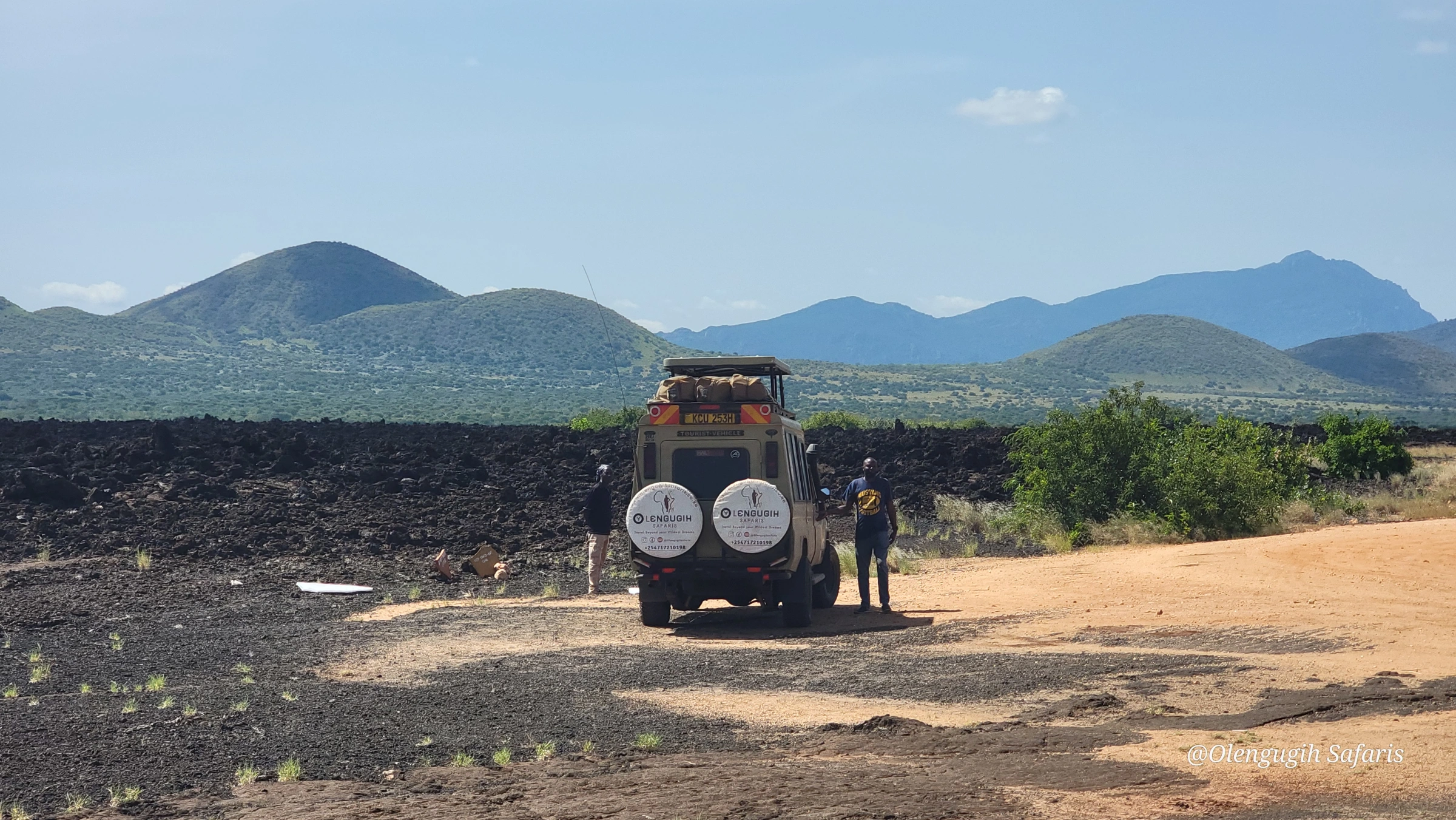
- Tsavo West: lava flows, rocky hills and the Ngulia area. See our Tsavo West National Park guide.
- Tsavo East: rocky outcrops such as Mudanda Rock. See our Tsavo East National Park guide.
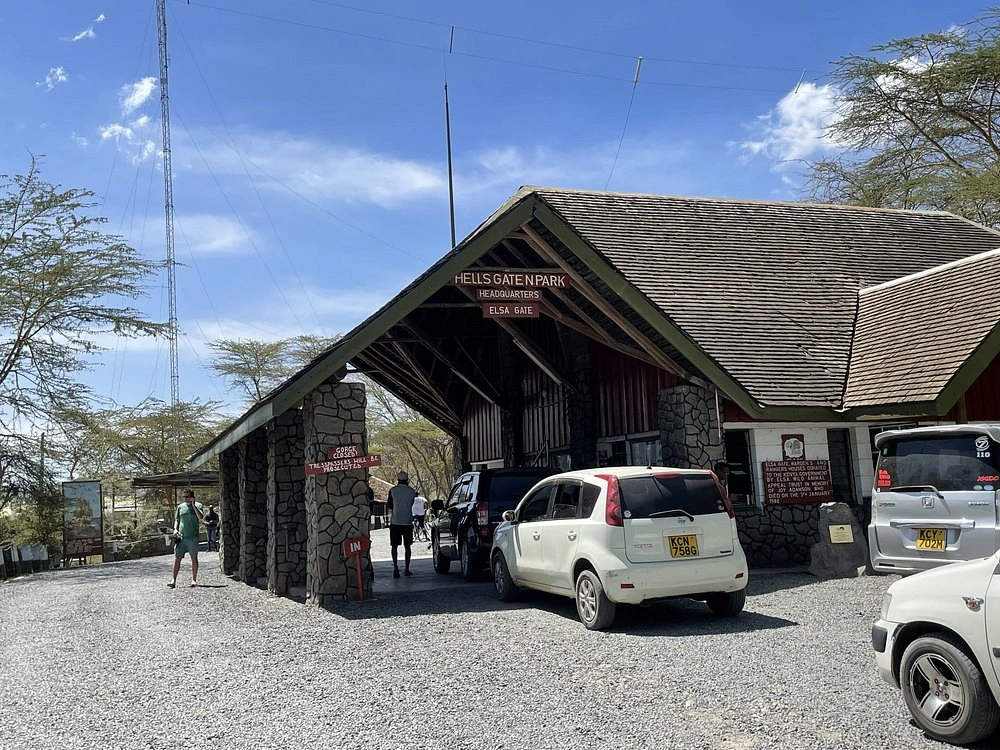
- Hell's Gate: the gorge and cliffs, which you can explore on foot or by bike. See our Hell's Gate National Park guide.
- Lake Nakuru: the rocky escarpment and viewpoints above the lake. See our Lake Nakuru National Park guide.
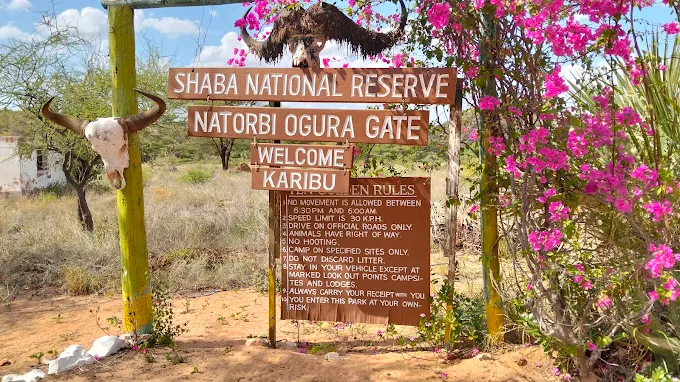
- Chyulu Hills and Shaba: volcanic hills and rocky northern country. See our Chyulu Hills National Park and Shaba National Reserve guides.
Go Early and Late
Klipspringers feed in the cooler early morning and late afternoon. In the midday heat they rest in the shade of rocks and overhangs.
Look for the Lookout
Scan the skyline of each kopje or cliff. A klipspringer standing on a rock with its four hooves bunched together is often the first sign of a pair.
Build a Route With Variety
The 10 Day Kenya Honeymoon Safari and Diani Beach Escape visits Tsavo West and Tsavo East, both good klipspringer country. The 7 Day Kenya Elephants, Lakes and Masai Mara Safari passes Lake Nakuru and Lake Naivasha, close to Hell's Gate. You can also browse our Kenya wildlife safaris and cycling safaris in Kenya.
Travel in the Dry Season
The bush thins out and rocks are easier to scan. The drier months are generally June to October and January to February. Travelling in the wet months instead? Read Can I do a Kenya safari during the rainy season?
Photograph the Pose
A klipspringer balanced on a boulder, all four hooves on one tiny point, is one of the most striking photos in Kenya. Shoot from low down against the sky. Our photographic safaris in Kenya are built for moments like this.
Responsible Wildlife Viewing
Keep your distance, switch off the engine and keep your voice low. On walking routes such as Hell's Gate, stay on the path and never climb towards a klipspringer pair. Let them stay on their lookout rock.
Frequently Asked Questions About the Klipspringer
What is a klipspringer?
A small, sturdy antelope that lives on cliffs, rocky hills and kopjes in eastern and southern Africa. Its scientific name is Oreotragus oreotragus.
What does klipspringer mean?
It means "rock jumper" in Afrikaans, a fitting name for an antelope that bounds up steep rock faces.
Why does the klipspringer walk on tiptoe?
Its small, cylindrical hoof tips grip bare rock and let it balance on tiny ledges.
How big is a klipspringer?
About 45–60 cm at the shoulder and about 8–18 kg, with females slightly heavier than males.
Do female klipspringers have horns?
In Kenya and Tanzania, often yes. In southern Africa, usually only males have horns.
What do klipspringers eat?
Leaves, shoots, flowers, fruit and succulent plants growing among the rocks. They rarely drink.
Where can I see klipspringer in Kenya?
Try Tsavo West, Tsavo East, Hell's Gate, Lake Nakuru, the Chyulu Hills and Shaba. Sightings are never guaranteed.
Are klipspringers endangered?
No. The klipspringer is listed as Least Concern.
Plan Your Kenya Safari Beyond the Plains
Want to explore Kenya's rocky hills, gorges and lava country as well as its famous plains? Olengugih Safaris can design a private, flexible Kenya itinerary through Tsavo, Hell's Gate, the Rift Valley lakes and beyond. Start planning your safari or contact our team for a free quote.
Interesting facts and identification clues
Interesting Facts About the Klipspringer
Klipspringer means rock jumper in Afrikaans.
It walks on the very tips of its hooves, like a ballet dancer on pointe.
It can land all four feet on a rocky ledge the size of a coin.
Klipspringer pairs take turns to keep watch while the other feeds.
In East Africa, female klipspringers often have horns, while in southern Africa only males do.
Its scientific name, Oreotragus, means mountain goat in Greek.
Content reviewed 19 Oct 2026