About the Yellow Baboon
Yellow Baboon: Amboseli's Famous Troops
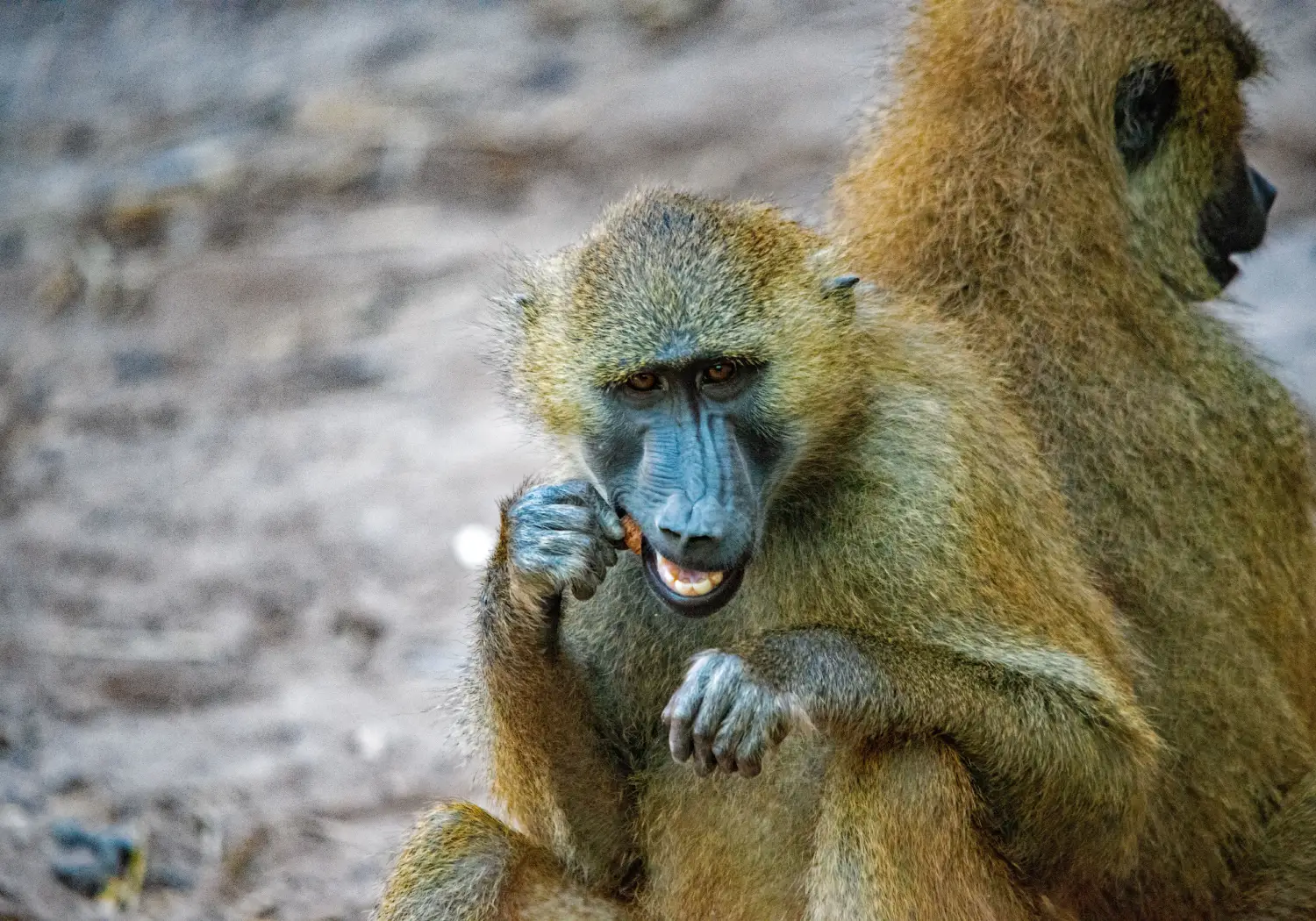
The yellow baboon (Papio cynocephalus), known in Swahili as nyani, is a slim, long-legged baboon with a sandy-yellow to yellow-brown coat, pale cheeks and a dark face. It lives in large, close-knit troops in the savannas, woodlands and coastal forests of East and southern Africa. In Kenya, it is the baboon of Tsavo, Amboseli and the coast. The yellow baboons of Amboseli are among the most closely studied wild animals on Earth: researchers have followed individual baboons there every day since 1971.
Quick answer: The yellow baboon lives in savanna, open woodland, thorn scrub and coastal forest from southern Somalia and Kenya south through Tanzania to Zambia, Malawi and Mozambique. In Kenya, it lives in the east and south, including Amboseli, Tsavo East, Tsavo West, Shimba Hills and the coast around Diani. Sightings are very likely but never guaranteed.
What Does a Yellow Baboon Look Like?
The yellow baboon is a large but slender monkey with long legs and a long, dog-like muzzle. Its coat is sandy-yellow to yellowish-brown, with paler cheeks, throat and belly, and its face is dark grey to black. Unlike the olive baboon, males don't have a thick mane, though they are much larger than females, with big canine teeth. Its long tail rises from the base and then drops sharply, as if broken. Infants are born with a black coat and pink face, which gradually turn to the adult colours.
Yellow Baboon vs Olive Baboon
Kenya has two baboon species, and they meet in some places.
- Yellow baboon: slimmer and longer-legged, with a sandy-yellow coat, pale cheeks and no real mane; found in eastern and southern Kenya, including Tsavo, Amboseli and the coast.
- Olive baboon: heavier and stockier, with a darker olive-grey coat and a mane on males; found in western, central and northern Kenya, including the Mara, the Rift Valley and Laikipia.
- Amboseli hybrids: in the south-western part of the Amboseli basin, olive and hybrid males have joined yellow baboon troops and bred, so some baboons there show a mix of both species' features.
Where Do Yellow Baboons Live?
Yellow baboons live from southern Somalia and Kenya through Tanzania to Zambia, Malawi and Mozambique. They live in savanna, open woodland, thorn scrub, riverine forest and coastal forest. They need water and tall trees or cliffs to sleep in. In Amboseli, troops sleep in groves of fever trees and forage across the semi-arid plains.
Browse our wildlife guide and Kenya national parks to learn more.
What Do Yellow Baboons Eat?
Yellow baboons are opportunistic omnivores. They eat grass seeds and the underground corms of grasses, which they dig up with their hands, as well as acacia pods, flowers and gum, fruit, leaves, roots, insects, eggs and small animals. Their diet changes with the seasons and with what each troop can find.
Yellow Baboon Behaviour
Yellow baboons are active by day and travel long distances to feed and drink. At night, the troop climbs into tall trees or onto cliffs to sleep, safe from predators.
Troop Life
Troops can number from a few dozen to more than 100 baboons. Females usually stay in the troop they were born into for life and form ranked family lines, while males leave when they mature and join other troops. Close friendships between males and females help protect infants and can improve a male's chances of mating.
Changing Sleeping Trees
Amboseli research has shown that troops switch between different sleeping groves, which may help them avoid parasites that build up under heavily used trees.
Predators
Leopards are the main predator, along with lions, spotted hyenas and Nile crocodiles.
Breeding
Yellow baboons breed throughout the year. Females usually give birth to one infant at a time. It clings to its mother's belly at first, then rides on her back.
The Amboseli Baboon Research Project
The Amboseli Baboon Research Project, founded in 1971 by Stuart and Jeanne Altmann, is one of the longest-running studies of any wild primate in the world. Researchers, including many long-term Kenyan field observers, have recorded the lives of individual yellow baboons in the Amboseli basin almost every day for more than 50 years. The project has produced hundreds of scientific papers on baboon behaviour, ageing, health, genetics, social bonds and hybridisation with olive baboons.
Is the Yellow Baboon Endangered?
No. The yellow baboon is listed as Least Concern on the IUCN Red List. It is widespread and adaptable. However, troops near farms and towns often raid crops and are trapped, poisoned or shot. Along the coast, baboons that are fed by people around hotels and roads can become bold and dangerous, which leads to conflict. Habitat loss also reduces the woodland and sleeping trees they need. You can explore recorded sightings on iNaturalist.
Learn how your trip can support wildlife and communities with our conservation-based safaris in Kenya.
Staying Safe Around Baboons
Yellow baboons are strong, clever and have large canine teeth. They usually avoid people, but baboons that have learned to get food from people can become aggressive, especially around coastal hotels and roadside stops.
- Never feed baboons, and keep food, bags and bins out of sight and out of reach.
- At beach hotels, keep balcony doors and windows closed when you're not in the room.
- Keep vehicle windows and roof hatches closed when baboons are around.
- Don't stare at or approach baboons, and if one grabs something, let it go.
Where to See Yellow Baboons in Kenya
Yellow baboons are common in eastern and southern Kenya. Look for troops foraging on the plains or resting under trees, especially in the morning and late afternoon.
Where to Look
- Amboseli: troops forage on the plains and sleep in the fever-tree groves, with Kilimanjaro as a backdrop. See our Amboseli National Park guide.
- Tsavo East and West: troops along rivers and around waterholes. See our Tsavo East and Tsavo West guides.
- Shimba Hills and the coast: troops in coastal forest and woodland around Diani. See our Shimba Hills National Reserve guide.
- Chyulu Hills: woodland and forest between Amboseli and Tsavo West. See our Chyulu Hills National Park guide.
Watch the Troop
Spend time with a troop to watch grooming, playing infants, family life and the daily journey between water, food and sleeping trees.
Visit the Fever-Tree Groves
In Amboseli, troops gather at their sleeping trees in the late afternoon, which is a good time to watch them.
Build a Route With Variety
The 3 Day Affordable Private Amboseli Safari from Nairobi and the 4 Days Amboseli and Tsavo East Safari both visit prime yellow baboon country. For coast and safari combinations, see the 10 Day Kenya Honeymoon Safari and Diani Beach Escape.
Responsible Wildlife Viewing
Watch baboons from your vehicle or a safe distance and never feed them, even at roadside stops or hotels. Fed baboons often become aggressive and are then destroyed, so feeding them puts both people and baboons at risk. Keep your voice low, avoid coming between mothers and infants, and never block a troop's path.
Frequently Asked Questions About the Yellow Baboon
What is a yellow baboon?
A slim, long-legged baboon with a sandy-yellow coat that lives in troops across East and southern Africa. Its scientific name is Papio cynocephalus.
How big is a yellow baboon?
Males average about 25.8 kg and females about 11 kg.
What do yellow baboons eat?
Grass seeds and corms, acacia pods and flowers, fruit, roots, insects and small animals.
What is the difference between yellow and olive baboons?
Yellow baboons are slimmer and sandier, with no mane on males. Olive baboons are heavier and darker, and males have a mane. In Kenya, yellow baboons live in the east and south, and olive baboons in the west and centre.
Are yellow baboons dangerous?
They usually avoid people, but baboons that have been fed can become aggressive. Never feed them, and keep food out of sight.
Where can I see yellow baboons in Kenya?
Amboseli, Tsavo East, Tsavo West, the Chyulu Hills, Shimba Hills and the coast around Diani. Sightings are very likely but never guaranteed.
Are yellow baboons endangered?
No. They are listed as Least Concern.
Plan Your Kenya Safari
Want to watch Amboseli's baboons beneath Kilimanjaro and then relax on the beach at Diani? Olengugih Safaris can design a private, flexible itinerary through Amboseli, Tsavo and the coast. Start planning your safari or contact our team for a free quote.
Sources
- Average weights (males 25.8 kg, females 11.0 kg), the Kenyan subspecies P. c. ibeanus, infants' black natal coat, habitats, Amboseli fever-tree habitat, and long-term research at Amboseli since 1971 and at Tana River: Wisconsin National Primate Research Center
- Founding in 1971 by the Altmanns, one of the longest-running wild primate studies, and over 230 publications: Wikipedia: Amboseli Baboon Research Project
- Olive and hybrid males joining yellow baboon troops in south-western Amboseli: Alberts & Altmann (2001), American Journal of Primatology, via PubMed
- Range countries, subspecies, male–female friendships and troop hierarchy: New England Primate Conservancy
- Amboseli research on switching sleeping groves to avoid parasites: Amboseli Baboon Research Project bibliography
Interesting facts and identification clues
Interesting Facts About the Yellow Baboon
- Amboseli's yellow baboons have been studied almost daily since 1971.
- Yellow baboons and olive baboons interbreed in part of the Amboseli basin.
- Infants are born with a black coat and pink face.
- Troops switch between sleeping trees, which may help them avoid parasites.
- Females usually stay in their birth troop for life, while males move between troops.
- They dig up grass corms with their hands, an important food in the dry season.
Content reviewed 28 Oct 2026