
About the Roan Antelope
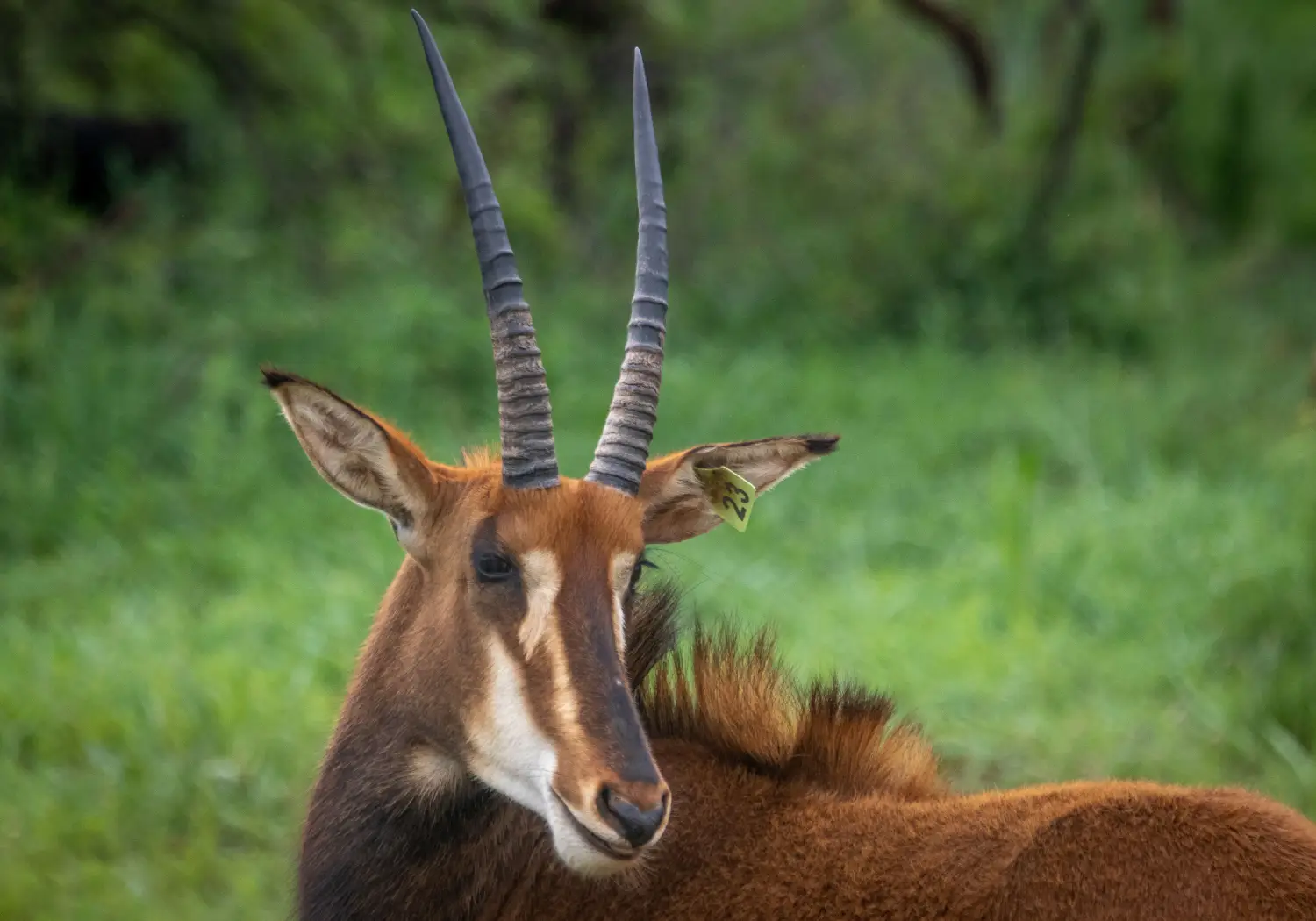
The roan antelope (Hippotragus equinus) is one of Africa's largest antelopes, a tall, powerful, horse-like animal with a grizzled grey-brown coat, a black-and-white face mask, long tufted ears and back-curving horns on both sexes. Its scientific name means "horse-like goat-antelope", and its upright mane adds to the horse-like look. Across Africa it is still widespread, but in Kenya it is on the brink. About 300 roan lived in Kenya in 1978. Today the last population, about 20 animals, survives only in Ruma National Park.
Quick answer: The roan antelope lives in open woodland and grassland savanna across West, Central, East and southern Africa. In Kenya, the only place to see it is Ruma National Park in the Lambwe Valley near Lake Victoria, where the Kenya Wildlife Service protects a small herd in a predator-proof sanctuary. Sightings are never guaranteed.
What Does a Roan Antelope Look Like?
The roan antelope is tall and heavily built, with a thick neck, long legs and a short, upright mane of stiff hair tipped with black. Its coat is grizzled grey-brown to reddish-fawn, a colour called "roan" in horses, which gives the antelope its name. The face is boldly marked with a black-and-white "clown" mask, darker in males. Its long, narrow ears end in dark tassels.
Both sexes carry ringed horns that sweep backwards in a curve, about 55–100 cm long. Males' horns are longer and thicker. Calves are lighter and redder than adults.
Roan vs Sable Antelope: How to Tell Them Apart
The roan's closest relative is the sable antelope, and Kenya has a small population of each.
- Coat: roan are grey-brown to reddish. Adult male sables are glossy black, and females are dark chestnut.
- Horns: roan horns curve back gently and are shorter. Sable horns are much longer and sweep back in a dramatic arc.
- Ears: roan have very long ears with dark tassels; sable ears are shorter.
- Where in Kenya: roan live only in Ruma National Park in the west. Sable live only in Shimba Hills National Reserve near the coast.
Where Do Roan Antelope Live?
Roan live in open woodland and lightly wooded grassland with tall grass, and they rarely move far from water. Across Africa, their range stretches from West Africa to Ethiopia and south to Botswana and South Africa, though they have vanished from many areas. AWF notes that roan are losing their living space to farms and settlements.
In Kenya, roan once ranged across the south-west, from Lake Natron and the Mara to Lake Victoria, Mount Elgon and the Cherangani Hills. They now survive only in the Lambwe Valley grasslands of Ruma National Park. Browse our wildlife guide and Kenya national parks to learn more.
What Do Roan Antelope Eat?
Roan are mainly grazers, preferring medium-length grasses and their leaves. They also browse shrubs, herbs, young twigs and acacia pods when grass is poor, and sometimes stand in water to feed on aquatic plants. They need to drink regularly and seldom stray more than a few kilometres from water.
Roan Antelope Behaviour
Roan live in herds of about 6–20 females and young, sometimes gathering in groups of over 100. A lead female guides each herd, and one dominant bull mates with the females. Young males leave at about two years old to join bachelor groups, and at around six they try to win a herd of their own.
Fierce Defenders
Roan are brave and can be aggressive. When threatened, they face the attacker, lower their heads and brandish their horns. Healthy adults can fight off many predators.
Dramatic Duels
Rival bulls drop to their knees and clash horns, pushing with their foreheads while whipping their tails and flicking their ears.
Predators
Lions, spotted hyenas, leopards, wild dogs and Nile crocodiles prey on roan, especially calves.
Breeding
Roan can breed at any time of year. Females leave the herd to give birth to a single calf after a pregnancy of about nine months (around 268–287 days). The calf hides in tall grass for several weeks before joining the herd.
Is the Roan Antelope Endangered?
Worldwide, no. The roan antelope is listed as Least Concern on the IUCN Red List, though its numbers are falling and it has disappeared from several countries. About 60% of roan live in protected areas, and Tanzania alone holds about 4,000.
In Kenya, the story is very different. About 300 roan lived in the country in 1978, including about 200 in the Lambwe Valley. Snaring and poaching drove the Ruma population down to about 12–19 animals by 2019. A study for Newcastle University warned that, without action, Kenya's roan could not survive more than three decades.
Kenya's Roan Recovery Plan
In 2020, the Kenya Wildlife Service launched a national recovery plan and built a predator-proof roan sanctuary of about 5.6 km² inside Ruma National Park, supported by partners including the M-Pesa Foundation and Back to Africa. With predators kept out and stronger anti-poaching patrols, the herd has grown to about 20. Kenya's 2024–25 national wildlife census counted 21 roan, up from 15 in 2021. Plans include bringing in roan from other populations to widen the gene pool.
You can explore recorded sightings across Africa on iNaturalist. Learn how your trip can support projects like this with our conservation-based safaris in Kenya.
How to See Roan Antelope in Kenya
Ruma National Park is the only place in Kenya to see roan. Because the herd lives inside a protected sanctuary, sightings depend on access arrangements with the park.
Visit Ruma National Park
Ruma lies in the Lambwe Valley in Homa Bay County, about 22 km from Homa Bay town near Lake Victoria. Ask at the park gate or let us arrange access in advance, and go with a KWS ranger or experienced guide. Ruma is also the best place in Kenya for oribi and Jackson's hartebeest, and it holds Rothschild's giraffe and rhino. See our Ruma National Park guide.
Combine Western Kenya's Hidden Gems
Pair Ruma with Kakamega Forest National Reserve for primates and forest birds, and Saiwa Swamp National Park for the sitatunga. The Masai Mara is a long but rewarding drive away. Ask us to build a tailor-made route through our Kenya safaris.
See Roan Beyond Kenya
Tanzania, home to about 4,000 roan, has far larger herds. Ask about our multi-country safaris.
Go Early and Late
Roan graze mostly in the early morning and late afternoon and rest during the heat of the day. The long grass at Ruma can hide them, so early drives in the dry season give the best views.
Travel in the Dry Season
Shorter grass makes animals easier to spot. In western Kenya, the drier months are generally December to February and June to September. Travelling in the wet months instead? Read Can I do a Kenya safari during the rainy season?
Responsible Wildlife Viewing
Kenya's roan herd is tiny and closely protected, so follow every instruction from KWS rangers, keep your distance and stay quiet. Never try to enter the sanctuary without permission. Report any snares or suspicious activity to park staff.
Frequently Asked Questions About the Roan Antelope
What is a roan antelope?
One of Africa's largest antelopes, with a grizzled grey-brown coat, a black-and-white face mask, long tufted ears and back-curving horns. Its scientific name is Hippotragus equinus.
How big is a roan antelope?
About 1.3–1.5 m at the shoulder. Males weigh about 235–300 kg and females about 215–280 kg.
Do female roan antelope have horns?
Yes. Both sexes have horns, though females' are shorter and thinner.
Where can I see roan antelope in Kenya?
Only in Ruma National Park, in the Lambwe Valley near Lake Victoria. Sightings are never guaranteed.
How many roan antelope are left in Kenya?
About 20. Kenya's 2024–25 national wildlife census counted 21, up from 15 in 2021.
What is the difference between roan and sable antelope?
Roan are grey-brown with shorter, gently curved horns and long tufted ears. Sable are black or dark chestnut with much longer, sweeping horns. In Kenya, roan live in Ruma and sable live in Shimba Hills.
What do roan antelope eat?
Mainly grass, plus leaves, shoots and acacia pods. They need to drink regularly.
Is the roan antelope endangered?
Not worldwide; it is listed as Least Concern. In Kenya, however, it is critically low and depends on the Ruma sanctuary.
Plan Your Western Kenya Safari
Want to see Kenya's rarest antelope, plus oribi, Rothschild's giraffe and the forests of Kakamega? Olengugih Safaris can design a private, flexible itinerary through western Kenya and beyond. Start planning your safari or contact our team for a free quote.
Interesting facts and identification clues
Interesting Facts About the Roan Antelope
- The roan is named after its coat colour, a grizzled brown also seen in horses.
- Its scientific name, Hippotragus equinus, refers to its horse-like look.
- Both males and females carry long, back-curving horns.
- Rival bulls fight on their knees, clashing horns.
- Kenya's roan population fell from about 300 in 1978 to fewer than 20 four decades later.
- The last roan in Kenya live only in Ruma National Park.
Content reviewed 19 Oct 2026