
About the Sable Antelope
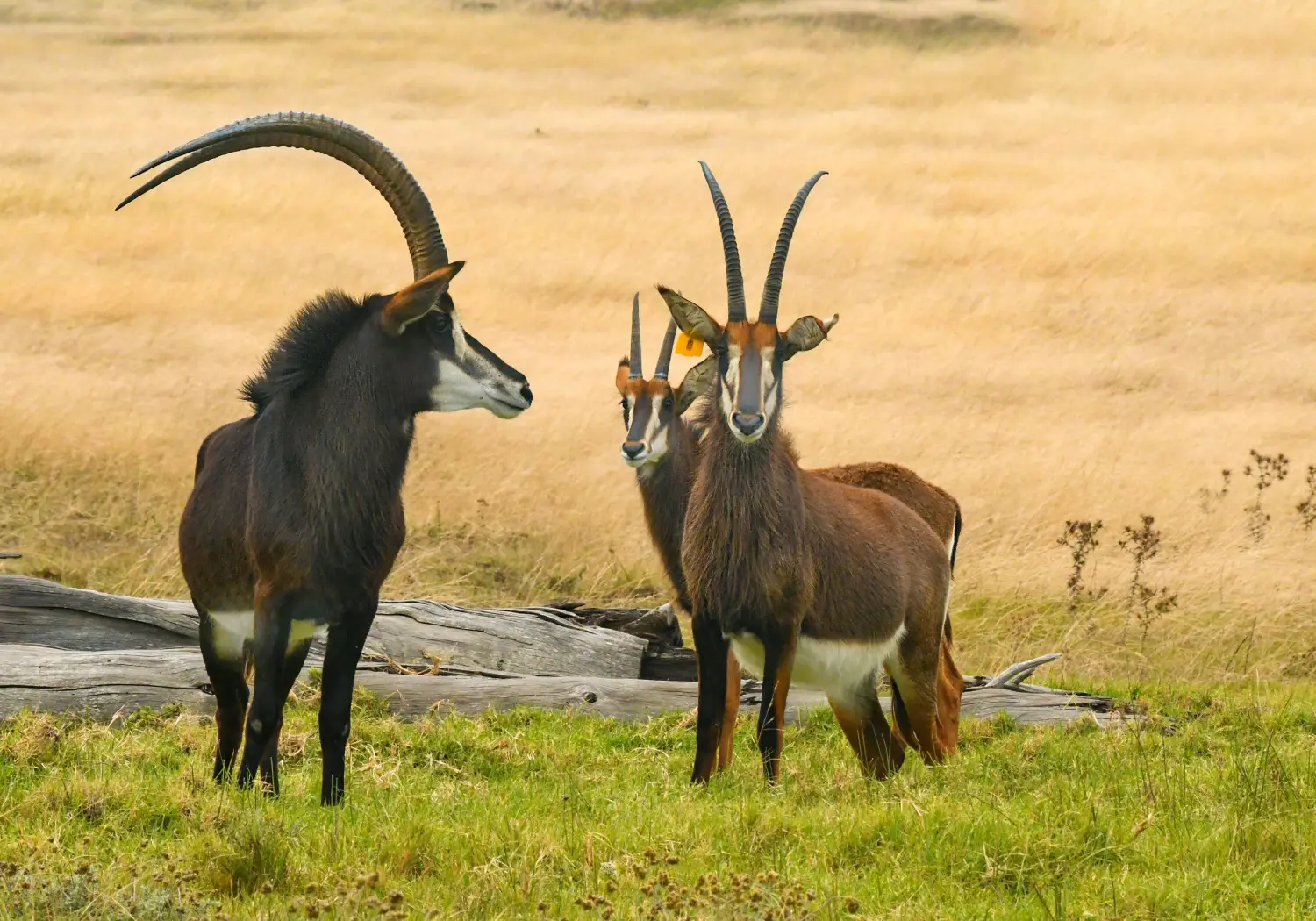
The sable antelope (Hippotragus niger) is one of Africa's most striking antelopes. Adult males are glossy black with a white belly and bold white face stripes, and carry huge, ridged horns that sweep back in a scimitar-like arc. Females and young are chestnut to reddish-brown. Kenya's sable belong to the Roosevelt's sable form, first described from the Shimba Hills in 1910. Once found along much of the south coast, they now survive only in Shimba Hills National Reserve near Mombasa, where Kenya's 2024–25 census counted just 40.
Quick answer: The sable antelope lives in miombo woodland and wooded grassland from south-eastern Kenya and Tanzania south to Angola, Zambia, Zimbabwe and South Africa. In Kenya, the only place to see it is Shimba Hills National Reserve, an easy trip from Diani Beach and Mombasa. Sightings are never guaranteed.
What Does a Sable Antelope Look Like?
The sable is a powerful, barrel-chested antelope with a short neck, a long face and an upright mane running along its neck. Adult males are a glossy jet black, while females and young are chestnut to reddish-brown, darkening with age. Both sexes have a white belly and a striking white face pattern: a white stripe above each eye that runs down to the muzzle, and a white chin. The name "sable" means black in heraldry, a nod to the dark males.
Their horns are the sable's crowning feature. Ringed and curving back in a great arc, they reach about 80–165 cm in males and about 60–100 cm in females. When a bull arches his neck and holds his head high, he looks much like a horse, which is why the sable is also called the black horse antelope. Roosevelt's sable, Kenya's form, is slightly smaller than the southern sable, with reddish tints.
Sable vs Roan Antelope: How to Tell Them Apart
The sable's closest relative is the roan, and Kenya has a tiny population of each.
- Coat: adult male sables are glossy black; females are chestnut. Roan are grizzled grey-brown.
- Horns: sable horns are much longer and sweep back in a dramatic arc. Roan horns are shorter and curve gently.
- Ears: roan have very long ears with dark tassels; sable ears are shorter.
- Where in Kenya: sable live only in Shimba Hills on the coast. Roan live only in Ruma National Park in the west.
Read our roan antelope profile for more.
Where Do Sable Antelope Live?
Sable live in miombo woodland and wooded grassland with good drainage and water nearby, avoiding wide-open plains. Their range runs from south-eastern Kenya and eastern Tanzania south through Mozambique, Zambia and Zimbabwe to South Africa, and west to Angola.
In Kenya, sable once ranged along the coastal hinterland from the Tanzania border northward for at least 210 km, and near Taveta. According to research published by FAO AGRIS, their range shrank by more than 98% between 1884 and the mid-2010s. Since 1994 they have been recorded only in Shimba Hills National Reserve. Browse our wildlife guide and Kenya reserves to learn more.
What Do Sable Antelope Eat?
Sable are mainly grazers, choosing fresh, leafy grass of medium height. They also browse leaves and herbs, especially in the dry season. Sable are known to chew bones to get minerals such as calcium and phosphorus. They drink regularly and stay within reach of water.
Sable Antelope Behaviour
Sable live in herds of about 10–30 females and young, led by a dominant female and watched over by a territorial bull. Young males form bachelor groups. In the dry season, groups may merge where grazing is shared.
Standing Their Ground
Sable are bold. Rather than run, they often face predators with lowered horns, and a cornered sable can seriously injure an attacker. This courage gives them some protection, but calves remain vulnerable.
Displays and Duels
Bulls show dominance by arching their necks and standing tall. Rival males drop to their knees and clash horns, though serious fights are rare.
Predators
Lions, leopards, spotted hyenas, wild dogs and Nile crocodiles prey on sable, especially young animals.
Breeding
Females give birth to a single calf after a pregnancy of about eight to nine months, usually timed for the end of the rains. The calf hides in long grass for its first two weeks or so, which is unusually long for an antelope, before joining the herd.
Is the Sable Antelope Endangered?
Worldwide, no. The sable antelope is listed as Least Concern on the IUCN Red List, though one form, the giant sable of Angola, is Critically Endangered. The African Wildlife Foundation notes that sable compete with farmers and herders for well-watered, well-drained land.
In Kenya, sable are in serious trouble. KWS figures reported by the Kenya News Agency show numbers falling from 265 in 1960 to 56 in the 2023 count, and Kenya's 2024–25 national wildlife census recorded just 40. Researchers consider Kenya's sable nationally Critically Endangered. Poaching, predation, habitat change, competition with Shimba's large elephant population, and inbreeding in a tiny population are the main threats.
Kenya's Sable Recovery Plan
KWS and its partners launched the second edition of the national Recovery and Action Plan for the Sable Antelope (2022–2031). It focuses on anti-poaching, habitat management, monitoring and improving breeding. You can explore recorded sightings across Africa on iNaturalist.
Learn how your trip can support projects like this with our conservation-based safaris in Kenya.
How to See Sable Antelope in Kenya
Shimba Hills National Reserve is the only place in Kenya to see sable, and it's an easy addition to a beach holiday.
Visit Shimba Hills National Reserve
Shimba Hills lies in Kwale County, about 33 km from Mombasa and a short drive from Diani Beach. Its rolling grassland, coastal forest and woodland are home to the sable, a large elephant population and rich birdlife, plus walks to Sheldrick Falls. Scan open grassy glades in the early morning and late afternoon. See our Shimba Hills National Reserve guide.
Combine It With the Coast
Shimba Hills makes an ideal half-day or day trip from Diani or Mombasa. The 10 Day Kenya Honeymoon Safari and Diani Beach Escape and the 12 Day Kenya Romance Safari and Indian Ocean Retreat both end on the south coast, where we can add a Shimba Hills visit. You can also browse our day trips.
Pair With Tsavo
Combine Shimba Hills with Tsavo East and Tsavo West for a classic coast-and-bush safari. Ask us to build a tailor-made route through our Kenya safaris.
See Sable Beyond Kenya
Tanzania's southern parks hold much larger numbers of Roosevelt's sable. Ask about our multi-country safaris.
Travel in the Dry Season
Shorter grass makes sable easier to spot in Shimba's glades. On the coast, the drier months are generally June to September and January to March. Travelling in the wet months instead? Read Can I do a Kenya safari during the rainy season?
Responsible Wildlife Viewing
Kenya's sable herd is tiny, so follow KWS guidance, keep your distance and stay quiet. Never approach on foot or drive off-track towards a herd. Report any snares or suspicious activity to park staff.
Frequently Asked Questions About the Sable Antelope
What is a sable antelope?
A large, powerful antelope with long, back-sweeping horns. Males are glossy black and females are chestnut-brown. Its scientific name is Hippotragus niger.
How big is a sable antelope?
About 1.2–1.4 m at the shoulder and about 190–270 kg, with males heavier.
Do female sable antelope have horns?
Yes. Females' horns are about 60–100 cm long; males' can reach about 165 cm.
Where can I see sable antelope in Kenya?
Only in Shimba Hills National Reserve, near Diani Beach and Mombasa. Sightings are never guaranteed.
How many sable antelope are left in Kenya?
Kenya's 2024–25 national wildlife census counted 40, down from 265 in 1960.
What is the difference between sable and roan antelope?
Sable males are black, with much longer, sweeping horns. Roan are grey-brown, with shorter horns and long tufted ears. In Kenya, sable live in Shimba Hills and roan live in Ruma National Park.
What do sable antelope eat?
Mainly fresh, leafy grass, plus some leaves and herbs. They also chew bones for minerals.
Is the sable antelope endangered?
Not worldwide; it is listed as Least Concern. In Kenya, however, it is critically low and found only in Shimba Hills.
Plan Your Coast and Safari Holiday
Want to see Kenya's rare sable, Shimba Hills' elephants and the beaches of Diani on one trip? Olengugih Safaris can design a private, flexible itinerary combining the coast, Shimba Hills and Tsavo. Start planning your safari or contact our team for a free quote.
Sources
- Kenya numbers falling from 265 (1960) to 56 (2023), the 2022–2031 recovery plan and threats: Kenya News Agency
- Kenya's 2024–25 census count of 40: IFAW
- Historic range, a decline of more than 98% and the nationally Critically Endangered assessment: Butynski, Parker & de Jong (2015), via FAO AGRIS
- Horn lengths, weight range and pregnancy length: Ultimate Ungulate
- Range and seasonal breeding: Animal Diversity Web
- Male and female colouring and size: SeaWorld
- Calves hiding for about two weeks: Odense Zoo
- Competition with farmers and herders: African Wildlife Foundation
Interesting facts and identification clues
Interesting Facts About the Sable Antelope
- The name sable means black, after the glossy black coat of adult males.
- Both males and females carry long, ringed horns, but the males' can be almost twice as long.
- Sable chew bones to get extra minerals.
- Sable calves stay hidden in long grass for about two weeks, longer than most antelope calves.
- Kenya's sable belong to Roosevelt's sable, first described from the Shimba Hills in 1910.
- Shimba Hills National Reserve is the only place in Kenya where sable survive.
Content reviewed 22 Oct 2026