About the Dwarf Mongoose
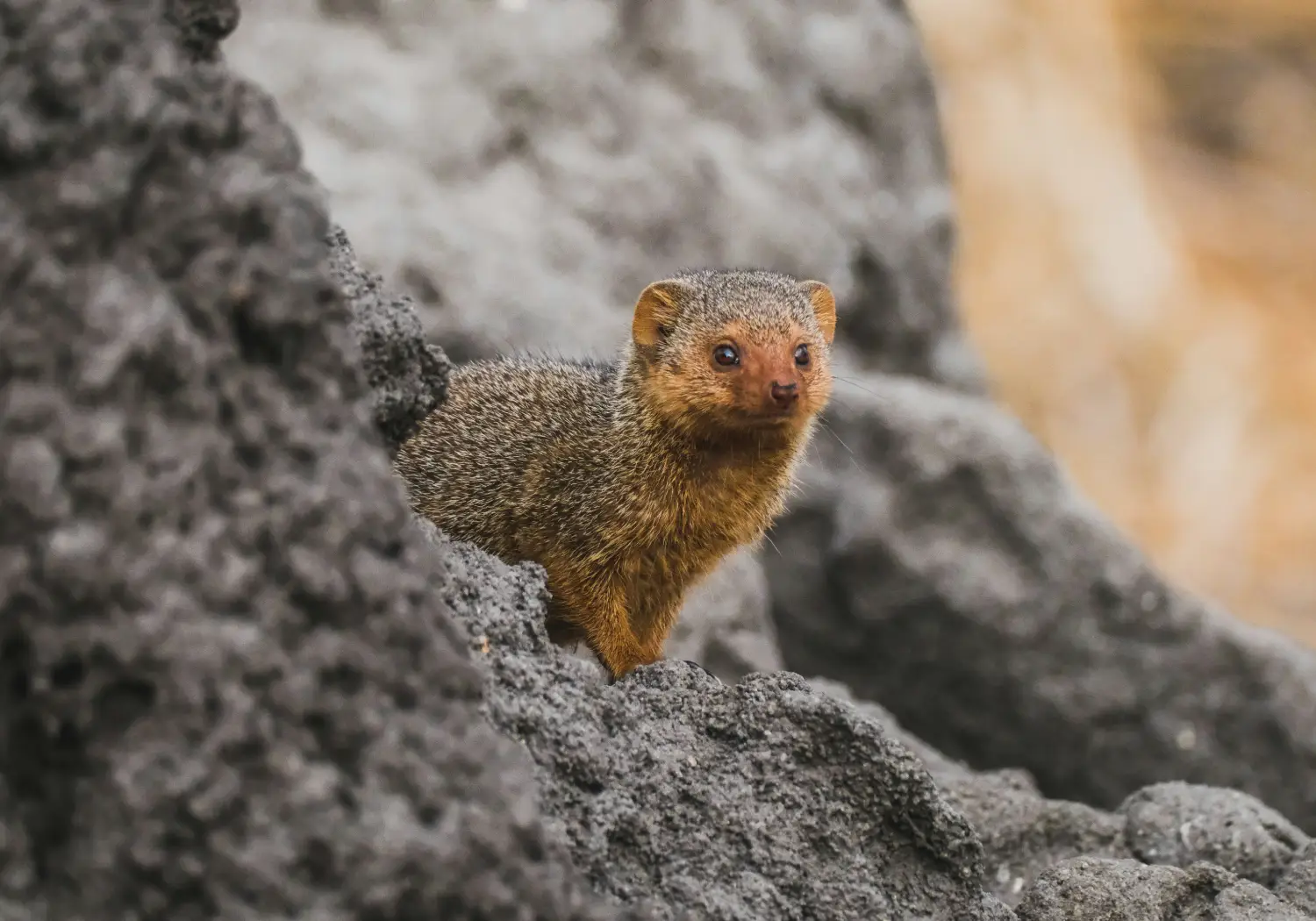
The common dwarf mongoose (Helogale parvula) is Africa's smallest carnivore, weighing only about 210–350 g, roughly the size of a can of soda. It has soft, finely speckled reddish-brown to dark brown fur, a short pointed muzzle and a long, fluffy tail. Dwarf mongooses live in tight-knit family groups, usually led by a single breeding pair, and take turns to stand guard while the rest dig for insects. In Kenya they are famous for teaming up with hornbills: the birds watch for danger while the mongooses flush out insects for the birds to catch.
Quick answer: The dwarf mongoose lives in dry savanna, open woodland and bush across East and southern Africa, wherever there are termite mounds, rocks or hollow trees for shelter. In Kenya, look for groups around termite mounds in Tsavo East, Tsavo West, Samburu, Meru and the Masai Mara. Sightings are never guaranteed.
What Does a Dwarf Mongoose Look Like?
The dwarf mongoose is tiny, about the length of a ruler including its tail, with a stocky body, short legs, a short pointed muzzle and small rounded ears. Its soft fur is finely speckled and ranges from yellowish-red to grizzled grey-brown or very dark brown, with no bands or stripes. The long, fluffy tail is often held low. Males and females look alike and are much the same size.
Dwarf Mongoose vs Banded Mongoose
Both species live in groups and use termite mounds, so they are easy to confuse at first glance.
- Size: the dwarf mongoose weighs about 210–350 g; the banded mongoose is much bigger, at about 1.5–2.25 kg.
- Markings: the dwarf mongoose is plain and finely speckled. The banded mongoose has clear dark bands across its back. Read our banded mongoose profile.
- Groups: dwarf mongoose groups average about 12 and are led by one breeding pair. Banded mongoose packs can reach 40, and all females breed.
- In northern Kenya: the similar Ethiopian (desert) dwarf mongoose lives in drier country, and the two dwarf species can overlap.
Where Do Dwarf Mongooses Live?
The common dwarf mongoose lives in East and southern Africa, from Ethiopia and Somalia through Kenya and Tanzania to Angola, Mozambique, northern Namibia, Botswana and north-eastern South Africa. It prefers dry savanna, open woodland, thickets and bush, avoiding dense forest, mountains above about 2,000 m and true desert. Above all, it needs shelter: termite mounds, rock piles or hollow trees where the whole group can sleep safely.
In Kenya, it is common in dry bush country such as Tsavo, Samburu and Meru. Browse our wildlife guide and Kenya national parks to learn more.
What Do Dwarf Mongooses Eat?
Dwarf mongooses are almost entirely insect eaters. They dig and sniff for beetles, beetle larvae, termites, grasshoppers and crickets, along with spiders, scorpions and worms. Now and then they catch small rodents, lizards, snakes, birds and eggs. Group members forage close together, each digging for its own food, and they keep in touch with soft, constant calls.
Dwarf Mongoose Behaviour
Dwarf mongooses are active by day and live in stable family groups of about 3–30, averaging about 12. Each group usually has a dominant breeding pair, often the oldest male and female, together with their grown-up offspring and a few males from other groups.
Teaming Up With Hornbills
In Kenya's Taru Desert near Tsavo, scientists recorded a remarkable partnership between dwarf mongooses and hornbills. The African Wildlife Foundation explains that the hornbills call out warnings when birds of prey approach, while the mongooses flush out insects for the hornbills to eat. Hornbills even wait at the den in the morning for the mongooses to emerge.
Sentinels on Duty
While the group forages, one mongoose often climbs onto a mound or branch to keep watch, giving alarm calls if danger appears. Research reported by National Geographic found that dwarf mongooses remember who did sentinel duty and reward them with extra grooming later in the day.
Helpers at the Nest
The dominant pair produces about 80% of the pups. Other group members help by babysitting, guarding, grooming and bringing food to the young. Some subordinate females even produce milk for the dominant female's pups.
Predators
Birds of prey such as eagles, goshawks and hawks are the main threat. Snakes, black-backed jackals and larger mongooses also hunt them. When a snake appears, the group mobs it together.
Breeding
After a pregnancy of about 50–55 days, the dominant female gives birth in a termite mound, usually to about four pups. She can breed several times a year in good seasons.
Is the Dwarf Mongoose Endangered?
No. The common dwarf mongoose is listed as Least Concern on the IUCN Red List. It is widespread and common in suitable habitat across much of East and southern Africa. Locally, it can suffer from habitat clearance, the loss of termite mounds to farming, road traffic and diseases spread by domestic dogs. Because small groups struggle to survive and raise pups, the loss of a few adults can hit a group hard. You can explore recorded sightings on iNaturalist.
Learn how your trip can support wildlife with our conservation-based safaris in Kenya.
How to See Dwarf Mongooses on Safari in Kenya
Dwarf mongooses are easy to miss because of their size, but once your guide spots a termite mound with a resident group, you can watch them for a long time.
Where to Look
- Tsavo East and West: dry bush with plenty of termite mounds. Tsavo East borders the Taru Desert, where the hornbill partnership was studied. See our Tsavo East and Tsavo West guides.
- Samburu, Buffalo Springs and Shaba: dry northern bush where both common and Ethiopian dwarf mongooses may occur. See our Samburu National Reserve, Buffalo Springs and Shaba guides.
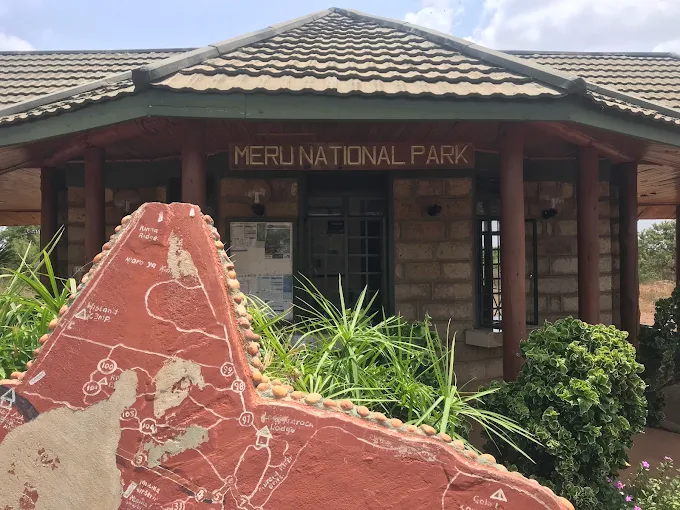
- Meru: termite mounds in the bush and grassland. See our Meru National Park guide.
- Amboseli and the Masai Mara: around termite mounds and woodland edges. See our Amboseli and Masai Mara guides.
Watch the Termite Mounds
In the early morning, dwarf mongooses sun themselves on top of their termite mound before heading out to forage. Ask your guide to stop at a known den mound and wait quietly.
Look for Hornbills
If you see red-billed or Von der Decken's hornbills hopping about on the ground, look nearby for a foraging group of dwarf mongooses.
Build a Route With Variety
The 4 Days Amboseli and Tsavo East Safari and the 8 Day Kenya Safari: Samburu, Ol Pejeta, Naivasha, Mara both visit good dwarf mongoose country. You can also browse our Kenya wildlife safaris.
Travel in the Dry Season
Short grass makes small animals easier to see. The drier months are generally June to October and January to February. Travelling in the wet months instead? Read Can I do a Kenya safari during the rainy season?
Photograph the Sentinel
A tiny dwarf mongoose standing upright on a termite mound, keeping watch, makes a delightful photo. Use a long lens and shoot at eye level. Our photographic safaris in Kenya are built for moments like this.
Responsible Wildlife Viewing
Keep your distance from den mounds, switch off the engine and stay quiet so the group carries on naturally. Never drive over or park on a termite mound. Don't feed mongooses at lodges or camps, as it harms their health and makes them bold.
Frequently Asked Questions About the Dwarf Mongoose
What is a dwarf mongoose?
Africa's smallest carnivore, a tiny, speckled brown mongoose that lives in family groups. Its scientific name is Helogale parvula.
How big is a dwarf mongoose?
About 35–40 cm long including its tail, and about 210–350 g.
What do dwarf mongooses eat?
Mainly insects such as beetles, larvae and termites, plus spiders, scorpions and occasionally small rodents, lizards, snakes and eggs.
Why do dwarf mongooses forage with hornbills?
The hornbills warn the mongooses about birds of prey, and the mongooses flush out insects that the hornbills eat.
What is the difference between dwarf and banded mongooses?
Dwarf mongooses are much smaller, plain speckled brown and live in groups led by one breeding pair. Banded mongooses are larger, have dark bands across the back, and all females breed.
Where can I see dwarf mongooses in Kenya?
Tsavo East and West, Samburu, Meru, Amboseli and the Masai Mara, especially around termite mounds. Sightings are never guaranteed.
Are dwarf mongooses endangered?
No. They are listed as Least Concern.
Plan Your Kenya Safari
Want to watch dwarf mongooses, hornbills and the rest of Kenya's small wonders alongside the Big Five? Olengugih Safaris can design a private, flexible Kenya itinerary through Tsavo, Samburu, the Mara and beyond. Start planning your safari or contact our team for a free quote.
Sources
- Insect diet, groups of 3–30, sentinels, territory size in Kenya's Taru Desert, the dominant pair producing 80% of pups, pregnancy and litter size: South African Red List (SANBI)
- Range, habitat preferences, the single breeding pair and predators: South African National Biodiversity Institute
- The hornbill partnership, size and pregnancy length: African Wildlife Foundation
- Sentinels rewarded with grooming: National Geographic
- Average group size of 12 and the Taru Desert hornbill study: Wikipedia
- The two dwarf mongoose species and subordinate females nursing pups: Africa Geographic
- Hornbills waiting at the den: Drayton Manor Zoo
Interesting facts and identification clues
Interesting Facts About the Dwarf Mongoose
The dwarf mongoose is Africa's smallest carnivore, weighing about as much as a can of soda.
In Kenya's Taru Desert, dwarf mongooses and hornbills work together to find food and stay safe.
Group members take turns on sentinel duty, and the group rewards them with extra grooming.
Usually only the dominant pair breeds, while the rest of the group helps raise the pups.
Some subordinate females produce milk to feed the dominant female's pups.
Dwarf mongooses often sleep inside termite mounds.
Content reviewed 22 Oct 2026