About the Kirk's Dik-Dik
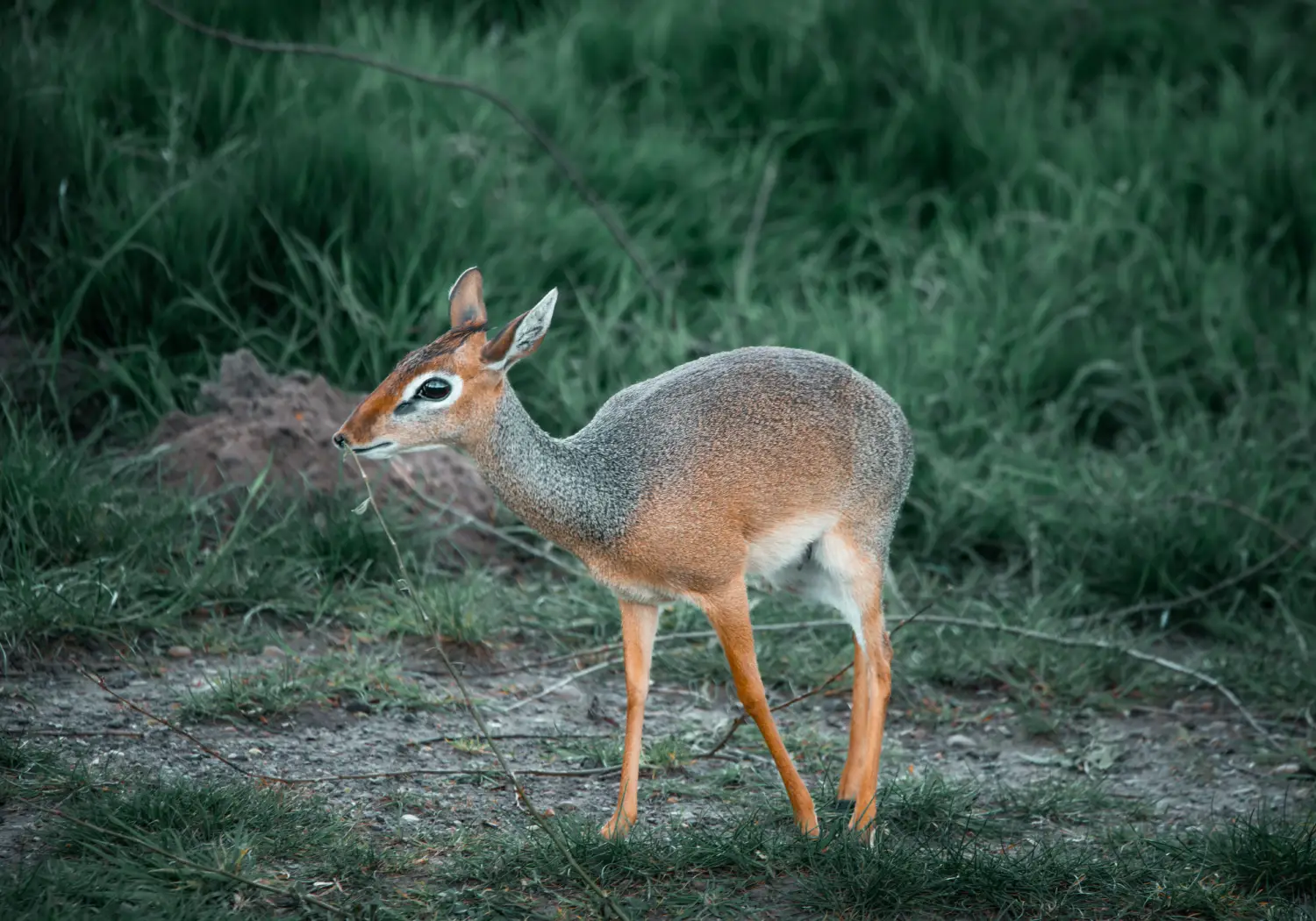
Kirk's dik-dik (Madoqua kirkii) is one of the smallest antelopes in the world, standing only about 35–45 cm at the shoulder and weighing about 3–6.5 kg. It has a grizzled grey-brown back, a reddish head and legs, huge dark eyes ringed with white, and a long, flexible, trunk-like nose. Dik-diks live in pairs that usually stay together for life. Their name comes from the sharp "zik-zik" or "dik-dik" alarm call they give as they dart for cover.
Quick answer: Kirk's dik-dik is a tiny browsing antelope of dry thornbush and woodland in East Africa, with a separate population in Namibia and Angola. In Kenya, look for pairs in the bush of Samburu, Tsavo, Lake Nakuru, the Masai Mara and the Laikipia conservancies, often by the roadside early and late in the day. Sightings are never guaranteed.
What Does a Kirk's Dik-Dik Look Like?
Kirk's dik-dik is about the size of a small dog. Its back is grizzled grey-brown, while its head, legs and flanks are warmer reddish-tan, and its belly is pale. Its large dark eyes are circled with white, and a dark gland just in front of each eye produces a scent used to mark territory. A tuft of upright hair on the crown gives it a slightly crested look.
Its most unusual feature is its nose: long, soft and flexible, almost like a tiny trunk. Only males carry horns, which are short, ridged spikes often half-hidden by the crown tuft. Females are slightly larger than males.
Kirk's Dik-Dik vs Guenther's Dik-Dik
Kenya has two dik-dik species, and they overlap in parts of the north.
- Kirk's dik-dik: the common, widespread dik-dik of central and southern Kenya, with a moderately long nose.
- Guenther's dik-dik: found in the drier north and north-east, with an even longer, more trunk-like nose.
- Where both occur: in northern areas such as Samburu, the two can be hard to tell apart, so ask your guide.
Where Do Kirk's Dik-Diks Live?
Kirk's dik-diks live in dry thornbush, thickets and open woodland with plenty of low cover to hide in. They avoid open grassland and tall grass, where they cannot see over the vegetation. Their range is split in two: one population runs from southern Somalia through Kenya to central Tanzania, and another lives in north-western Namibia and south-western Angola.
A pair usually lives in the same small territory for life. Browse our wildlife guide and Kenya destinations to see where these habitats are found.
What Do Kirk's Dik-Diks Eat?
Kirk's dik-diks are browsers. They pick leaves, shoots, buds, flowers, fruit and berries, and only rarely eat grass. Their narrow, pointed snout lets them choose the most nutritious parts of each plant. They can live without drinking, getting the water they need from their food and from dew. They feed in bursts through the day and night, resting in shade during the midday heat.
Kirk's Dik-Dik Behaviour
Kirk's dik-diks live in pairs, often with their latest young, on a territory they share for life.
A Nose That Keeps Them Cool
The long nose is packed with blood vessels. As the dik-dik breathes, air flowing through the nose cools the blood, and on very hot days it pants through its nose to cool down even more. This helps it survive in hot, dry country without losing too much water.
Marking Territory
A pair marks its territory with dung piles about 30 cm across, placed along the borders. The male often covers the female's dung with his own. Both also wipe scent from the gland in front of each eye onto twigs and grass stems.
Dik-Dik Alarm
When startled, a dik-dik gives its sharp "zik-zik" whistle and dashes for cover in quick zigzag leaps. Leopards, cheetahs, wild dogs, jackals, caracals, eagles and pythons hunt them. Lions rarely bother with such a small meal.
Breeding
Females give birth to a single fawn after a pregnancy of about five and a half months (166–174 days), and can breed twice a year. Unusually for an antelope, the fawn is born nose first. It can stand within about 15 minutes and stays hidden in thick cover for its first weeks.
Is Kirk's Dik-Dik Endangered?
No. Kirk's dik-dik is listed as Least Concern on the IUCN Red List, and it remains common across much of its range. In some areas it is affected by habitat loss and by bushmeat snaring, since its small size makes it an easy target. Kenya's wildlife officials have reported rising bushmeat poaching of small plains species such as dik-diks. You can explore recorded sightings on iNaturalist.
Learn how your trip can support wildlife with our conservation-based safaris in Kenya.
How to See Kirk's Dik-Dik on Safari in Kenya
Dik-diks are small and shy, but they are common in thornbush country. Once your guide shows you the first pair, you'll start seeing them everywhere.
Scan the Bush and Roadsides
- Samburu and Buffalo Springs: pairs in the dry acacia bush beside the Ewaso Ng'iro. See our Samburu National Reserve and Buffalo Springs National Reserve guides.
- Tsavo East and West: common in the thick Tsavo bush. See our Tsavo East and Tsavo West guides.
- Lake Nakuru: pairs in the acacia woodland. See our Lake Nakuru National Park guide.
- Masai Mara: thickets along rivers and on the bushy fringes of the plains. See our Masai Mara National Reserve guide.
- Laikipia and Meru: conservancies such as Ol Pejeta and Lewa, and Meru National Park.
Go Early and Late
Dik-diks are most active in the early morning and late afternoon, and often step out beside the track at these times. At midday they rest in deep shade.
Build a Route With Variety
The 8 Day Kenya Safari: Samburu, Ol Pejeta, Naivasha, Mara passes some of the best dik-dik country in Kenya. The 7 Day Kenya Elephants, Lakes and Masai Mara Safari is another good choice. You can also browse our Kenya wildlife safaris.
Travel in the Dry Season
The bush thins out and small antelopes are easier to spot. The drier months are generally June to October and January to February. Travelling in the wet months instead? Read Can I do a Kenya safari during the rainy season?
Photograph the Pair
A dik-dik pair standing together, big eyes fixed on the lens, makes a charming portrait. Approach slowly, stay in the vehicle and use a long lens. Our photographic safaris in Kenya are built for moments like this.
Responsible Wildlife Viewing
Keep your distance, switch off the engine and keep your voice low. Dik-diks bolt at the slightest disturbance, so a quiet, patient approach gives the best view. Never leave the vehicle to follow one into the bush.
Frequently Asked Questions About Kirk's Dik-Dik
What is a Kirk's dik-dik?
A tiny East African antelope with large eyes, a long trunk-like nose and a grizzled grey-brown coat. Its scientific name is Madoqua kirkii.
How big is a dik-dik?
About 35–45 cm at the shoulder and about 2.7–6.5 kg, with females slightly larger than males.
Why is it called a dik-dik?
Because of its alarm call, a sharp "zik-zik" or "dik-dik" whistle it gives as it runs for cover.
Do dik-diks mate for life?
Yes. Kirk's dik-diks live in pairs that usually share the same territory for life.
Why do dik-diks have long noses?
The nose works like a radiator. Air flowing through it cools the blood, which helps the dik-dik stay cool in hot, dry country.
What do dik-diks eat?
Mostly leaves, shoots, buds, flowers and fruit. They rarely eat grass and can live without drinking.
Where can I see Kirk's dik-dik in Kenya?
Try Samburu, Tsavo, Lake Nakuru, the Masai Mara, Laikipia and Meru. Sightings are never guaranteed.
Are dik-diks endangered?
No. Kirk's dik-dik is listed as Least Concern, though snaring and habitat loss affect it locally.
Plan Your Kenya Bush Safari
Want to spot dik-diks, leopards and elephants in Kenya's thornbush country? Olengugih Safaris can design a private, flexible Kenya itinerary through Samburu, Tsavo, the Rift Valley lakes, the Mara and beyond. Start planning your safari or contact our team for a free quote.
Interesting facts and identification clues
Interesting Facts About Kirk's Dik-Dik
Kirk's dik-dik is one of the smallest antelopes in the world, about the size of a small dog.
Its name comes from the sharp alarm call it gives when startled.
Its long, flexible nose helps cool its blood in hot weather.
Dik-dik pairs usually stay together for life on the same territory.
Unlike most antelopes, a dik-dik fawn is born nose first.
The species is named after Sir John Kirk, a Scottish naturalist and British consul in Zanzibar.
Content reviewed 19 Oct 2026