About the Rock Hyrax
Rock Hyrax: The Elephant's Tiny Cousin
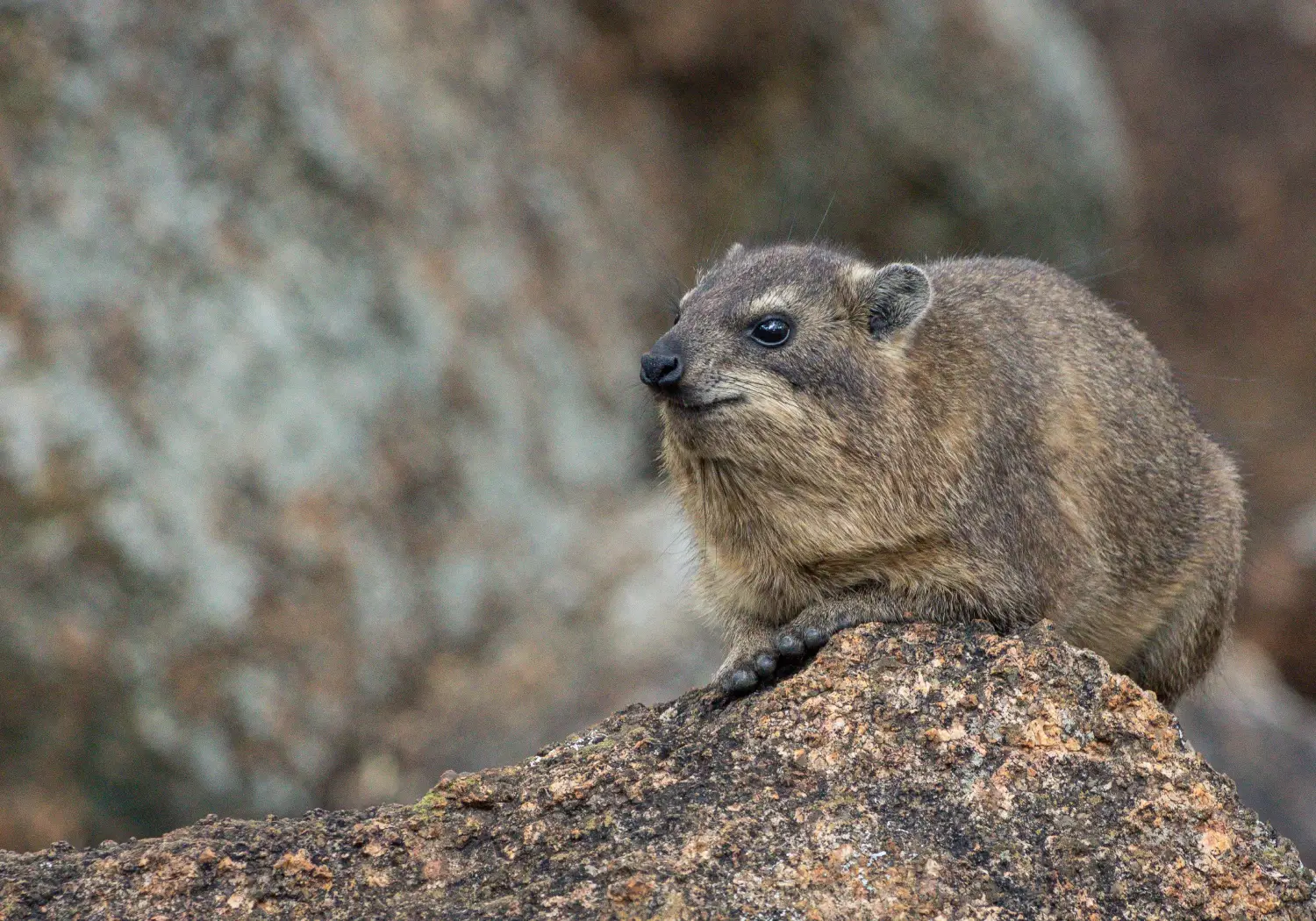
The rock hyrax (Procavia capensis), also called the dassie or rock rabbit, looks like a large guinea pig with short ears and no tail. Surprisingly, it isn't a rodent at all. Its closest living relatives are elephants and manatees, and it even has small, tusk-like upper incisors. Rock hyraxes live in noisy colonies among rocky outcrops (kopjes), cliffs and boulders, where they spend their mornings basking in the sun and dash into crevices at the first sign of danger. They are one of the easiest small mammals to see in Kenya, often allowing close views.
Quick answer: The rock hyrax lives in rocky places across much of Africa and the Middle East, from deserts to mountains. In Kenya, look for colonies sunning themselves on rocks at Hell's Gate National Park, the cliffs of Lake Nakuru, the lava rocks of Tsavo West and the kopjes of the Masai Mara, especially in the morning. Sightings are never guaranteed.
What Does a Rock Hyrax Look Like?
The rock hyrax is a stout, rounded animal with a short neck, a pointed head, small rounded ears and no visible tail. Its thick fur is grey-brown to yellowish-brown, paler underneath. In the middle of its back is a dark patch of hair covering a scent gland, which it raises when excited or alarmed. Its upper incisors grow into small, pointed tusks, like a miniature version of an elephant's.
Its feet are built for climbing. The soles have rubbery, moist pads kept damp by sweat glands, and special muscles that let the middle of the sole work like a suction cup. This lets hyraxes run up steep, smooth rock faces with ease.
Rock Hyrax vs Bush Hyrax vs Tree Hyrax
Kenya has three kinds of hyrax, and two often share the same rocks.
- Rock hyrax: larger and stockier, with a blunt nose and a dark back patch; mainly eats grass.
- Bush hyrax (yellow-spotted rock hyrax): smaller and slimmer, with a pale patch over each eye and a yellowish back gland; often shares kopjes with rock hyraxes but mostly browses on leaves.
- Tree hyrax: lives in forest trees, is mainly nocturnal and is famous for its loud, shrieking night calls, often heard in the Aberdares and on Mount Kenya.
The Elephant's Surprising Relative
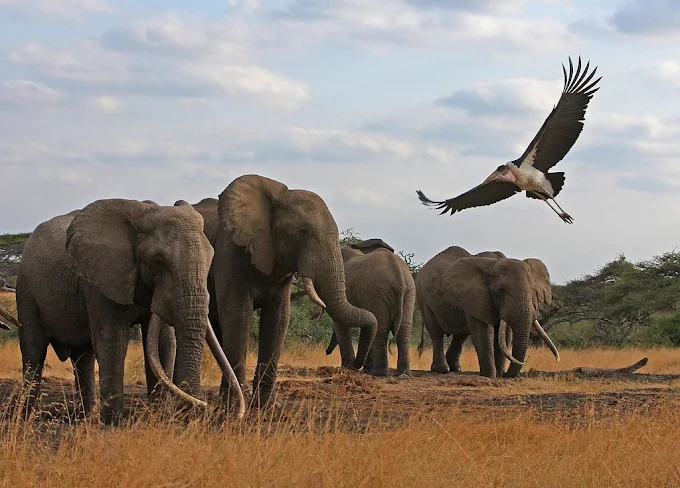
Hyraxes may look like rodents, but DNA shows that their closest living relatives are elephants and manatees. They share several features with elephants, including tusk-like incisors, similar toe and skull structure, males with internal testes, and an unusually long pregnancy for their size.
Where Do Rock Hyraxes Live?
Rock hyraxes live across much of sub-Saharan Africa, North-East Africa, Arabia and the Levant, from sea level up to high mountains. They depend on rocky outcrops, cliffs, boulder piles, gorges and lava flows, where cracks and crevices give them shelter from predators and extreme temperatures. Their homes are easy to spot: hyrax urine leaves white, crusty streaks on the rocks.
Browse our wildlife guide and Kenya national parks to learn more.
What Do Rock Hyraxes Eat?
Rock hyraxes are mainly grazers, feeding on grasses, but they also eat leaves, shoots, buds, fruit and bark, and can eat some plants that are poisonous to other animals. They usually feed close to their rocks, often in a circle with their heads facing outwards to watch for danger, and quickly fill their stomachs before retreating to shelter. They get most of the water they need from their food.
Rock Hyrax Behaviour
Rock hyraxes are active by day and live in colonies of a few to a few dozen animals, usually led by a dominant male with several females and their young.
Sunbathers
Hyraxes can't control their body temperature very well, so they spend the early morning basking in the sun, often huddled together, and shelter in crevices during the midday heat.
Sentinels
While the colony feeds, a dominant male often stands guard on a high rock. At the first sign of danger he gives a sharp alarm call and the whole colony dives for cover.
Communal Toilets
A colony uses the same latrine sites for years. The dried urine and droppings build up into a hard, resinous material called hyraceum, which has been used in traditional medicine and perfume.
Predators
Verreaux's eagle (black eagle) is a specialist hyrax hunter. Leopards, caracals, black-backed jackals, servals, pythons and other eagles also prey on them.
Breeding
After an unusually long pregnancy of about seven to eight months, females give birth to about one to six well-developed young. Babies can run and climb within a day or two, and the colony shares the care of youngsters in nursery groups.
Is the Rock Hyrax Endangered?
No. The rock hyrax is listed as Least Concern on the IUCN Red List. It is widespread and common, and many populations live in protected areas. Locally, hyraxes are hunted for meat and skins, and outbreaks of disease such as mange can wipe out whole colonies. Quarrying of rocky outcrops can also destroy their homes. You can explore recorded sightings on iNaturalist.
Learn how your trip can support wildlife with our conservation-based safaris in Kenya.
How to See Rock Hyraxes in Kenya
Rock hyraxes are among the easiest small mammals to see in Kenya. Scan any rocky outcrop, cliff or boulder pile, especially in the morning when they sunbathe.
Where to Look
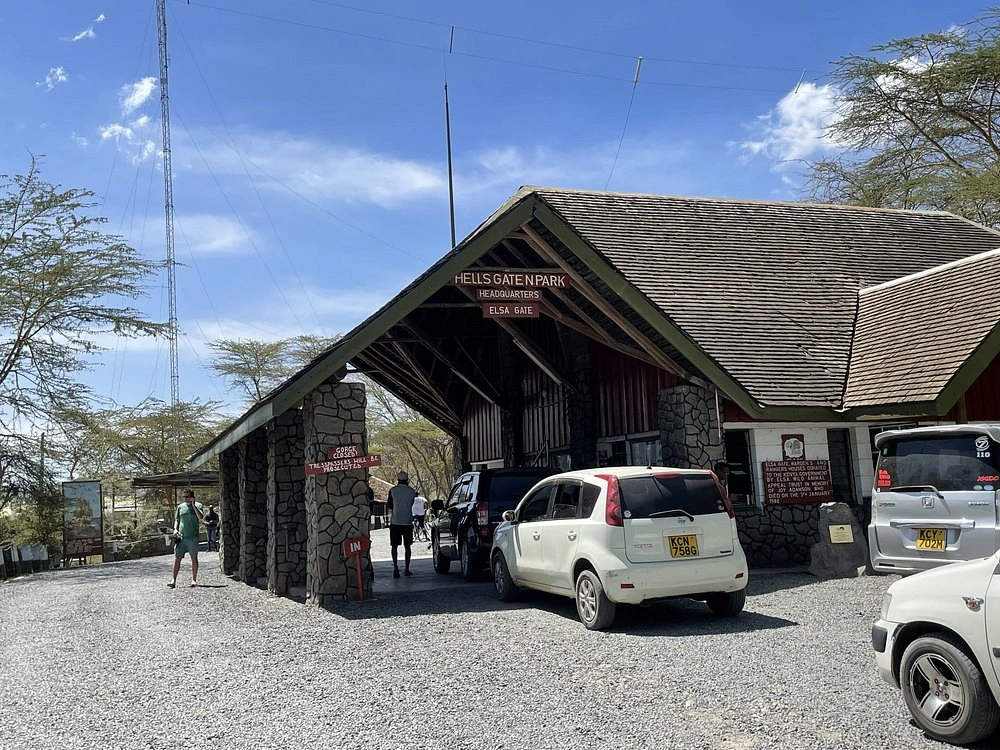
- Hell's Gate National Park: the cliffs and boulders of the gorge, which you can explore on foot or by bike. See our Hell's Gate National Park guide.
- Lake Nakuru: the rocky escarpment and viewpoints such as Baboon Cliff. See our Lake Nakuru National Park guide.
- Tsavo West: lava flows, rocky hills and the rocks around Mzima Springs. See our Tsavo West National Park guide.
- Masai Mara: rocky kopjes scattered across the plains. See our Masai Mara National Reserve guide.
- Mountains and hills: rocks on Mount Kenya and in the Chyulu Hills.
Go Early
The best time is the early morning, when colonies gather on sunny rocks to warm up. Late afternoon is also good.
Look for White Streaks
White, crusty streaks on rocks show where hyrax colonies live and use their latrines.
Watch for Klipspringers Too
Rocky outcrops are also home to the klipspringer, so you may see both together.
Build a Route With Variety
The 7 Day Kenya Elephants, Lakes and Masai Mara Safari passes Lake Nakuru, Lake Naivasha (close to Hell's Gate) and the Mara. You can also browse our cycling safaris in Kenya, which include Hell's Gate.
Responsible Wildlife Viewing
Rock hyraxes at busy viewpoints and lodges can seem tame, but they are wild animals and can bite. Watch them from a few metres away, don't try to touch or corner them, and never feed them. Human food makes them ill and bold, and can lead to conflict with people.
Frequently Asked Questions About the Rock Hyrax
What is a rock hyrax?
A furry, rabbit-sized African mammal that lives in colonies on rocky outcrops. Its scientific name is Procavia capensis, and it is also called the dassie.
Is the rock hyrax related to the elephant?
Yes. Despite looking like a rodent, its closest living relatives are elephants and manatees.
What do rock hyraxes eat?
Mainly grasses, plus leaves, shoots, fruit and bark.
How big is a rock hyrax?
About 44–54 cm long and about 1.8–5.4 kg.
What is the difference between a rock hyrax and a bush hyrax?
The rock hyrax is larger with a blunt nose and mainly eats grass. The bush hyrax is smaller, with a pale patch over each eye, and mainly eats leaves.
Where can I see rock hyraxes in Kenya?
On rocky outcrops and cliffs at Hell's Gate, Lake Nakuru, Tsavo West, the Masai Mara kopjes, Mount Kenya and the Chyulu Hills. Sightings are never guaranteed.
Are rock hyraxes endangered?
No. They are listed as Least Concern.
Plan Your Kenya Safari
Want to explore Hell's Gate on foot or by bike, see hyraxes and klipspringers on the rocks and track big game on the plains? Olengugih Safaris can design a private, flexible itinerary through the Rift Valley, Tsavo and the Mara. Start planning your safari or contact our team for a free quote.
Sources
- Least Concern status, other names, tusk-like incisors, subspecies including the black-necked rock hyrax (P. c. johnstoni) of East Africa, and Verreaux's eagle as a hyrax specialist: Wikipedia
- Size of 44–54 cm, weight of 1.8–5.4 kg, a grass diet, 210–240-day pregnancy, colonies of 2–26 and the dominant male: SeaWorld
- Relationship to elephants and manatees, rubbery foot pads with suction, sentry duty, kopjes and uses of hyrax waste: Los Angeles Zoo
- Feeding in a circle, white urine streaks, predators, mange and nursery groups: San Diego Zoo Wildlife Alliance
- Morning basking, a guard always on watch, 1–6 young after an almost eight-month pregnancy, and Least Concern status: De Wets Wild
- Elephant-like traits including internal testes and a long pregnancy: Science Insights
Interesting facts and identification clues
Interesting Facts About the Rock Hyrax
- The rock hyrax's closest living relatives are elephants and manatees.
- It has small, tusk-like upper incisors.
- Rubbery, sweaty foot pads let it run up steep, smooth rock.
- It sunbathes every morning because it can't control its body temperature well.
- Colonies use the same latrines for years, leaving white streaks on the rocks.
- Its pregnancy lasts about seven to eight months, very long for an animal its size.
Content reviewed 28 Oct 2026