About the Side-Striped Jackal
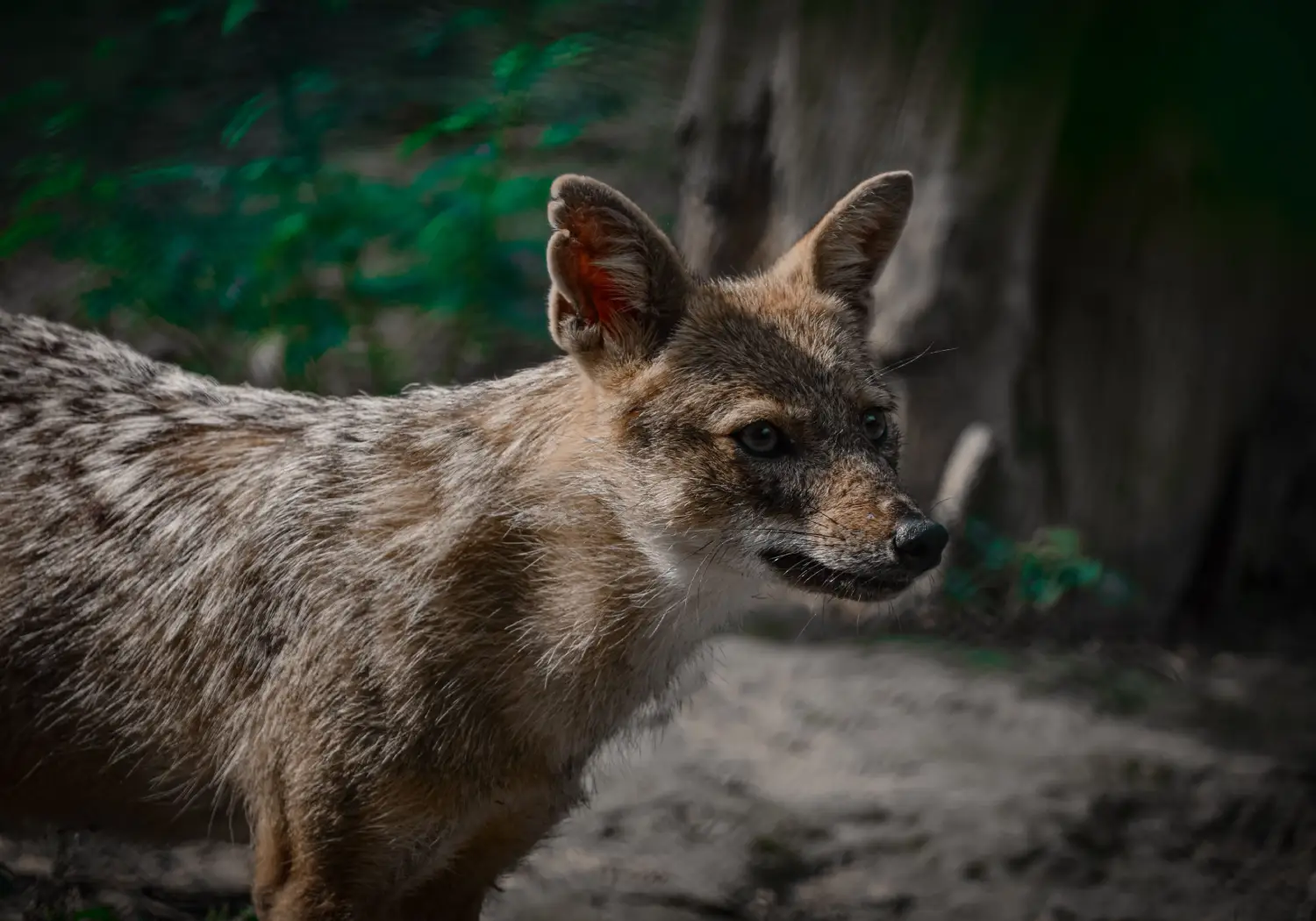
The side-striped jackal (Lupulella adusta) is the least known of Africa's jackals. It is a greyish-buff wild dog with a pale stripe, edged in black, running along each flank and a distinctive white tip to its tail. Unlike the black-backed jackal of the open plains, it prefers wetter, wooded country and is mostly active at night. Instead of a wailing howl, it gives a soft, owl-like hoot. It is also the most omnivorous of the jackals, eating plenty of fruit and insects.
Quick answer: The side-striped jackal lives in moist savanna, woodland, bush and marsh edges across tropical Africa, from West Africa to Ethiopia and south to South Africa. In Kenya, it is shy and seldom seen. Your best chances are on night or early-morning drives in wooded, well-watered areas such as parts of the Masai Mara, Lake Nakuru and the forested highlands. Sightings are never guaranteed.
What Does a Side-Striped Jackal Look Like?
The side-striped jackal is a medium-sized wild dog with a more dog-like look than other jackals: a broader face, a shorter muzzle and shorter, rounder ears. Its coat is grey to buff-brown, paler underneath. Along each flank runs a light stripe, edged below with darker hair, which can be faint in some animals. Its bushy, dark tail almost always ends in a white tip, a useful clue at night. Males are slightly larger than females.
Side-Striped Jackal vs Other Jackals in Kenya
Kenya has three jackal-like canids. Here's how to tell them apart.
- Side-striped jackal: grey-buff, with a pale side stripe and a white-tipped tail. It prefers wooded, wetter areas and is mainly nocturnal.
- Black-backed jackal: reddish, with a bold silver-black saddle and a black-tipped tail. It is common on open plains. Read our black-backed jackal profile.
- African golden wolf (golden jackal): sandy or golden-grey, with no bold saddle or stripe. It prefers dry, open plains. Read our golden jackal profile.
Where side-striped and black-backed jackals share an area, the side-striped jackal keeps to woodland while the black-backed jackal uses the open grassland.
Where Do Side-Striped Jackals Live?
Side-striped jackals live across tropical Africa, from about 15° North to 23° South. Their range runs from West Africa to Ethiopia and south to Angola and north-eastern South Africa. According to the Animal Diversity Web, they are most common in moister habitats: well-watered savanna, woodland, bush, forest edges and marshes. They often live at low densities, which is one reason they are rarely seen.
In Kenya, look for them in wooded and wetter areas rather than dry, open plains. Browse our wildlife guide and Kenya destinations to learn more.
What Do Side-Striped Jackals Eat?
The side-striped jackal is the most omnivorous of the jackals. It eats insects such as beetles and termites, fruit and berries, rodents, hares, birds and their eggs, reptiles and carrion. It is less of a hunter than the black-backed jackal and more of a forager and scavenger.
Side-Striped Jackal Behaviour
Side-striped jackals live alone, in pairs or in small family groups. Pairs mate for life and share a territory, which they mark with scent.
Creatures of the Night
Side-striped jackals are mainly nocturnal, most active from dusk to before dawn. By day they rest in burrows, rocky outcrops or thick cover, which makes them hard to see on daytime game drives.
An Owl-Like Hoot
Instead of the wailing howl of other jackals, the side-striped jackal gives a soft, owl-like hoot. It also yips, and screams when threatened.
Predators
Leopards, spotted hyenas and large eagles are their main predators, especially of young jackals.
Breeding
Females give birth in a den, often an old burrow or termite mound, after a pregnancy of 57–70 days. Litters usually have about three to six pups. The male brings food back to the den, and the young stay with their parents for almost a year.
Is the Side-Striped Jackal Endangered?
No. The side-striped jackal is listed as Least Concern on the IUCN Red List. It is widespread, though it usually lives at low densities. Like other wild dogs, it can be persecuted as a livestock predator and can catch rabies and distemper from domestic dogs. You can explore recorded sightings on iNaturalist.
Learn how your trip can support wildlife with our conservation-based safaris in Kenya.
How to See Side-Striped Jackals in Kenya
Side-striped jackals are shy and nocturnal, so a sighting takes luck, good timing and a sharp-eyed guide.
Where to Look
- Masai Mara: wooded and riverine areas along the Mara and Talek rivers, and the conservancies where night drives are allowed. See our Masai Mara National Reserve guide and conservancies such as Naboisho.
- Lake Nakuru: acacia woodland and forest edges around the lake. See our Lake Nakuru National Park guide.
- Highland forests: the forest edges and glades of the Aberdares and Mount Kenya, especially near lodges that floodlight their waterholes at night.
- Western Kenya: wetter, wooded country such as Ruma National Park and Kakamega Forest.
Book a Night Drive
Because side-striped jackals are mostly nocturnal, a guided night drive in a private conservancy gives the best chance. Look for the white tail tip in the spotlight.
Watch at Dawn and Dusk
Early morning and late evening drives catch them leaving or returning to their dens.
Listen for the Hoot
At night, listen for a soft, owl-like hoot. It may be a side-striped jackal rather than an owl.
Build a Route With Variety
The 8 Day Kenya Safari: Samburu, Ol Pejeta, Naivasha, Mara combines woodland, conservancy and plains habitats. You can also browse our Kenya wildlife safaris.
Travel in the Dry Season
Animals gather near water and cover is thinner. The drier months are generally June to October and January to February. Travelling in the wet months instead? Read Can I do a Kenya safari during the rainy season?
Responsible Wildlife Viewing
On night drives, keep spotlights off the animal's eyes for long, stay quiet and follow your guide's rules. Never feed jackals at camps or lodges, and keep away from dens with pups.
Frequently Asked Questions About the Side-Striped Jackal
What is a side-striped jackal?
A shy, mainly nocturnal African jackal with a grey-buff coat, a pale stripe along each side and a white-tipped tail. Its scientific name is Lupulella adusta.
How big is a side-striped jackal?
About 35–50 cm at the shoulder and about 6.5–14 kg.
How do you tell a side-striped jackal from a black-backed jackal?
The side-striped jackal is greyer, with a pale side stripe and a white-tipped tail. The black-backed jackal is reddish, with a silver-black saddle and a black-tipped tail.
What do side-striped jackals eat?
Insects, fruit, small mammals, birds, reptiles and carrion. They eat more fruit than other jackals.
Are side-striped jackals nocturnal?
Yes. They are mostly active from dusk to before dawn.
Where can I see side-striped jackals in Kenya?
In wooded, wetter areas such as parts of the Masai Mara, Lake Nakuru, the Aberdares, Mount Kenya and western Kenya, especially on night drives. Sightings are never guaranteed.
Are side-striped jackals endangered?
No. They are listed as Least Concern.
Plan Your Kenya Night-Drive Safari
Want to look for side-striped jackals and other night creatures on a private conservancy safari? Olengugih Safaris can design a flexible itinerary with night drives in the Mara and Laikipia conservancies. Start planning your safari or contact our team for a free quote.
Sources
- Range, moist habitats, monogamy, 57–70-day pregnancy, litters of three to six, nocturnal habits, owl-like hoot, omnivorous diet and predators: Animal Diversity Web
- Genus Lupulella, the Kenyan Elgon form and less predatory habits: Wikipedia
- Weight up to 14 kg and the owl-like hoot: Bushwise
- Low densities, Least Concern status, males bringing food to the den and young staying for almost a year: De Wets Wild
- Weight range of 6.2–13.6 kg and damp woodland habitat: New World Encyclopedia
Interesting facts and identification clues
Interesting Facts About the Side-Striped Jackal
The side-striped jackal is named after the pale stripe that runs along each flank.
Its tail almost always ends in a white tip, unlike the black-tipped tail of the black-backed jackal.
It gives a soft, owl-like hoot instead of a wailing howl.
It is the most omnivorous of all jackals, eating plenty of fruit.
It is mostly active at night and rests in burrows by day.
Pairs mate for life, and the male brings food to the den.
Content reviewed 22 Oct 2026