About the Warthog
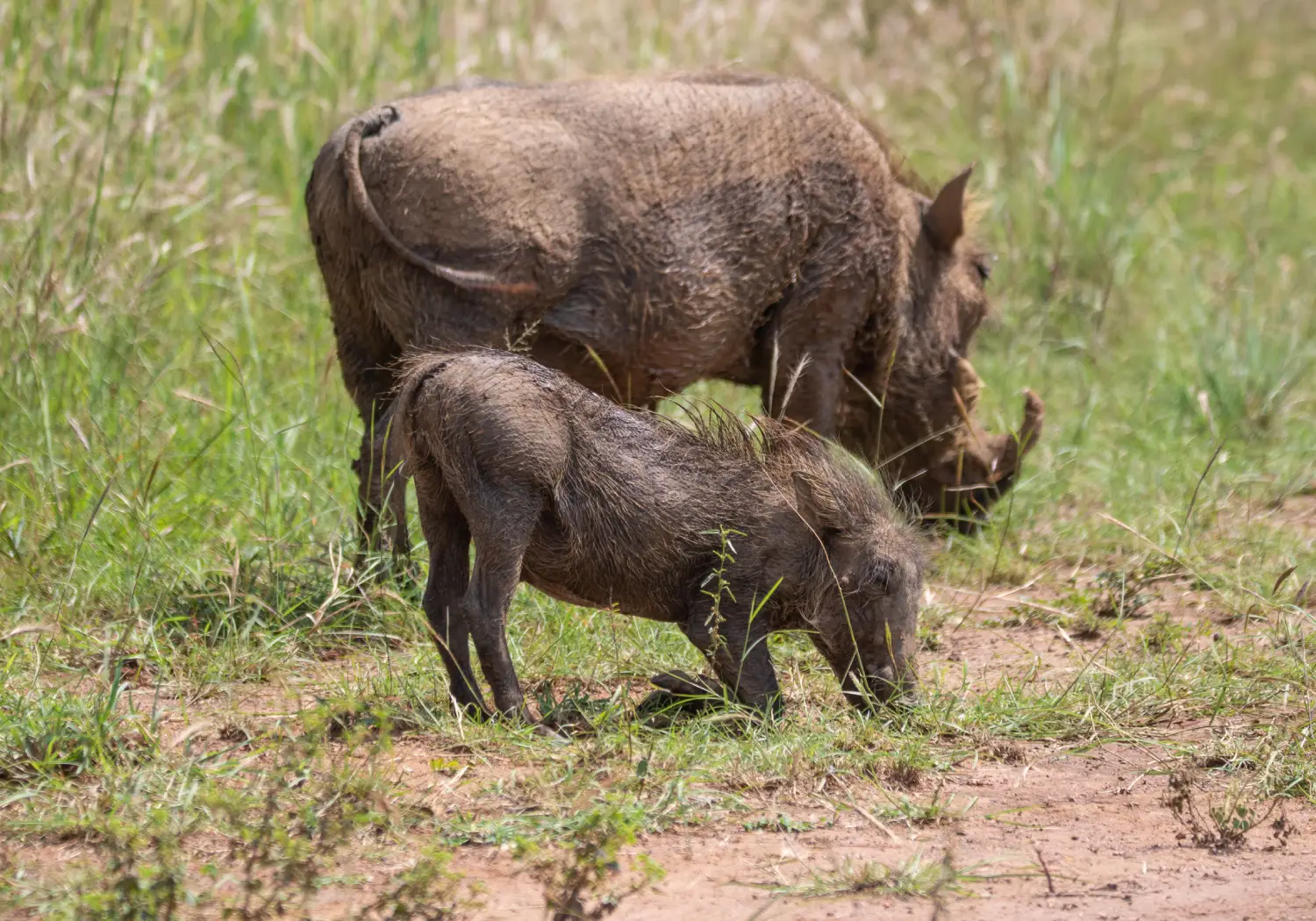
The common warthog (Phacochoerus africanus) is a wild pig with a big, flat head, two pairs of curved tusks, bumpy "warts" on its face and a long mane down its back. It is one of the most entertaining animals on safari: warthogs kneel on their padded wrists to graze, trot away with their thin tails held straight up like aerials, and reverse into burrows at night. In Swahili the warthog is called ngiri. Kenya's 2021 national wildlife census counted 8,013.
Quick answer: The common warthog lives on savanna grassland and open woodland across sub-Saharan Africa. In Kenya, you can see it in almost every savanna park, including Nairobi National Park, the Masai Mara, Lake Nakuru, Amboseli and Tsavo. Eastern and northern Kenya also has a second species, the desert warthog. Sightings are never guaranteed.
What Does a Warthog Look Like?
The warthog has a stocky, barrel-shaped body, short neck and long legs. Its grey skin is almost bare apart from a few bristles and a long, coarse mane running from the head down the back. The head is large and flat, with eyes set high so the warthog can keep watch while it feeds.
Its name comes from the thick, wart-like pads on the face. These are not true warts but tough lumps of skin and gristle that protect the face during fights. Males have two pairs and much bigger ones, which can reach about 15 cm; females have one smaller pair. Both sexes have tusks. The curved upper tusks are blunt and used for digging and display, while the lower tusks rub against them and stay razor-sharp, making them dangerous weapons.
Common Warthog vs Desert Warthog
Kenya is one of only a few countries with both warthog species.
- Common warthog: found across sub-Saharan Africa, including almost every savanna park in Kenya.
- Desert warthog: found in the Horn of Africa and eastern and central Kenya. It is slightly smaller, with paler, shorter bristles, ear tips that curl back, and no functional front teeth.
- Where they meet: researchers have recorded both species together in Tsavo East, Tsavo West, Meru, the northern coast and Laikipia, according to a study published by Wildsolutions. Ask your guide which one you are seeing.
Where Do Warthogs Live?
Warthogs live on open grassland, savanna, bushland and light woodland, avoiding thick forest and true desert. They need burrows for shelter, usually old aardvark holes, so their numbers often depend on how many burrows are available. According to the Animal Diversity Web, they are found outside forested areas from Mauritania to Ethiopia and south to Namibia and South Africa.
Browse our wildlife guide and Kenya destinations to see where these habitats are found.
What Do Warthogs Eat?
Warthogs are mainly grazers. They drop onto their padded front knees to crop short grass and fresh shoots. In the dry season they use their tough snouts and hooves to dig up roots, bulbs and rhizomes. They also eat fruit, bark, fungi and, occasionally, eggs, insects or carrion. They drink regularly when water is available but can survive dry spells on the moisture in their food.
Warthog Behaviour
Warthogs live in family groups called sounders, usually a few females and their piglets. Adult males live alone or in small bachelor groups and join the females in the breeding season. They are active by day and spend the night underground.
Backing Into Burrows
A warthog enters its burrow backwards, so its tusks face the entrance and it can charge out at any predator. In the morning, warthogs often burst out at speed to get a head start on anything waiting outside.
Mud Baths and Grooming
Warthogs love to wallow in mud, which cools them down and protects their skin from sun and insects. They then rub off on trees and termite mounds. Banded mongooses and oxpeckers sometimes groom them, picking off ticks.
Tail Up and Away
When alarmed, warthogs run off at up to about 48 km/h with their tails pointing straight up, helping the family follow each other through long grass.
Predators
Lions are the main predators of warthogs, and some prides become warthog specialists. Leopards, cheetahs, spotted hyenas, wild dogs, Nile crocodiles and eagles also hunt them, especially piglets.
Breeding
Females give birth in a burrow after a pregnancy of about 160–175 days, the longest of any pig. Litters usually have two or three piglets, but can range from one to eight. The piglets stay underground for their first week or so.
Is the Warthog Endangered?
No. The common warthog is listed as Least Concern on the IUCN Red List. It is widespread, often locally abundant and breeds quickly, and it lives in most protected savanna areas. The desert warthog is also listed as Least Concern on the Mammal Diversity Database, though far less is known about it. Locally, warthogs face hunting for bushmeat and tusks, drought, competition with livestock for grazing and water, and conflict with farmers. You can explore recorded sightings on iNaturalist.
Learn how your trip can support wildlife with our conservation-based safaris in Kenya.
How to See Warthogs on Safari in Kenya
Warthogs are one of the easiest animals to see in Kenya, and they are great fun to watch, especially families with young piglets.
Where to Look
- Nairobi National Park: families graze the short grass and roadsides just outside the city. Try our Nairobi National Park private 4x4 safari or the Nairobi National Park layover safari.
- Masai Mara: common on the plains, where lions often hunt them. See our Masai Mara National Reserve guide.
- Lake Nakuru: sounders on the grassy lakeshore. See our Lake Nakuru National Park guide.
- Amboseli: families at the swamp edges and on the open plains. See our Amboseli National Park guide.
- Tsavo, Meru and Laikipia: look closely here, as both common and desert warthogs occur. See our Tsavo East, Tsavo West and Meru National Park guides, and Laikipia's Ol Pejeta Conservancy.
Watch in the Morning
Warthogs come out of their burrows after sunrise and graze through the day, so you'll see them on almost any game drive. Early mornings are best for watching families burst out of their burrows.
Build a Route With Variety
The 7 Day Kenya Elephants, Lakes and Masai Mara Safari passes Amboseli, Lake Nakuru and the Mara, all good warthog country. For families, try the 3 Day Masai Mara Family Wildlife Adventure or browse our Kenya family safaris.
Travel in the Dry Season
Short grass makes warthogs easy to spot, and they gather at waterholes and mud wallows. The drier months are generally June to October and January to February. Travelling in the wet months instead? Read Can I do a Kenya safari during the rainy season?
Photograph the Kneel
A warthog kneeling to graze, or a family trotting off with tails held high, makes a fun and memorable photo. Get low and use a long lens. Our photographic safaris in Kenya are built for moments like this.
Responsible Wildlife Viewing
Keep your distance, switch off the engine and stay in the vehicle. Warthogs look comical, but adults can charge and their lower tusks are razor-sharp. Never feed warthogs at lodges or campsites; it makes them bold and can lead to dangerous encounters.
Frequently Asked Questions About the Warthog
What is a warthog?
A wild pig of the African savanna with a large flat head, facial "warts", curved tusks and a long mane. The common warthog's scientific name is Phacochoerus africanus.
How big is a warthog?
Males weigh about 60–150 kg and females about 45–75 kg.
Why do warthogs kneel?
With short necks and long legs, they kneel on padded wrists to reach short grass and dig for roots.
Do female warthogs have tusks?
Yes, but they are smaller than the males' tusks.
Are warthogs dangerous?
They usually run away, but adults can charge if cornered, and their lower tusks are very sharp. Always keep your distance.
What do warthogs eat?
Mostly grass, plus roots, bulbs, fruit and bark, and occasionally insects, eggs or carrion.
Where can I see warthogs in Kenya?
Almost every savanna park, including Nairobi National Park, the Masai Mara, Lake Nakuru, Amboseli and Tsavo. Sightings are never guaranteed.
Are warthogs endangered?
No. Both the common and the desert warthog are listed as Least Concern.
Plan Your Kenya Family Safari
Want to watch warthog families, lions and elephants on a fun, flexible trip? Olengugih Safaris can design a private Kenya itinerary through Nairobi, the Mara, the Rift Valley lakes and beyond. Start planning your safari or contact our team for a free quote.
Sources
- Least Concern status, pregnancy of 155–175 days, burrows and lions as warthog specialists: San Diego Zoo Wildlife Alliance fact sheet
- Weights by sex and tusk length: Handbook of the Mammals of the World, via Plazi
- Range, wart types, family groups and digging for rhizomes: Animal Diversity Web
- Backing into burrows and bursting out in the morning: SeaWorld
- Desert warthog range and its overlap with the common warthog in Kenya: Wildsolutions (Butynski & de Jong, 2021) and Animal Diversity Web: desert warthog
- Kenya 2021 census count of 8,013: The Star
Interesting facts and identification clues
Interesting Facts About the Warthog
- The warthog's "warts" are tough pads of skin that protect its face in fights.
- Warthogs kneel on padded wrists to graze short grass.
- They back into their burrows so their tusks face the entrance.
- A running warthog holds its tail straight up like an aerial.
- The warthog's genus name, Phacochoerus, means wart pig in Greek.
- Warthogs have the longest pregnancy of any pig.
Content reviewed 19 Oct 2026