About the Fringe-Eared Oryx
The fringe-eared oryx (Oryx beisa callotis) is a powerfully built antelope with a fawn-grey coat, bold black and white face markings and long, straight, rapier-like horns carried by both sexes. Its name comes from the tufts of black hair, up to about 7 cm long, that fringe the tips of its ears. It is one of the most heat- and drought-tolerant large mammals in Africa, able to go for weeks without drinking. It lives only south of Kenya's Tana River, in south-eastern Kenya and north-eastern Tanzania, and Tsavo is its Kenyan stronghold.
Quick answer: The fringe-eared oryx is a large, desert-adapted antelope found only in south-eastern Kenya and north-eastern Tanzania. In Kenya, look for herds on the dry plains of Tsavo East, Tsavo West and around Amboseli. North of the Tana River you will see its cousin, the Beisa oryx, instead. Sightings are never guaranteed.
What Does a Fringe-Eared Oryx Look Like?
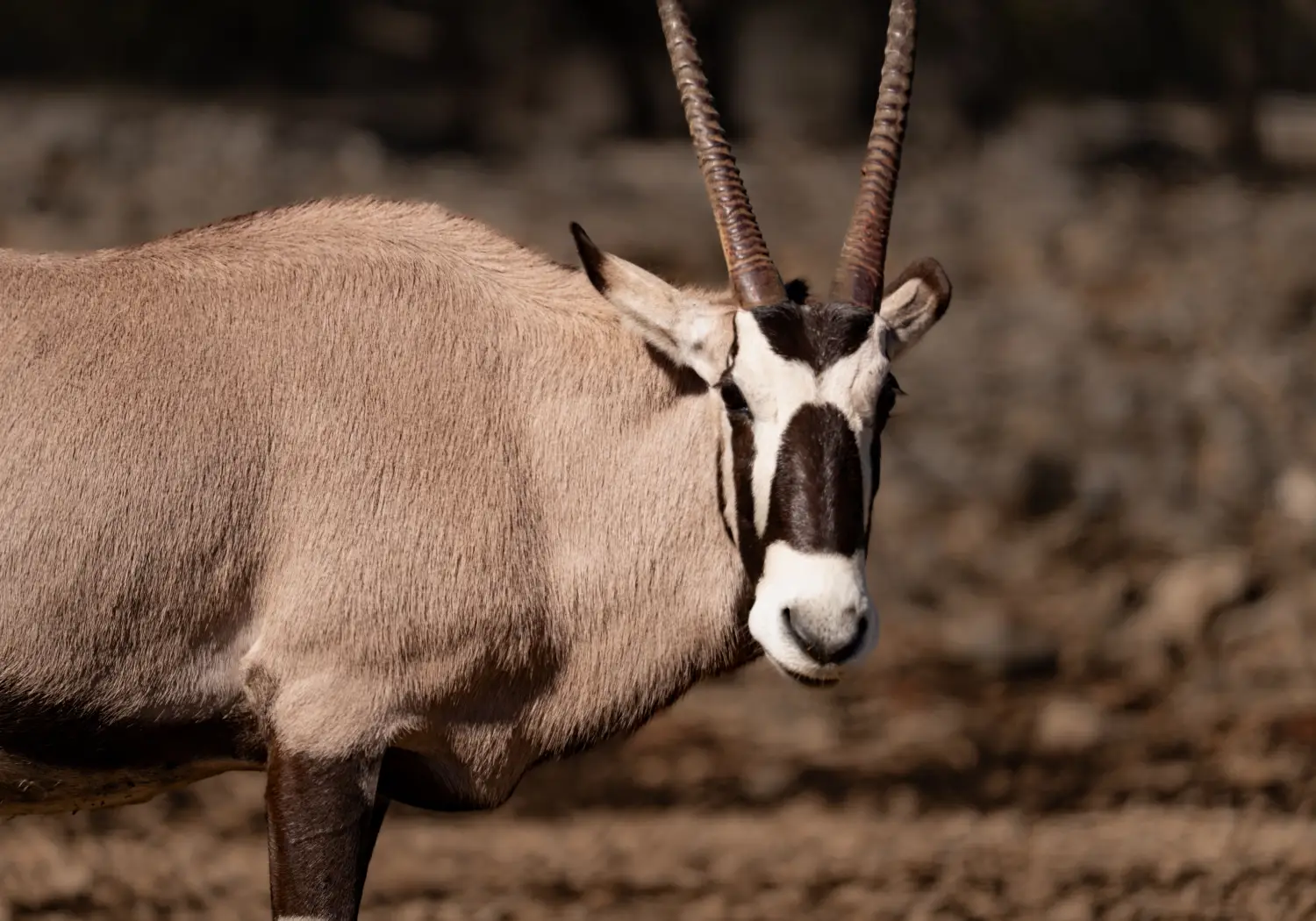
The fringe-eared oryx is a muscular, deep-chested antelope with a short neck and slender legs. Its coat is dull fawn to brownish-grey, generally darker than the Beisa oryx of northern Kenya. A black stripe separates the grey flanks from the white belly, black bands mark the legs, and the face has a striking black-and-white mask. A short chestnut mane runs down the neck.
Its trademark is a tuft of black hair, about 5–7.6 cm long, extending from the tip of each ear. Both males and females carry long, straight, ringed horns, typically around 75–80 cm. There is little visible difference between the sexes.
Fringe-Eared Oryx vs Beisa Oryx: What Is the Difference?
Kenya has two forms of East African oryx, divided by the Tana River.
- Fringe-eared oryx: south of the Tana River, in Tsavo, Amboseli and north-eastern Tanzania. It has long black ear tufts and a duller, browner coat.
- Beisa oryx: north of the Tana River, in Samburu, Buffalo Springs, Shaba and the Horn of Africa. Its coat is paler and greyer, with short or no ear tufts. Read our Beisa oryx profile.
- A possible separate species: genetic studies show a clear split along the Tana River, and some scientists now treat the fringe-eared oryx as its own species, Oryx callotis.
Where Do Fringe-Eared Oryx Live?
Fringe-eared oryx live in dry grassland, semi-desert scrub and open bushland. They are found only south of the Tana River, in south-eastern Kenya and north-eastern Tanzania. In Kenya, the Tsavo Trust describes the Tsavo Conservation Area as their home. In Tanzania, they live in areas such as Tarangire, and herds began moving into the Serengeti in 1972.
Browse our wildlife guide and Kenya national parks to see where this dry country is found.
What Do Fringe-Eared Oryx Eat?
More than 80% of the fringe-eared oryx's diet is grass. It also eats leaves, buds, fruit and herbs, and digs for roots and tubers that hold water. It often feeds at night and early morning, when plants carry the most moisture. Using these tricks, it can go for up to a month without drinking, though it will drink when water is available.
Fringe-Eared Oryx Behaviour
Fringe-eared oryx live in nomadic herds that usually number 30–40 animals and include both sexes. According to Britannica, herds in Kenya's Tsavo can reach up to 300. Some older males live alone or hold territories where water and grazing allow.
Built for Heat
Oryx can let their body temperature rise to about 47°C (116°F) on hot days instead of sweating, saving precious water. They release the heat at night. They also produce very concentrated urine and dry dung, losing as little water as possible.
Horns as Weapons
Those long horns are dangerous weapons. Oryx defend themselves by lowering their heads and pointing their horns at an attacker. Rivals fence with their horns in sparring matches.
Predators
Lions are the main predators of adult oryx. Cheetahs, leopards, spotted hyenas and wild dogs mostly take calves and young animals.
Breeding
Females give birth to a single calf after a pregnancy of about eight and a half to nine months. The calf hides for its first weeks before joining the herd.
Is the Fringe-Eared Oryx Endangered?
The East African oryx, which includes the fringe-eared oryx, is listed as Endangered on the IUCN Red List, with a decreasing population. The fringe-eared form is assessed separately, and its numbers are also falling. Poaching for meat and hides, competition with livestock for grazing and water, drought, and the loss of open rangeland to farms and settlements are the main threats. You can explore recorded sightings on iNaturalist and see the species' full range on the Mammal Diversity Database.
Large protected areas such as Tsavo, along with community ranches and conservancies, are key to the oryx's survival. Learn how your trip can help with our conservation-based safaris in Kenya.
How to See Fringe-Eared Oryx on Safari in Kenya
Fringe-eared oryx are a classic sight in Tsavo, but herds roam widely, so give yourself time.
Where to Look
- Tsavo East: the open plains along the Galana River and the dry country north and east of Voi. See our Tsavo East National Park guide.
- Tsavo West: the drier, open parts of the park and the plains towards the Chyulu Hills. See our Tsavo West National Park guide.
- Amboseli: occasional herds on the dry fringes of the park and the surrounding group ranches. See our Amboseli National Park guide.
- Chyulu Hills: the plains between Amboseli and Tsavo West. See our Chyulu Hills National Park guide.
- Tanzania: Tarangire and the Serengeti also hold herds. Combine them on our multi-country safaris.
Build a Route With Variety
The 4 Days Amboseli and Tsavo East Safari visits two of the best areas for fringe-eared oryx. The 10 Day Kenya Honeymoon Safari and Diani Beach Escape covers Tsavo West, Amboseli and Tsavo East before the coast. You can also browse our Kenya wildlife safaris.
Go Early and Late
Oryx feed in the cooler hours of morning and late afternoon and often rest in whatever shade they can find at midday. Early drives also give the best light for photos.
Travel in the Dry Season
Animals gather near the few water sources and visibility is good. The drier months are generally June to October and January to February. Travelling in the wet months instead? Read Can I do a Kenya safari during the rainy season?
Photograph the Horns and Ear Tufts
A herd crossing Tsavo's red earth, horns silhouetted against the sky, is one of Kenya's great safari photos. Use a long lens to pick out the ear tufts. Our photographic safaris in Kenya are built for moments like this.
Responsible Wildlife Viewing
Keep your distance, switch off the engine and avoid sudden movements. Oryx are wary and will run off if pressed, wasting precious energy and water in the heat. Never approach on foot; those horns can kill a lion.
Frequently Asked Questions About the Fringe-Eared Oryx
What is a fringe-eared oryx?
A large, desert-adapted antelope of south-eastern Kenya and north-eastern Tanzania, with long straight horns and black tufts on its ear tips. Its scientific name is Oryx beisa callotis.
Where can I see fringe-eared oryx in Kenya?
Try Tsavo East, Tsavo West, Amboseli and the Chyulu Hills. Sightings are never guaranteed.
What is the difference between a fringe-eared oryx and a Beisa oryx?
The fringe-eared oryx lives south of the Tana River and has long black ear tufts and a browner coat. The Beisa oryx lives north of the Tana River and is paler, with short or no ear tufts.
Do female oryx have horns?
Yes. Both sexes have long, straight horns, typically around 75–80 cm.
How long can an oryx go without water?
Up to about a month, getting moisture from grass, leaves, roots and dew.
What do fringe-eared oryx eat?
Mostly grass, plus leaves, buds, fruit and water-storing roots and tubers.
Is the fringe-eared oryx endangered?
The East African oryx, which includes the fringe-eared oryx, is listed as Endangered, and numbers are falling.
What eats fringe-eared oryx?
Lions are the main predators of adults; cheetahs, leopards, hyenas and wild dogs mostly take calves.
Plan Your Tsavo and Amboseli Safari
Want to see fringe-eared oryx, red elephants and Kilimanjaro views on one trip? Olengugih Safaris can design a private, flexible itinerary through Tsavo, Amboseli and the Chyulu Hills, with an optional beach finish. Start planning your safari or contact our team for a free quote.
Interesting facts and identification clues
Interesting Facts About the Fringe-Eared Oryx
Its name comes from the tufts of black hair that fringe the tips of its ears.
Both males and females carry long, straight horns.
It can let its body temperature rise to about 47°C instead of sweating, saving water.
It can survive for up to a month without drinking.
The Tana River in Kenya divides the fringe-eared oryx from its northern cousin, the Beisa oryx.
Oryx herds in Tsavo have been recorded at up to 300 animals.
Content reviewed 19 Oct 2026