About the Leopard Tortoise
Leopard Tortoise: The Spotted Wanderer of the Savanna
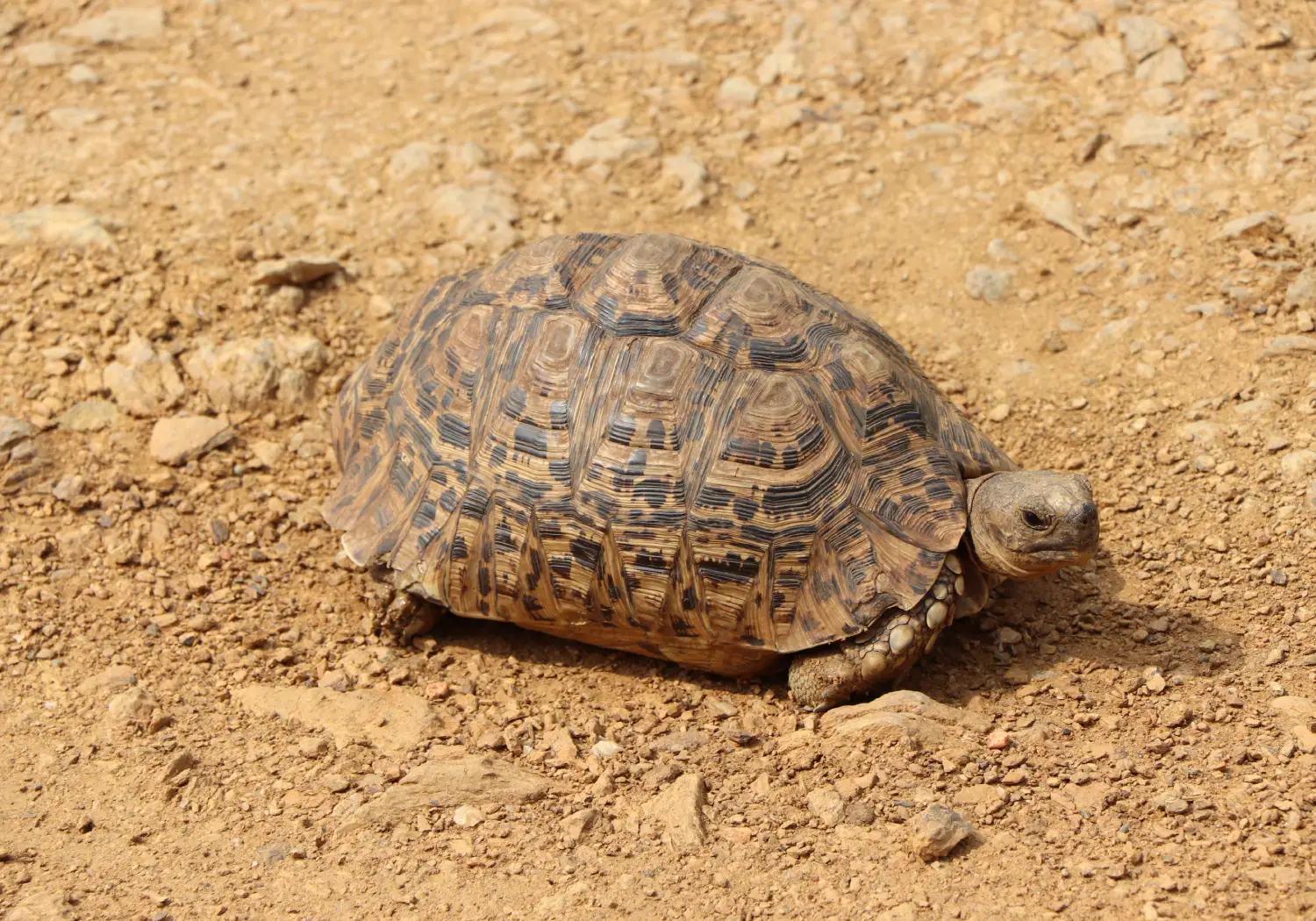
The leopard tortoise (Stigmochelys pardalis) is mainland Africa's largest tortoise and the fourth-largest tortoise species in the world. It is named for the yellow-and-black blotches on its high, domed shell, which can look like a leopard's spots, especially in young tortoises. Adults usually measure about 40 cm long and weigh around 13 kg, though exceptional individuals can be much bigger. It grazes on grasses and succulents and sometimes gnaws old bones or even hyena droppings to get extra calcium. In Swahili it is called kobe.
Quick answer: The leopard tortoise lives in savanna, grassland and dry bush across East and southern Africa, from Sudan, Ethiopia and Somalia to South Africa. In Kenya, it is a common sight in many savanna parks, often plodding along tracks or grazing by the roadside, especially after rain. Good places include the Masai Mara, Nairobi National Park, Amboseli, Tsavo and Samburu. Sightings are never guaranteed.
What Does a Leopard Tortoise Look Like?
The leopard tortoise has a high, steeply domed shell (carapace) with no strong rim. The shell is yellowish, tan or buff, marked with black or dark brown blotches, spots and radiating streaks on each scute. Young tortoises have the boldest, most leopard-like patterns, which dull and darken with age. Its head and legs are light brown to yellowish, and its strong front legs are covered in tough, overlapping scales. When threatened, it pulls its head and legs inside its shell and blocks the opening with its armoured forelegs. Females are usually larger than males.
Leopard Tortoise vs Other Kenyan Tortoises
Kenya has several land tortoises. Here's how to tell the leopard tortoise apart.
- Leopard tortoise: large, with a high, domed, spotted shell; common in savanna parks across Kenya.
- Pancake tortoise: small, with a remarkably flat, flexible shell; hides in rock crevices in dry, rocky hills of eastern Kenya and Tanzania. It is listed as Critically Endangered.
- Hinged tortoises: medium-sized, with a hinge at the back of the shell that closes to protect the hind legs; live in bush and coastal forest.
Where Do Leopard Tortoises Live?
Leopard tortoises live in savanna, grassland, dry thorn bush and semi-arid scrub across East and southern Africa, from Sudan, Ethiopia and Somalia through Kenya and Tanzania to Namibia, Botswana and South Africa. They are found from near sea level to high grassland, and avoid dense forest and true desert. They don't dig burrows, but shelter from the heat in thick bush, under rocks or in abandoned burrows of other animals.
Browse our wildlife guide and Kenya national parks to learn more.
What Do Leopard Tortoises Eat?
Leopard tortoises are grazers and browsers. They eat grasses, succulents, herbs, thistles, wild flowers and fallen fruit, and drink from puddles after rain. To get extra calcium for their shells and eggs, they sometimes gnaw on old bones, eat ash or even chew dry hyena droppings, which are rich in calcium from crushed bones.
Leopard Tortoise Behaviour
Leopard tortoises are active by day, especially in the cooler mornings and after rain. In very hot or dry weather they rest in shade, and in the driest times they may become largely inactive.
Slow but Steady Wanderers
They can travel surprisingly long distances while foraging, slowly plodding across the savanna.
Shoving Matches
In the breeding season, males compete by ramming and shoving each other, sometimes until one is flipped over. Males also give a loud, husky call when mating.
Predators
Adult leopard tortoises are protected by their shells, but lions and hyenas occasionally take them. Eggs and hatchlings are eaten by many animals, including mongooses, jackals, monitor lizards, birds of prey and ground hornbills.
Breeding
The female digs a nest hole with her hind legs, often softening the soil with urine, and lays a clutch of about 5–30 hard-shelled eggs. She may lay several clutches a year. The eggs take about 8–15 months to hatch, depending on temperature, and the hatchlings often dig out after rain has softened the soil. The temperature of the nest decides whether the young are male or female. Hatchlings are on their own from the start.
Is the Leopard Tortoise Endangered?
No. The leopard tortoise is listed as Least Concern on the IUCN Red List because it is widespread across East and southern Africa. It is listed on CITES Appendix II, which controls international trade. Locally, it faces threats from collection for the pet trade and for food, habitat loss to farming and settlement, bush fires, road traffic, and electric fences in which tortoises can get stuck. Because tortoises grow slowly and take many years to mature, populations recover slowly from losses. You can explore recorded sightings on iNaturalist.
Learn how your trip can support wildlife with our conservation-based safaris in Kenya.
How to See Leopard Tortoises on Safari in Kenya
Leopard tortoises are common in many Kenyan savanna parks and are often spotted on or beside the track, especially after rain.
Where to Look
- Masai Mara: grassland and bush across the reserve and conservancies. See our Masai Mara National Reserve guide.
- Nairobi National Park: open grassland and roadsides just outside the city. Try our Nairobi National Park private 4x4 safari.
- Amboseli: the dry plains and bush around the swamps. See our Amboseli National Park guide.
- Tsavo East and West: dry bush and grassland. See our Tsavo East and Tsavo West guides.
- Samburu and Laikipia: semi-arid bush and grassland. See our Samburu National Reserve and Ol Pejeta Conservancy guides.
Watch After Rain
Leopard tortoises are most active after rain, when fresh grass sprouts and puddles form. Look carefully along the edges of the track.
Keep Your Eyes on the Road
Tortoises often cross or rest on tracks, so ask your driver to go slowly and watch out for them.
Build a Route With Variety
The 7 Day Kenya Elephants, Lakes and Masai Mara Safari passes Amboseli and the Mara, both good tortoise country. For families, browse our Kenya family safaris.
Travel in the Green Season
Tortoises are busiest during and just after the rains. Read Can I do a Kenya safari during the rainy season? for tips on travelling then.
Responsible Wildlife Viewing
Watch leopard tortoises from your vehicle and never pick them up. Handling stresses tortoises, and a frightened tortoise may empty its bladder, losing water it needs to survive dry periods. Never move a tortoise far from where you found it, and never take one home. Drive slowly on park tracks to avoid running over tortoises.
Frequently Asked Questions About the Leopard Tortoise
What is a leopard tortoise?
A large African tortoise with a high, domed, spotted shell. Its scientific name is Stigmochelys pardalis.
How big do leopard tortoises get?
Usually about 40 cm long and 13 kg, though some grow much larger, up to about 70 cm and 40 kg.
What do leopard tortoises eat?
Grasses, succulents, herbs, thistles and fallen fruit, plus occasionally bones or droppings for calcium.
How long do leopard tortoises live?
They can live for many decades; in captivity, leopard tortoises have lived to around 75 years.
How long do leopard tortoise eggs take to hatch?
About 8–15 months, depending on temperature.
Where can I see leopard tortoises in Kenya?
In savanna parks such as the Masai Mara, Nairobi National Park, Amboseli, Tsavo and Samburu, especially after rain. Sightings are never guaranteed.
Is the leopard tortoise endangered?
No. It is listed as Least Concern, but it is protected from international trade under CITES.
Plan Your Kenya Safari
Want to see leopard tortoises alongside lions, elephants and the rest of Kenya's savanna wildlife? Olengugih Safaris can design a private, flexible itinerary through the Mara, Amboseli, Tsavo and beyond. Start planning your safari or contact our team for a free quote.
Sources
- Least Concern status, gnawing bones and hyena droppings for calcium, not digging except for nests, sexual maturity at 12–15 years and an 8–15-month incubation: Wikipedia
- Mainland Africa's largest tortoise, an average size of 40 cm and 13 kg, up to 40 kg, clutches of up to 30 eggs, eggs hatching after rain, temperature-dependent sex, predators and a 75-year captive lifespan: De Wets Wild
- Swahili names, only three larger tortoise species, eating bones or ash, clutches of 5–30 eggs and nest depth: Mpala Research Centre (Laikipia, Kenya)
- Fourth-largest tortoise in the world and CITES Appendix II listing: Rancho Texas Lanzarote
- Domed carapace, markings changing with age, males' shoving matches, males' calls when mating, and females softening soil with urine: Cleveland Metroparks Zoo
Interesting facts and identification clues
Interesting Facts About the Leopard Tortoise
- The leopard tortoise is mainland Africa's largest tortoise and the fourth-largest tortoise in the world.
- It gets its name from the leopard-like spots on its shell, which are boldest in young tortoises.
- It sometimes chews old bones or hyena droppings to get extra calcium.
- Its eggs can take more than a year to hatch.
- The temperature of the nest decides whether hatchlings are male or female.
- In Swahili, a tortoise is called kobe.
Content reviewed 28 Oct 2026