
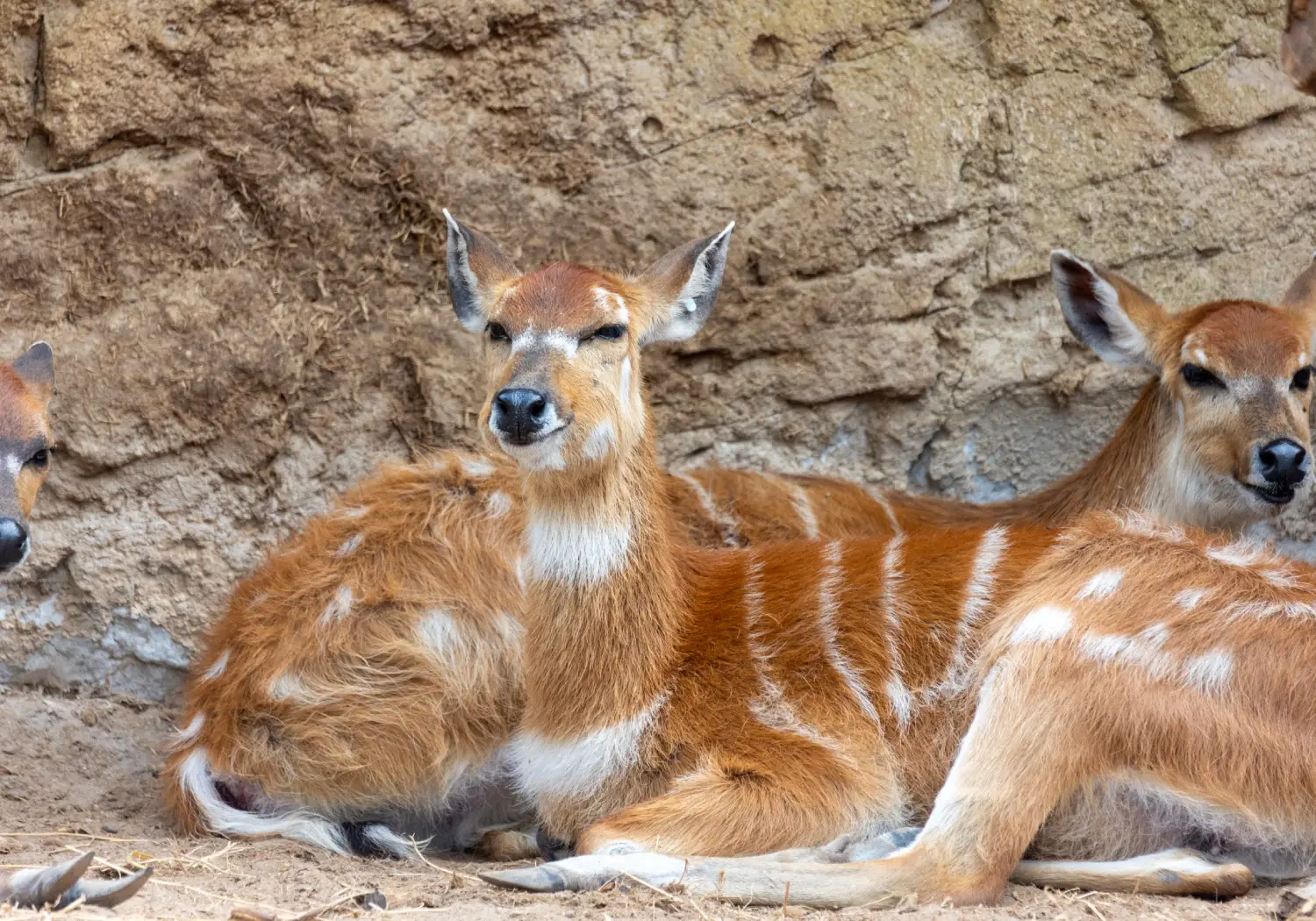
About the Sitatunga
The sitatunga (Tragelaphus spekii), also called the marshbuck, is a shy, semi-aquatic antelope that lives in papyrus swamps and reedbeds. Its long, splayed hooves, up to about 18 cm, spread its weight so it can walk on soft, floating vegetation without sinking. Its shaggy, water-repellent coat helps it stay dry, and when danger threatens it swims away or sinks until only its nostrils show. Males are dark grey-brown with spiralled horns; females are chestnut with thin white stripes. In Kenya, sitatunga are rare and found in just a few western wetlands, with Saiwa Swamp National Park the best place to see them.
Quick answer: The sitatunga lives in swamps and marshes across West, Central, East and southern Africa. In Kenya, look for it from the viewing towers and boardwalks of Saiwa Swamp National Park in Trans-Nzoia, or at the community-protected King'wal Swamp in Nandi County. In Uganda, try Lake Mburo National Park. Sightings are never guaranteed.
What Does a Sitatunga Look Like?
The sitatunga is a medium-sized antelope with a slightly hunched back, long legs and a long, shaggy coat. Males and females look quite different. Adult males are dark grey to chocolate-brown, with faint stripes, a short mane and a white chevron between the eyes. Females and young are a bright chestnut or reddish-brown, with thin white stripes and spots on the body. Both have white patches on the throat and legs.
Only males carry horns. These are spiralled, with one to one and a half twists, and about 45–90 cm long, often tipped with yellow or white. They slope backwards, which helps the male push through dense reeds.
Built for Swamps: How the Sitatunga Is Adapted
Few antelopes are as specialised as the sitatunga. Several features help it live in water and mud.
- Splayed hooves: its long, flexible hooves, up to about 18 cm, spread wide to stop it sinking into mud and floating plants. On dry land they make it walk awkwardly.
- Water-repellent coat: the long, oily coat sheds water and keeps the animal warm and dry.
- Strong swimmer: when threatened, a sitatunga dives into deep water. It can submerge almost completely, leaving only its nostrils above the surface.
- Sharp hearing: large ears help it pinpoint sounds among the reeds.
Where Do Sitatunga Live?
Sitatunga live in permanent swamps, papyrus beds, reedbeds and marshy river edges in more than 25 African countries, from West Africa through the Congo Basin to East and southern Africa. Some of the largest populations live in the Okavango Delta, the Bangweulu swamps and around Lake Victoria.
In Kenya, sitatunga survive in a few small wetlands in the west. The Kenya News Agency reports KWS records of about 40 at the Kesses scheme in Uasin Gishu, 60 at Saiwa Swamp National Park and 150 at King'wal Swamp in Nandi County. Browse our wildlife guide and Kenya national parks to learn more.
What Do Sitatunga Eat?
Sitatunga feed mostly on reeds, papyrus, sedges, aquatic plants and fresh grasses, along with leaves and buds from shrubs at the swamp edge. They sometimes stand on their hind legs to reach higher branches. Near farmland they may raid crops such as sweet potatoes. They feed mainly at dawn and dusk, and sometimes at night.
Sitatunga Behaviour
Sitatunga are shy and secretive. They live alone, in pairs or in small groups of a male with a few females and young. They move along regular paths through the reeds and often rest on platforms of trampled vegetation.
Hide and Dive
When alarmed, a sitatunga freezes, then crashes off through the reeds or plunges into deep water. Its alarm call sounds like a sharp bark or sneeze.
Predators
In the wild, lions, leopards, wild dogs, pythons and Nile crocodiles prey on sitatunga. In Kenya, the biggest dangers are domestic dogs, which chase and kill young sitatunga, and poachers.
Breeding
Sitatunga can breed at any time of year. Females give birth to a single calf after a pregnancy of about seven to eight months. The calf hides on a platform of flattened reeds for its first weeks, and its mother returns to nurse it.
Is the Sitatunga Endangered?
Worldwide, no. The sitatunga is listed as Least Concern on the IUCN Red List, with a global population put at about 170,000. In Kenya, though, it is rare and declining. Its small wetland homes are being drained for farming, cleared of trees and grazed by livestock, and dogs and poachers kill sitatunga that wander outside protected areas. KWS reports that the swamp habitat around Saiwa has shrunk by almost half.
Communities are helping. At King'wal Swamp in Nandi County, local groups and KWS have built viewing towers and run anti-poaching patrols. Around Saiwa, KWS and the International Tree Foundation are restoring the wetlands that feed the swamp. You can explore recorded sightings across Africa on iNaturalist.
Learn how your trip can support projects like this with our conservation-based safaris in Kenya.
How to See Sitatunga in Kenya and Uganda
Sitatunga are shy, so the best way to see them is to wait quietly at a viewpoint over a swamp at dawn or dusk.
Saiwa Swamp National Park
Saiwa Swamp, near Kitale in Trans-Nzoia County, was created in 1974 to protect the sitatunga. At about 2.9 km², it is Kenya's smallest national park and can only be explored on foot. Boardwalks and tall viewing towers look out over the papyrus swamp, where you can watch sitatunga feeding in the early morning and evening. The park is also home to De Brazza's monkeys, grey crowned cranes and more than 300 bird species. See our Saiwa Swamp National Park guide.
King'wal Swamp, Nandi County
This community-protected wetland near Kapsabet holds Kenya's largest sitatunga population. Viewing towers built by KWS and local groups give good chances, especially early in the day.
Combine Western Kenya's Hidden Gems
Pair Saiwa with Kakamega Forest National Reserve for primates and forest birds, Ruma National Park for roan antelope and oribi, and Mount Elgon. Our birding safaris in Kenya and the 11 Days 10 Nights Kenya Birding Safari are a good starting point. Ask us to build a tailor-made route through our Kenya safaris.
Add Uganda
Uganda's Lake Mburo National Park has sitatunga in its papyrus-fringed lakes and swamps, and boat trips sometimes reveal them. Ask about our multi-country safaris.
Bring Binoculars and Patience
Sitatunga often stand motionless in the reeds. Scan the edges of the papyrus slowly with binoculars, and stay quiet on the towers.
Travel in the Dry Season
Paths are easier to walk and animals gather in the wettest parts of the swamp. In western Kenya, the drier months are generally December to March. Travelling in the wet months instead? Read Can I do a Kenya safari during the rainy season?
Responsible Wildlife Viewing
Sitatunga are easily disturbed. Stay on the boardwalks and paths, keep your voice low on the viewing towers, and never try to approach through the swamp. Leave dogs at home, and report snares or wetland damage to KWS staff.
Frequently Asked Questions About the Sitatunga
What is a sitatunga?
A shy, semi-aquatic antelope of African swamps, with long splayed hooves and a shaggy, water-repellent coat. Its scientific name is Tragelaphus spekii.
Why does the sitatunga have long hooves?
Long, splayed hooves spread its weight so it can walk on mud and floating vegetation without sinking.
Can sitatunga swim?
Yes. They are strong swimmers and escape predators by diving into deep water, sometimes with only their nostrils showing.
Do female sitatunga have horns?
No. Only males carry spiralled horns, about 45–90 cm long.
Where can I see sitatunga in Kenya?
Saiwa Swamp National Park near Kitale and King'wal Swamp in Nandi County are the best places. Sightings are never guaranteed.
How many sitatunga are left in Kenya?
KWS records put Kenya's population at about 250, spread across Saiwa, King'wal and the Kesses area, though other estimates are higher.
What do sitatunga eat?
Reeds, papyrus, sedges, aquatic plants, fresh grasses and leaves.
Is the sitatunga endangered?
Not worldwide; it is listed as Least Concern. In Kenya, however, it is rare and its swamp habitat is shrinking.
Plan Your Western Kenya Safari
Want to see sitatunga at Saiwa, primates in Kakamega and Kenya's rarest antelopes at Ruma? Olengugih Safaris can design a private, flexible itinerary through western Kenya and beyond. Start planning your safari or contact our team for a free quote.
Sources
- KWS population records (Kesses 40, Saiwa 60, King'wal 150), habitat loss around Saiwa and the KWS–International Tree Foundation project: Kenya News Agency
- King'wal Swamp viewing towers and community protection: Nation
- Global population of about 170,000: ScienceAfrica
- Saiwa Swamp's size, its 1974 gazettement and its role as a sitatunga sanctuary: Kenya Clearing-House Mechanism (CBD)
- Least Concern status, horn length and origin of the name: Wikipedia
- Weight, horn twists, swimming and activity pattern: Ultimate Ungulate
- Hoof length of about 18 cm: Bioparc Fuengirola
- Male and female colouring, sneeze-like alarm calls and submerging: Zoo Berlin
Interesting facts and identification clues
Interesting Facts About the Sitatunga
The sitatunga's hooves can grow up to about 18 cm long, helping it walk on floating plants.
When danger threatens, it can sink into the water until only its nostrils show.
Its shaggy coat is oily and water-repellent.
Only males have horns, and their spirals help them push through dense reeds.
The name sitatunga comes from an old Bantu language.
Saiwa Swamp National Park was created especially to protect the sitatunga.
Content reviewed 22 Oct 2026
