About the White-Tailed Mongoose
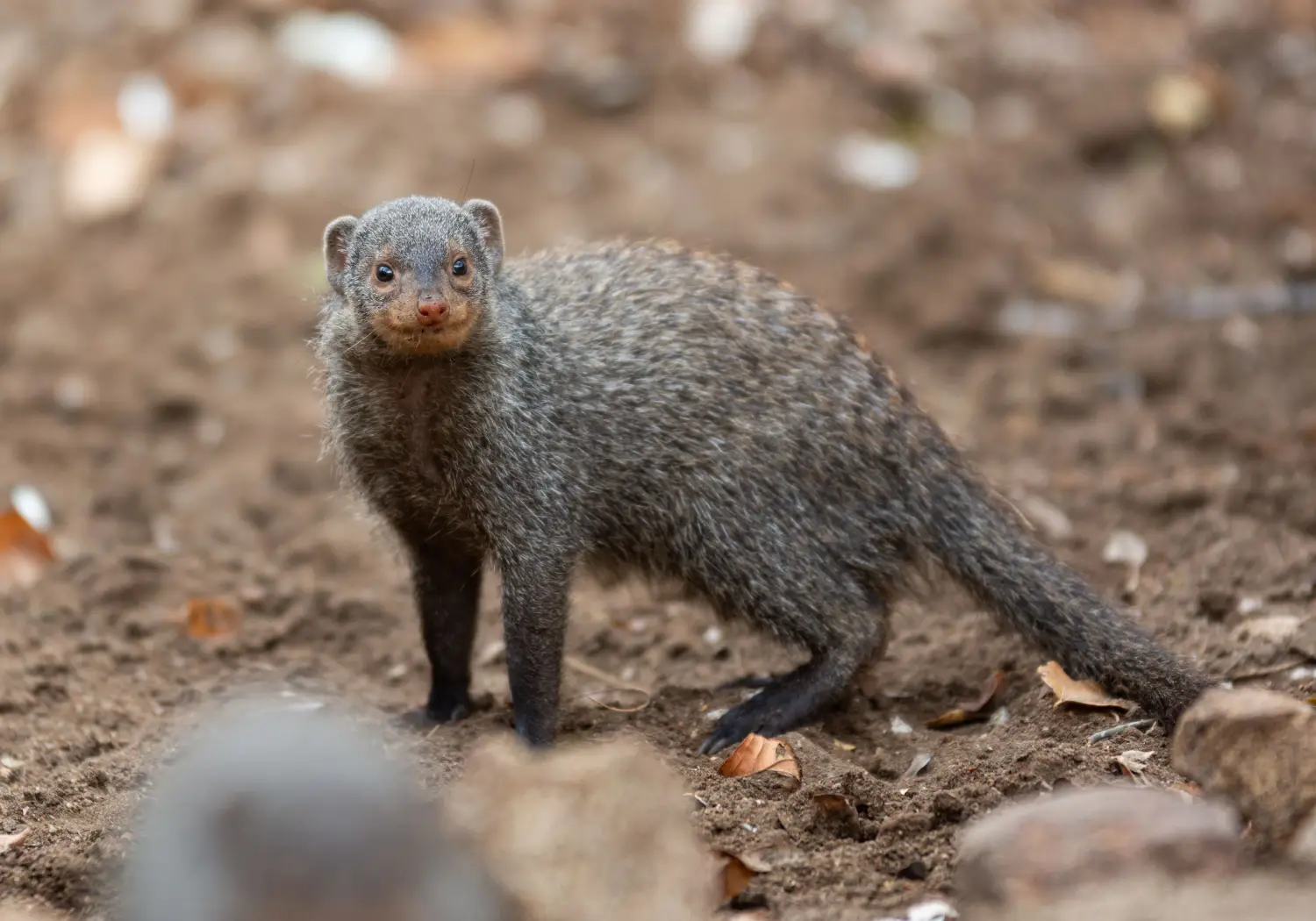
The white-tailed mongoose (Ichneumia albicauda) is, on average, the longest and heaviest mongoose in the world. It has long legs for a mongoose, a grizzled grey coat, black legs and a big, bushy white tail that glows in the beam of a spotlight. It is a solitary night hunter that eats mainly insects, and if threatened, it sprays a foul-smelling liquid from glands under its tail. In Swahili it is called nguchiro mkia mweupe. Because it is active almost entirely at night, a sighting is a highlight of any night drive.
Quick answer: The white-tailed mongoose lives in savanna and woodland across most of sub-Saharan Africa, avoiding rainforest and desert. In Kenya, the best chance of seeing one is on a guided night drive in the conservancies around the Masai Mara, such as Naboisho, or in Laikipia conservancies such as Ol Pejeta. Sightings are never guaranteed.
White-Tailed Mongoose: Quick Identification (At a Glance)
Field | Detail |
|---|---|
Scientific name | Ichneumia albicauda |
Other names | Nguchiro mkia mweupe (Swahili) |
Category | Mammals (carnivore, mongoose family Herpestidae) |
Size | Body about 53–71 cm, tail about 40–47 cm; about 1.8–5.2 kg (average about 3.4 kg) |
Key features | Long legs, grizzled grey body, black legs, large bushy white tail (black in some animals) |
Range | Most of sub-Saharan Africa, plus southern Arabia; absent from rainforest and desert |
Typical habitat | Savanna, grassland, open woodland and bush, often near water and farmland |
Diet | Mainly insects (beetles, termites, locusts, crickets), plus frogs, rodents, snakes, eggs and fruit |
Where to see it in Kenya | Masai Mara conservancies, Laikipia conservancies, Samburu, Lake Nakuru |
Viewing pattern | Solitary and nocturnal, most active from dusk to around midnight |
Breeding | About two-month pregnancy; litters of one to three young |
Conservation status | Least Concern (IUCN Red List) |
What Does a White-Tailed Mongoose Look Like?
The white-tailed mongoose is big for a mongoose, with relatively long legs and a high-backed, slightly hunched look as it trots along. Its coarse coat is grizzled grey, made up of long white hairs over dark underfur, and its legs are black. Its trademark is a long, bushy tail, about 40–47 cm, which is white for most of its length. In some animals the tail is dark or black instead. Males and females look alike.
White-Tailed Mongoose vs Other Mongooses in Kenya
On a night drive, a large mongoose in the spotlight could be one of several species.
- White-tailed mongoose: large, long-legged, grey, with a bushy white tail; solitary and nocturnal in savanna and grassland.
- Marsh mongoose: similar size but shaggy dark brown, with a dark tapering tail; nocturnal near water.
- Egyptian mongoose: large and grizzled grey, with a black-tasselled tail; active by day near water.
- Banded mongoose: smaller, with dark bands; lives in packs by day. Read our banded mongoose profile.
Where Do White-Tailed Mongooses Live?
White-tailed mongooses live across most of sub-Saharan Africa and into southern Arabia. They avoid rainforest, desert and semi-desert. They prefer savanna, grassland, open woodland and bush, especially well-watered areas, and often forage on farmland and around lodges and camps where insects are plentiful.
They don't dig their own burrows. Instead, they rest by day in old termite mounds, aardvark holes, rock crevices or thick cover. According to Mpala Research Centre in Laikipia, they can reach densities of about 4.3 per square kilometre in good habitat such as the Serengeti. Browse our wildlife guide and Kenya conservancies to learn more.
What Do White-Tailed Mongooses Eat?
White-tailed mongooses are mainly insect eaters, with broad, heavy teeth for crushing hard shells. Beetles, termites, locusts, grasshoppers and mole crickets make up most of their diet, especially in the wet season. They also eat frogs, toads, lizards, snakes, rodents, birds and eggs, and some fruit and berries. They often hunt in dung piles and along roads, where insects gather at night.
White-Tailed Mongoose Behaviour
White-tailed mongooses are mainly solitary and nocturnal, most active from dusk to around midnight. Females may share loosely overlapping ranges, and young stay with their mothers for some time.
Stink Defence
When threatened, a white-tailed mongoose raises its hair to look bigger and can spray a foul-smelling liquid from its anal glands, much like a skunk.
A Mostly Silent Hunter
It is usually quiet, but it gives high-pitched chittering and loud bark-screeches when frightened or upset.
Predators
Leopards, lions, spotted hyenas, pythons and large owls may prey on white-tailed mongooses, especially the young.
Breeding
Breeding is seasonal. After a pregnancy of about two months, the female gives birth to one to three young in a burrow or den.
Is the White-Tailed Mongoose Endangered?
No. The white-tailed mongoose is listed as Least Concern on the IUCN Red List. It is common and widespread, and adapts well to farmland. Locally, it may be killed by poultry keepers, hit by cars at night, poisoned or caught in snares, and it is vulnerable to rabies and distemper from domestic dogs. You can explore recorded sightings on iNaturalist.
Learn how your trip can support wildlife with our conservation-based safaris in Kenya.
How to See White-Tailed Mongooses in Kenya
White-tailed mongooses are fairly common, but because they come out at night, you'll rarely see one on a normal game drive. A guided night drive gives the best chance.
Where to Look
- Masai Mara conservancies: night drives in conservancies such as Naboisho, Mara North and Olare Motorogi often turn up white-tailed mongooses. Night drives are not allowed in the main Masai Mara National Reserve.
- Laikipia: night drives in conservancies such as Ol Pejeta, Lewa and Loisaba.
- Samburu and Lake Nakuru: sometimes seen around lodges and on early morning or late evening drives. See our Samburu National Reserve and Lake Nakuru National Park guides.
Book a Night Drive
Private conservancies offer guided night drives with spotlights. Look for a large grey mongoose trotting through the grass with its white tail lit up in the beam.
Look Around Camp
White-tailed mongooses sometimes forage for insects attracted to lights around lodges and camps after dark. Ask staff whether one has been seen recently.
Build a Route With Variety
Combine the Mara and Laikipia conservancies on a tailor-made trip to maximise night-drive opportunities. The 8 Day Kenya Safari: Samburu, Ol Pejeta, Naivasha, Mara is a good starting point, and you can browse our luxury safaris in Kenya for conservancy stays.
Travel in the Wet Season Too
Insects are most plentiful in the wet season, when white-tailed mongooses are especially busy. If you are travelling in the rains, read Can I do a Kenya safari during the rainy season?
Responsible Wildlife Viewing
On night drives, keep the spotlight off the animal's eyes for long and follow your guide's lead. Stay in the vehicle and keep noise down. Never feed mongooses or leave food out at camps, and give them space—a frightened white-tailed mongoose may spray a very unpleasant smell.
Frequently Asked Questions About the White-Tailed Mongoose
What is a white-tailed mongoose?
A large, nocturnal African mongoose with long legs, a grey coat and a bushy white tail. Its scientific name is Ichneumia albicauda.
Is the white-tailed mongoose the largest mongoose?
On average, yes. It is the longest and heaviest mongoose, though the marsh mongoose can be similar in weight.
How big is a white-tailed mongoose?
The body is about 53–71 cm long, the tail about 40–47 cm, and it weighs about 1.8–5.2 kg.
What do white-tailed mongooses eat?
Mainly beetles, termites, locusts and crickets, plus frogs, rodents, snakes, eggs and fruit.
Are white-tailed mongooses nocturnal?
Yes. They are most active from dusk to around midnight.
Where can I see white-tailed mongooses in Kenya?
On night drives in the Masai Mara and Laikipia conservancies, and sometimes around lodges in Samburu and Lake Nakuru. Sightings are never guaranteed.
Are white-tailed mongooses endangered?
No. They are listed as Least Concern.
Plan Your Kenya Night-Drive Safari
Want to see white-tailed mongooses, aardvarks, genets and other night creatures? Olengugih Safaris can design a private conservancy safari with guided night drives in the Mara and Laikipia. Start planning your safari or contact our team for a free quote.
Sources
- Weight, length, long legs, nocturnal habits, the anal-gland spray, diet and the meaning of albicauda: Wikipedia
- Swahili name, solitary life, calls, borrowed burrows, crushing teeth, seasonal breeding, the scent defence and Serengeti density: Mpala Research Centre (Laikipia, Kenya)
- IUCN assessment (Least Concern): IUCN Red List
- Dark grey coat, black legs, white tail, one to three young after a two-month pregnancy, and a mainly solitary life: Kruger National Park
- Active from dusk to around midnight: Namibian.org
Interesting facts and identification clues
Interesting Facts About the White-Tailed Mongoose
- The white-tailed mongoose is, on average, the largest mongoose in the world.
- Its bushy white tail shows up clearly in a spotlight at night.
- When threatened, it can spray a foul-smelling liquid, like a skunk.
- It doesn't dig its own burrows, using old termite mounds and aardvark holes instead.
- Its scientific name, albicauda, means "white tail" in Latin.
- In Swahili it is called nguchiro mkia mweupe.
Content reviewed 27 Oct 2026