About the Yellow-Spotted Rock Hyrax
Yellow-Spotted Rock Hyrax: The Rock Hyrax's Smaller Cousin
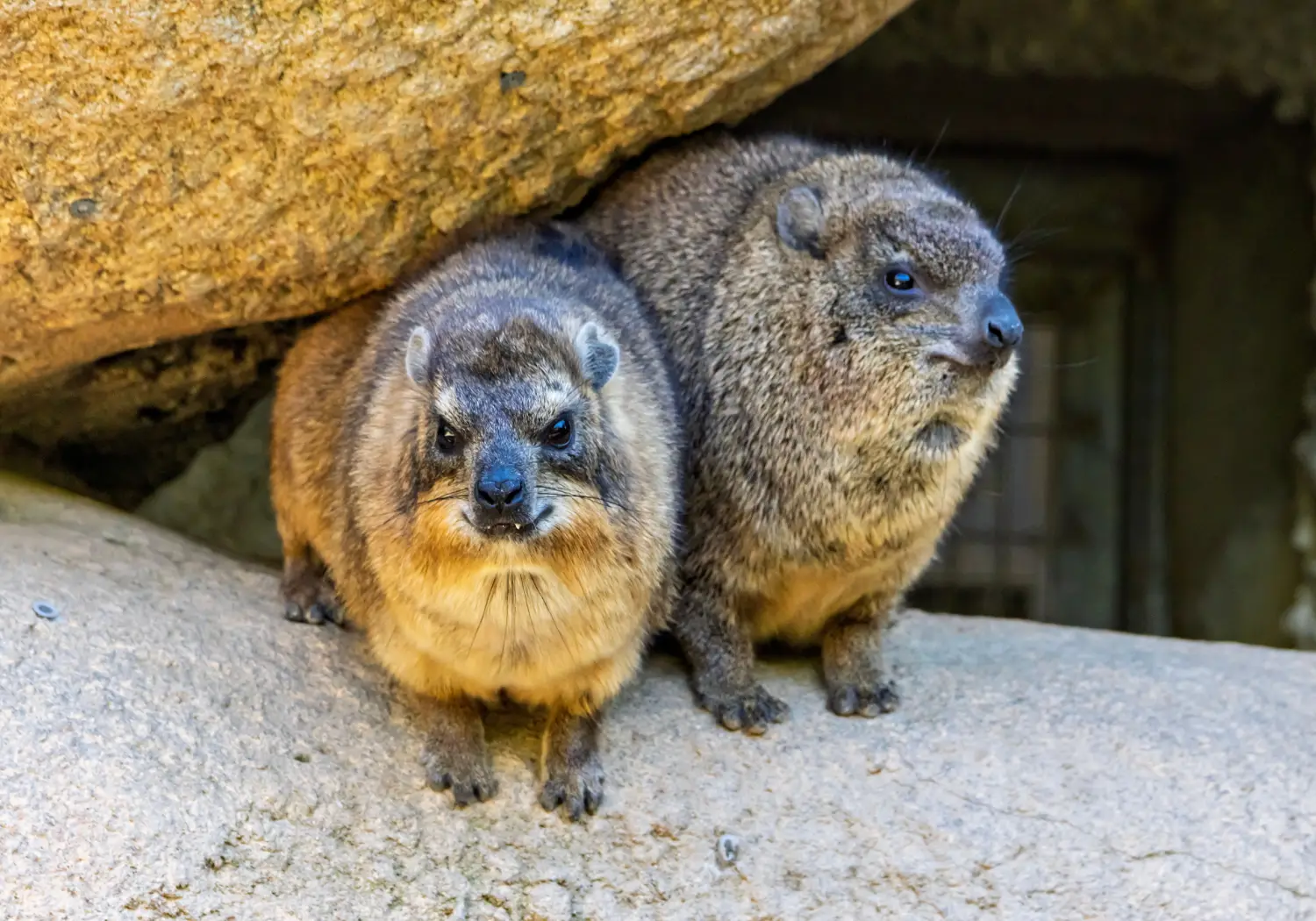
The yellow-spotted rock hyrax (Heterohyrax brucei), also called the bush hyrax or bush dassie, is a small, furry, tailless relative of the elephant that lives among rocks across much of eastern and southern Africa. It gets its name from a patch of yellowish hair on its back, which covers a scent gland. It is smaller and slimmer than the rock hyrax, with a narrower muzzle and a pale spot above each eye. The two species often share the same rocky outcrops, basking side by side, sleeping in the same crevices and even sharing nursery duties. While the rock hyrax mainly grazes on grass, the bush hyrax mainly browses on leaves.
Quick answer: The yellow-spotted rock hyrax lives on rocky kopjes, cliffs and boulder piles from Egypt and Sudan through East Africa to Angola and northern South Africa. In Kenya, look for colonies on rocks in Tsavo West, Tsavo East, the kopjes of the Masai Mara and the rocky hills of Samburu, often alongside rock hyraxes. Sightings are never guaranteed.
What Does a Yellow-Spotted Rock Hyrax Look Like?
The yellow-spotted rock hyrax looks like a small, slim guinea pig with short, rounded ears and no visible tail. Its soft fur is grey to grey-brown, sometimes with a reddish tinge, flecked with lighter hairs, and its belly is white or cream. The best field marks are a white or off-white patch above each eye and paler sides to the face. On its lower back is a scent gland under a raised patch of skin, surrounded by erectile hairs that are yellow to ochre, which gives the species its name. Its feet have rubbery, moist pads that grip smooth rock.
Yellow-Spotted Rock Hyrax vs Rock Hyrax
The two hyraxes often live on the same rocks, so it helps to know the differences.
- Size and build: the yellow-spotted rock hyrax is smaller and slimmer (about 1.3–2.4 kg) than the rock hyrax (about 1.8–5.4 kg).
- Face: the yellow-spotted rock hyrax has a narrower muzzle and a pale spot above each eye. The rock hyrax has a blunter nose and no eye spots.
- Back gland: yellow to ochre hairs in the yellow-spotted rock hyrax; dark hairs in the rock hyrax.
- Diet: the yellow-spotted rock hyrax mainly browses on leaves; the rock hyrax mainly grazes on grass.
Read our rock hyrax profile for more.
Where Do Yellow-Spotted Rock Hyraxes Live?
Yellow-spotted rock hyraxes live from south-eastern Egypt and Sudan through Ethiopia, Kenya and Tanzania to Angola, Malawi, Mozambique and northern South Africa. They live only in rocky places: kopjes rising from the plains, sheer rock faces, rocky hillsides and piles of boulders, from low country up to high mountains. They shelter in crevices and holes between rocks, which they often share with rock hyraxes.
Browse our wildlife guide and Kenya national parks to learn more.
What Do Yellow-Spotted Rock Hyraxes Eat?
Yellow-spotted rock hyraxes are mainly browsers. They eat leaves, shoots, twigs, buds, flowers and fruit, often climbing into bushes and trees around their rocks to feed. In the warm, wet season they also eat some grass. Because they eat different food from rock hyraxes, the two species can live on the same rocks without competing much. They get most of their water from their food.
Yellow-Spotted Rock Hyrax Behaviour
Yellow-spotted rock hyraxes are active by day and live in colonies, usually a dominant, territorial male with several females and their young.
Living With Rock Hyraxes
On many kopjes, yellow-spotted and rock hyraxes live side by side. They bask together, sleep in the same crevices and huddle together for warmth. Their young may even play together in shared nurseries, though the two species don't interbreed.
Sunbathing and Sentries
Like rock hyraxes, they can't control their body temperature well, so they bask in the sun in the morning and shelter from the midday heat. While the colony feeds, one animal keeps watch and gives an alarm call if danger appears.
Predators
Verreaux's eagles and other birds of prey, leopards, rock pythons, caracals, mongooses and other small carnivores hunt them.
Breeding
They breed once a year, usually at the end of the rainy season. Females give birth to about one to three well-developed young in a den lined with soft plants or fur. The babies can move about soon after birth.
Is the Yellow-Spotted Rock Hyrax Endangered?
No. The yellow-spotted rock hyrax is listed as Least Concern on the IUCN Red List. It is widespread and has no major threats, though it is hunted locally for meat and skins in some areas. Disease outbreaks and the quarrying of rocky outcrops can affect individual colonies. You can explore recorded sightings on iNaturalist.
Learn how your trip can support wildlife with our conservation-based safaris in Kenya.
How to See Yellow-Spotted Rock Hyraxes in Kenya
Yellow-spotted rock hyraxes are easy to see once you know where to look. Scan rocky outcrops and boulder piles, especially in the morning when colonies bask in the sun, and look for the pale eye spots that separate them from rock hyraxes.
Where to Look
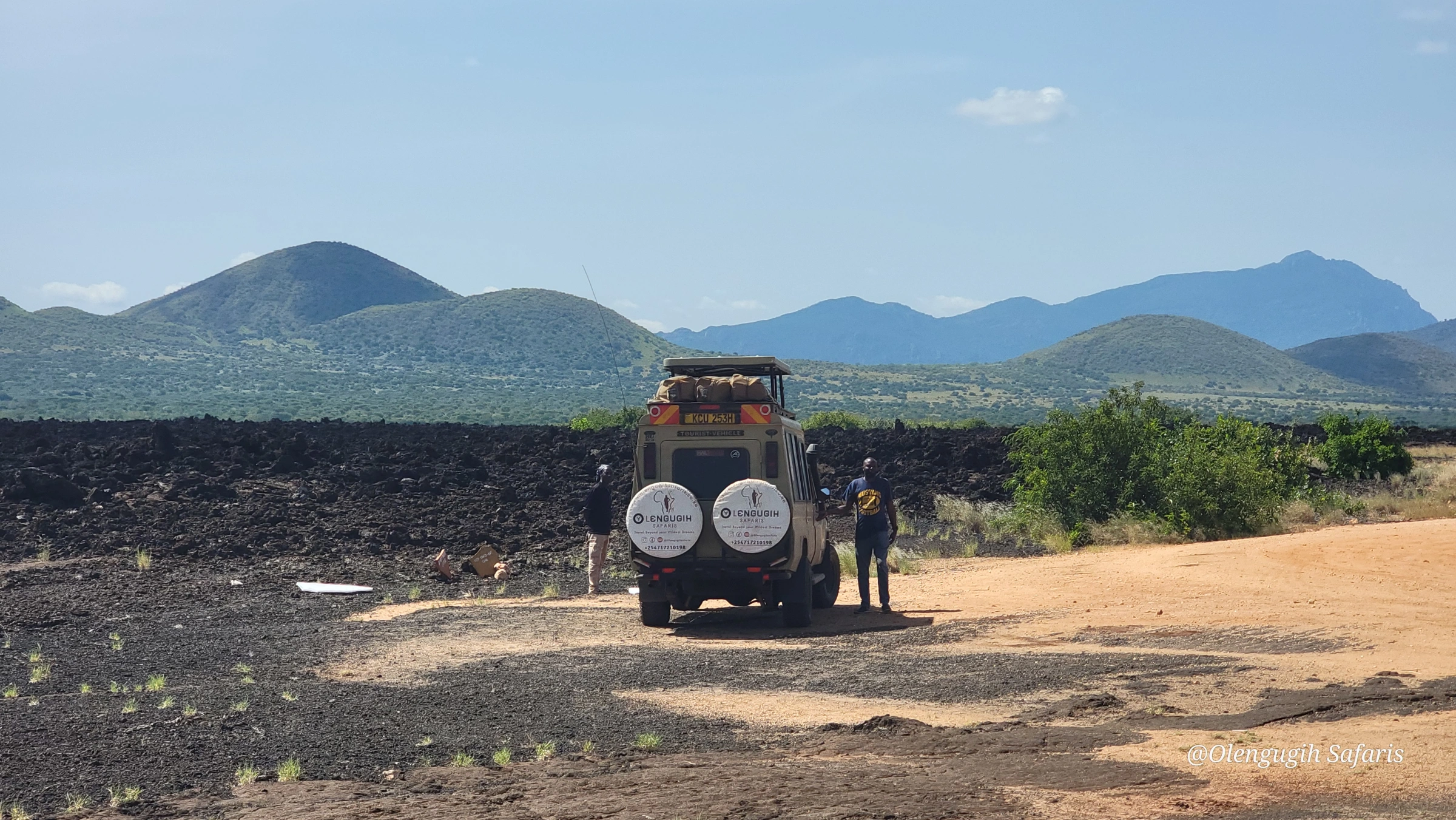
- Tsavo West: lava flows, rocky hills and boulders. A good place to compare both hyraxes. See our Tsavo West National Park guide.
- Tsavo East: rocky outcrops such as Mudanda Rock. See our Tsavo East National Park guide.
- Masai Mara: kopjes scattered across the plains. See our Masai Mara National Reserve guide.
- Samburu, Shaba and Meru: rocky hills and outcrops in dry northern country. See our Samburu, Shaba and Meru guides.
Look for Mixed Colonies
Where you see rock hyraxes, check carefully for smaller, slimmer animals with white eye spots: these are yellow-spotted rock hyraxes sharing the same rocks.
Watch Them Browse
Unlike rock hyraxes, yellow-spotted rock hyraxes often climb into bushes and small trees near their rocks to feed on leaves.
Share the Rocks With Klipspringers
Rocky outcrops are also home to the klipspringer, so keep an eye out for this small, rock-hopping antelope.
Build a Route With Variety
The 4 Days Amboseli and Tsavo East Safari visits Tsavo East, and the 8 Day Kenya Safari: Samburu, Ol Pejeta, Naivasha, Mara covers Samburu and the Mara.
Responsible Wildlife Viewing
Watch hyraxes from a few metres away and never try to touch or corner them. They can bite hard. Don't feed them at viewpoints or lodges, as human food makes them ill and bold. Stay on paths when exploring rocky areas on foot, and don't climb on kopjes where colonies live.
Frequently Asked Questions About the Yellow-Spotted Rock Hyrax
What is a yellow-spotted rock hyrax?
A small, furry, tailless African mammal that lives on rocky outcrops, also called the bush hyrax. Its scientific name is Heterohyrax brucei.
Is the yellow-spotted rock hyrax the same as the bush hyrax?
Yes. Yellow-spotted rock hyrax, bush hyrax and bush dassie are names for the same species.
How is it different from the rock hyrax?
It is smaller and slimmer, with a narrower muzzle, pale spots above the eyes and yellowish hair over its back gland. It mainly eats leaves rather than grass.
What do yellow-spotted rock hyraxes eat?
Mainly leaves, shoots, twigs, flowers and fruit, with some grass in the wet season.
Do yellow-spotted rock hyraxes live with rock hyraxes?
Yes. The two often share the same rocks and crevices and even care for each other's young, but they don't interbreed.
Where can I see yellow-spotted rock hyraxes in Kenya?
On rocky outcrops in Tsavo West, Tsavo East, the Masai Mara kopjes, Samburu, Shaba and Meru. Sightings are never guaranteed.
Are yellow-spotted rock hyraxes endangered?
No. They are listed as Least Concern.
Plan Your Kenya Safari
Want to explore Tsavo's lava flows, the Mara's kopjes and Samburu's rocky hills, and the wildlife that lives among them? Olengugih Safaris can design a private, flexible itinerary to suit you. Start planning your safari or contact our team for a free quote.
Sources
- Least Concern status, common names, its smaller size and narrower muzzle compared with the rock hyrax, kopje habitat, the back gland and shared nurseries with rock hyraxes: Wikipedia
- Weight of 1.3–2.4 kg and length of 32.5–47 cm, browsing versus grazing, and colony sizes on kopjes: PILAfrica / SchoolNet SA
- Range from south-eastern Egypt to Angola and South Africa, breeding at the end of the wet season, and predators: Animal Diversity Web
- White eye patches, yellow-to-ochre gland hair, sharing crevices without interbreeding, and diet: Namibian.org
- Leaf-based diet, independence from drinking water, sentry duty and weight of 1.5–3.5 kg: De Wets Wild
- A Tsavo West record: JungleDragon
Interesting facts and identification clues
Interesting Facts About the Yellow-Spotted Rock Hyrax
- Its closest living relatives, like those of the rock hyrax, are elephants and manatees.
- It is named for the yellowish hair around a scent gland on its back.
- It often shares crevices, sunbathing spots and even nurseries with rock hyraxes.
- It mainly eats leaves, while the rock hyrax mainly eats grass, so the two rarely compete.
- It can climb into bushes and small trees to feed.
- It gets most of the water it needs from its food.
Content reviewed 28 Oct 2026