About the Slender Mongoose
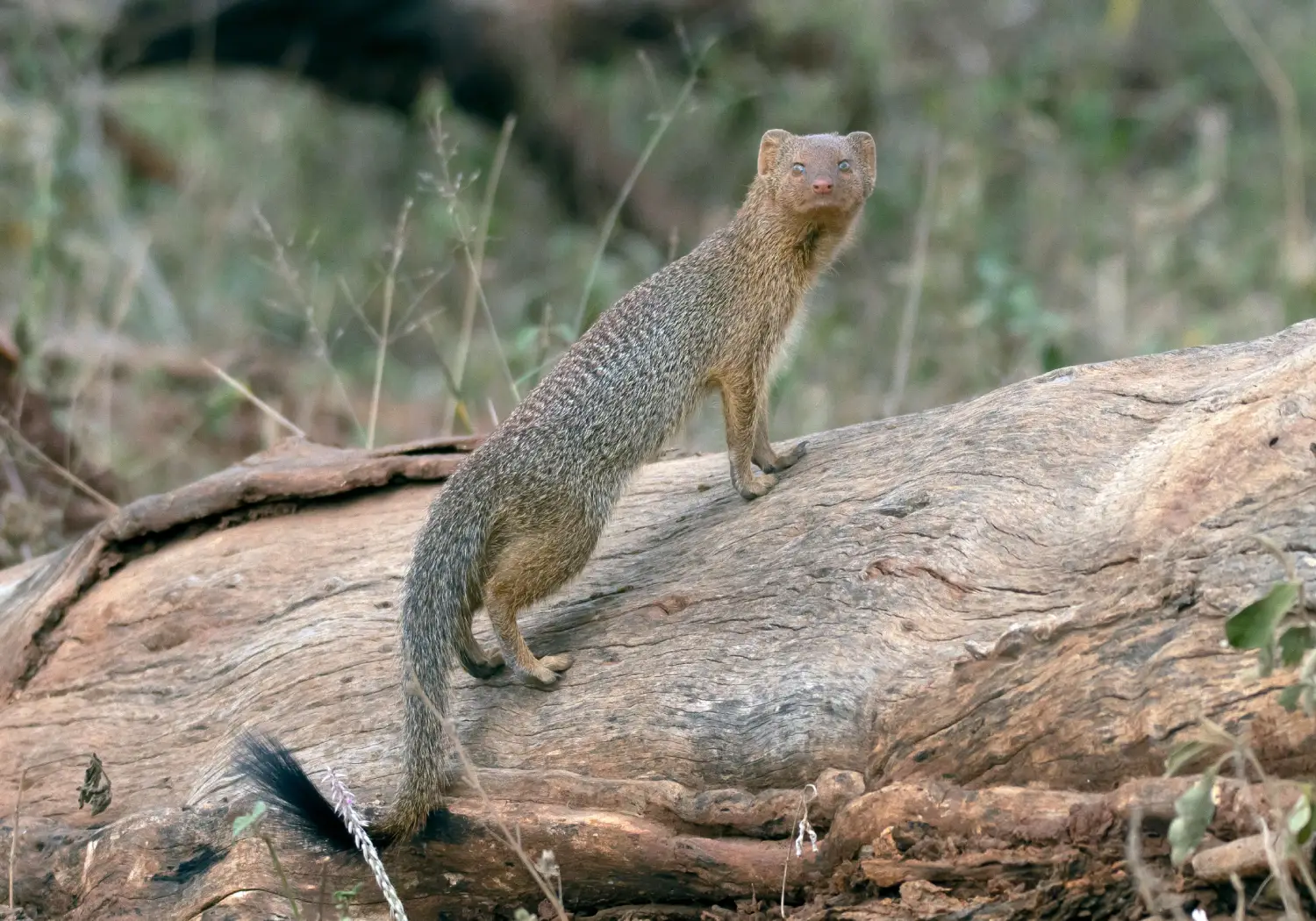
The common slender mongoose (Herpestes sanguineus, also placed in the genus Galerella) is a small, lithe mongoose with a long, sinuous body, short legs and a long tail ending in a black tip. It is also called the black-tipped or black-tailed mongoose. Unlike the pack-living banded and dwarf mongooses, it usually lives alone. It is active by day and is a quick, agile hunter that often climbs trees to raid birds' nests. On safari, you'll most often see one dashing across a track, tail held high with its black tip flicked forward.
Quick answer: The slender mongoose lives across most of sub-Saharan Africa wherever there is cover, avoiding only true desert and dense rainforest. In Kenya, it is widespread and fairly common. Look for it crossing tracks in the Masai Mara, Samburu, Tsavo, Nairobi National Park and Lake Nakuru. Sightings are never guaranteed.
What Does a Slender Mongoose Look Like?
The slender mongoose lives up to its name: a long, sinuous body on short legs, a small pointed head with tiny rounded ears, and a tail almost as long as its body. Its coat colour varies widely across its range, from grizzled grey-brown to bright reddish-brown or almost black, often with a speckled look. The underparts are usually paler. Its most reliable feature is the black or dark tip to the tail, and the end of the tail is often curled slightly upwards when alert. Males are noticeably larger than females.
Slender Mongoose vs Other Mongooses in Kenya
Kenya has several mongoose species. Here's how to pick out the slender mongoose.
- Slender mongoose: small, slim and solitary, with a long black-tipped tail that it flicks up as it runs.
- Banded mongoose: stockier, with dark bands across the back; lives in large packs. Read our banded mongoose profile.
- Dwarf mongoose: much smaller and plain brown; lives in family groups around termite mounds.
- Egyptian mongoose: much larger and grizzled grey, with a black-tasselled tail; lives near water.
- Somali slender mongoose: a close relative of drier north-eastern Kenya, often paler or more yellowish.
Where Do Slender Mongooses Live?
Slender mongooses live across most of sub-Saharan Africa, from West Africa to Ethiopia and south to Namibia and South Africa. They are absent only from the driest deserts and the densest rainforests. They are not fussy about habitat as long as there is cover: savanna, open woodland, thornbush, rocky hills, forest edges and even farmland and gardens. They den in hollow trees, rock crevices, old termite mounds and burrows.
In Kenya, they are widespread in parks and reserves at most altitudes. Browse our wildlife guide and Kenya destinations to learn more.
What Do Slender Mongooses Eat?
Slender mongooses are opportunistic hunters. They eat insects, especially in the wet season, and more rodents in the dry season. They also catch lizards, snakes, frogs, birds and their eggs, and occasionally eat fruit and berries. Despite their small size, they can overpower prey as large as a guineafowl or chicken, which sometimes brings them into conflict with poultry keepers. According to Animal Diversity Web, they adjust their diet to the habitat and season.
Slender Mongoose Behaviour
Slender mongooses are mostly solitary and active by day, sometimes hunting by moonlight or when flying termites emerge at night. Males may form small coalitions that defend a territory overlapping several females' home ranges.
Tree Climbers
Unlike most mongooses, slender mongooses climb trees readily, hunting nesting birds, eggs and lizards in the branches.
The Tail Flick
When it dashes away from danger, a slender mongoose lifts its tail high, often with the black tip curled forward over its back. Some suggest this may resemble a rearing snake.
Predators
Eagles and other birds of prey are their main predators. Leopards, black-backed jackals, pythons and larger mongooses also take them.
Breeding
Females give birth in a den, often a hollow tree or rock crevice, to one to three pups after a pregnancy of about 57–70 days. Only the mother raises the young, which become independent at around three to five months.
Is the Slender Mongoose Endangered?
No. The slender mongoose is listed as Least Concern on the IUCN Red List. It is widespread, common and adaptable, and it even lives on farmland and near towns. Locally, it may be persecuted by poultry keepers, killed on roads or affected by diseases such as rabies. You can explore recorded sightings on iNaturalist.
Learn how your trip can support wildlife with our conservation-based safaris in Kenya.
How to See Slender Mongooses on Safari in Kenya
Slender mongooses are common, but they are quick and shy. Most sightings are brief glimpses as one darts across the track, so keep your eyes on the road ahead.
Where to Look
- Masai Mara: woodland edges, rocky areas and riverine bush. See our Masai Mara National Reserve guide.
- Samburu and Buffalo Springs: dry bush and riverine woodland. See our Samburu National Reserve and Buffalo Springs guides.
- Tsavo East and West: thornbush and rocky outcrops. See our Tsavo East and Tsavo West guides.
- Nairobi National Park and Lake Nakuru: woodland and bush close to the city and the lake. Try our Nairobi National Park private 4x4 safari or see our Lake Nakuru National Park guide.
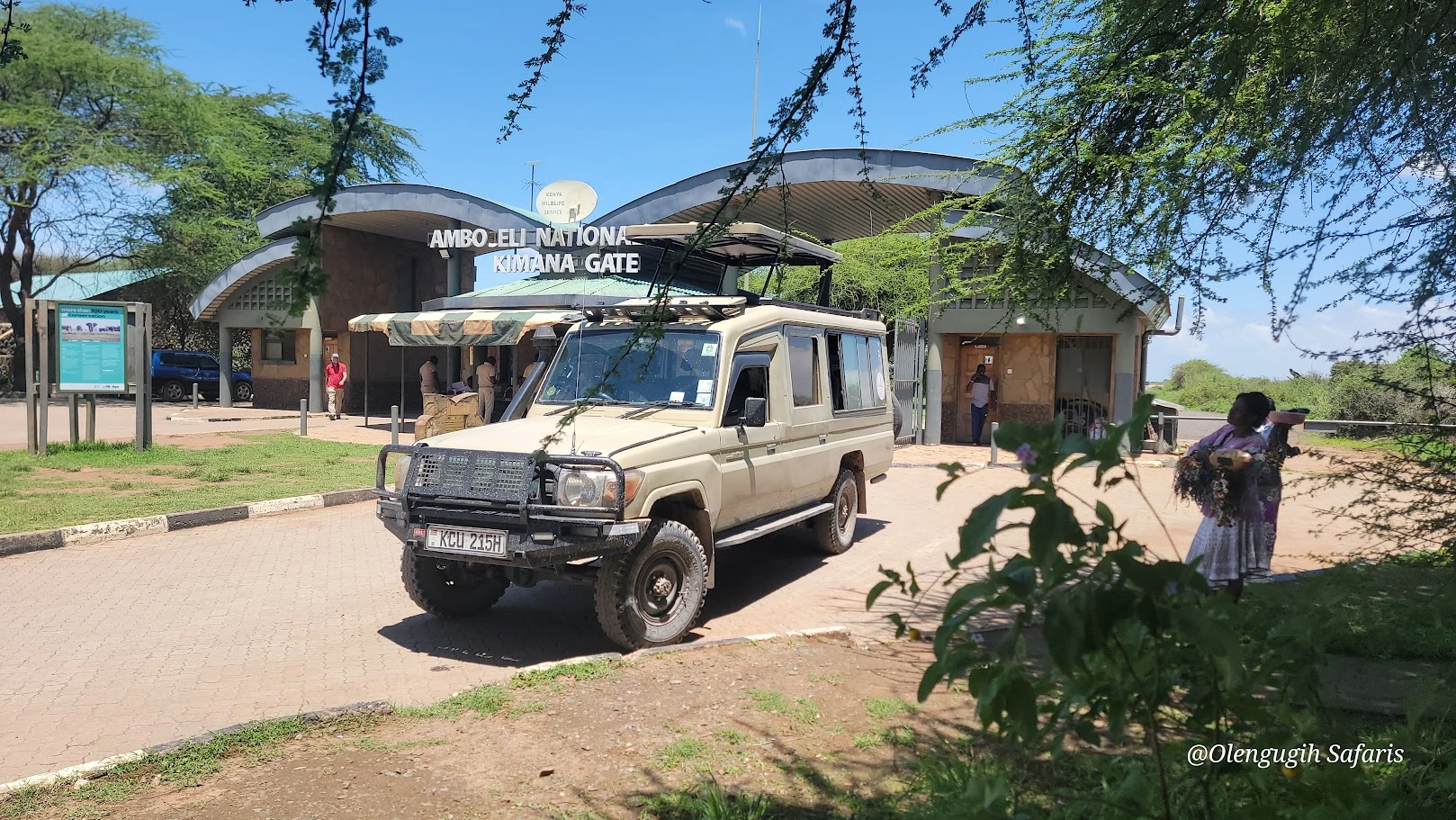
- Amboseli: bush and woodland edges. See our Amboseli National Park guide.
Watch the Track Ahead
The classic sighting is a slender mongoose racing across the road, its black-tipped tail held high. Scan ahead and to the sides as you drive.
Check the Trees and Rocks
Look in low branches, on fallen logs and on rocky outcrops, where slender mongooses hunt and rest.
Go During the Day
Unlike many small carnivores, slender mongooses are active by day, so you may see one at any time on a game drive, especially in the cooler morning and late afternoon.
Build a Route With Variety
The 8 Day Kenya Safari: Samburu, Ol Pejeta, Naivasha, Mara passes through several good habitats. You can also browse our Kenya wildlife safaris.
Travel in the Dry Season
Thinner bush makes small animals easier to see. The drier months are generally June to October and January to February. Travelling in the wet months instead? Read Can I do a Kenya safari during the rainy season?
Responsible Wildlife Viewing
Slow down when you see a mongoose near the track, and never try to chase or corner one. Stay in the vehicle and keep noise down. Don't feed mongooses at lodges or camps, and keep food stored securely.
Frequently Asked Questions About the Slender Mongoose
What is a slender mongoose?
A small, slim, solitary mongoose with a long black-tipped tail, found across most of sub-Saharan Africa. Its scientific name is Herpestes sanguineus, also given as Galerella sanguinea.
How big is a slender mongoose?
The body is about 27–34 cm long, the tail about 19–33 cm, and it weighs about 280–790 g.
What do slender mongooses eat?
Insects, rodents, lizards, snakes, frogs, birds and eggs, and occasionally fruit.
Can slender mongooses climb trees?
Yes. They climb readily, hunting birds, eggs and lizards in the branches.
How do you tell a slender mongoose from other mongooses?
Look for a small, slim, solitary mongoose with a long tail ending in a black tip, often flicked up as it runs.
Where can I see slender mongooses in Kenya?
The Masai Mara, Samburu, Tsavo, Nairobi National Park, Lake Nakuru and Amboseli. Sightings are never guaranteed.
Are slender mongooses endangered?
No. They are listed as Least Concern.
Plan Your Kenya Safari
Want to spot slender mongooses and the rest of Kenya's small carnivores alongside the Big Five? Olengugih Safaris can design a private, flexible Kenya itinerary through Samburu, Tsavo, the Mara and beyond. Start planning your safari or contact our team for a free quote.
Sources
- Size and weight by sex, variable colouring, dark tail tip, seasonal diet and Least Concern status: Handbook of the Mammals of the World, via Zenodo
- Other names (black-tipped and black-tailed mongoose) and the genus Herpestes: Wikipedia
- Tree climbing, a 60–70-day pregnancy, one to three pups and care by the mother alone: Namibian.org
- Pregnancy of 57–65 days, independence at 70–148 days and an opportunistic diet: Animal Diversity Web
- Raised tail curled forward and climbing trees: h2g2: Colours of Wildlife
- Male coalitions and dens in termitaria, rock crevices and hollow trees: Kruger National Park
- Prey as large as guineafowl and susceptibility to rabies: De Wets Wild
- Night activity when termites emerge: Namibia Carnivore Red Data Book
Interesting facts and identification clues
Interesting Facts About the Slender Mongoose
- The slender mongoose is also called the black-tipped or black-tailed mongoose.
- Unlike most mongooses, it often climbs trees to hunt.
- It flicks its tail high, black tip forward, as it runs from danger.
- It can overpower prey as big as a guineafowl.
- Its coat colour varies from grey to bright red to almost black, depending on where it lives.
- Only the mother raises the pups.
Content reviewed 27 Oct 2026