
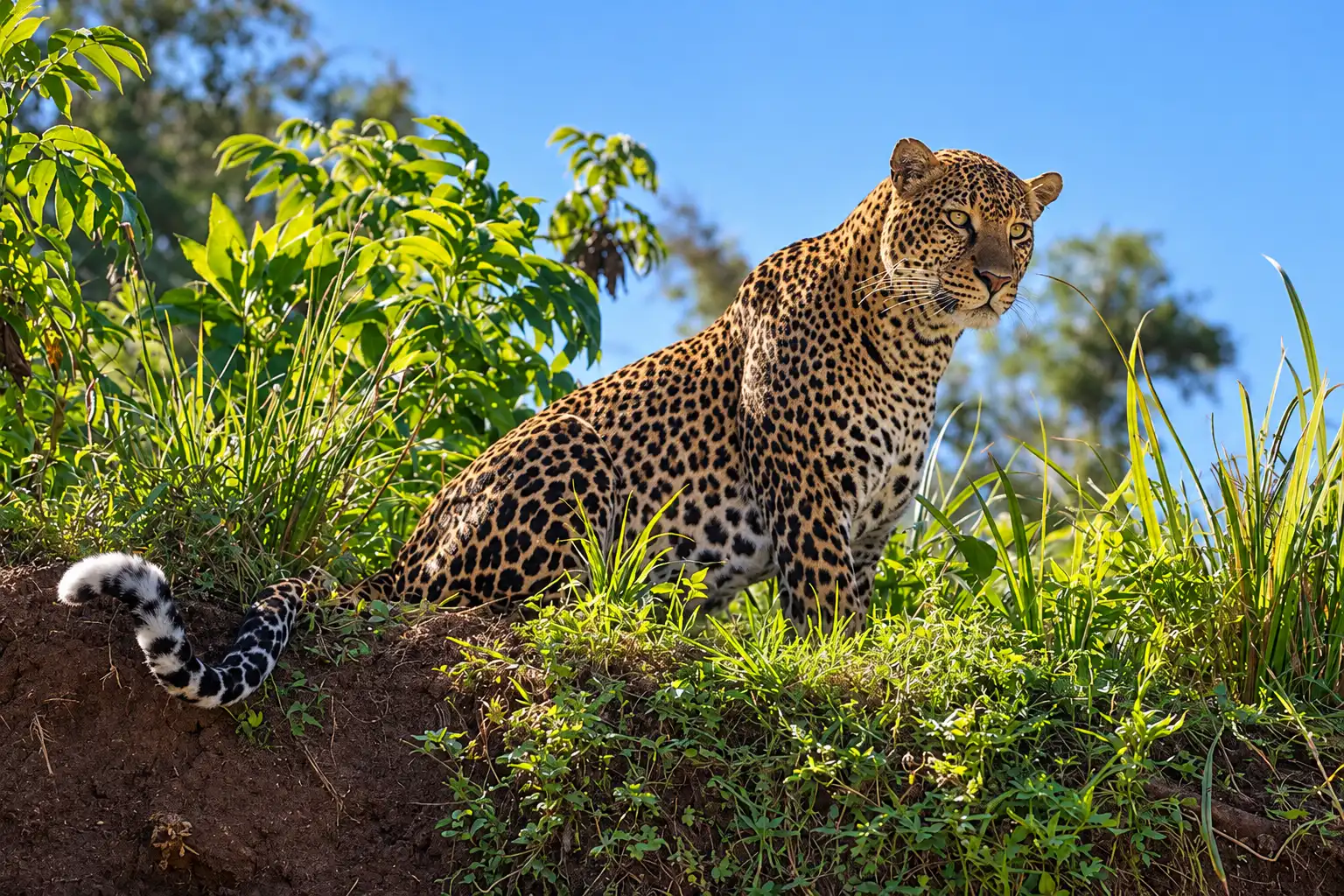
Big Cat Safaris in Kenya
Big cat safaris in Kenya offer the best chance to see lions, leopards and cheetahs in the wild. The Masai Mara is the top choice, and conservancies, Samburu, Tsavo and Laikipia add variety. Plan 3 to 5 days.
Last updated: 18 November 2026
Big cat safaris in Kenya at a glance
- The big cats: lion, leopard and cheetah. Serval and caracal are smaller wild cats.
- Best overall place: the Masai Mara and its private conservancies.
- Best for leopards: Masai Mara, Samburu and Tsavo West.
- Best for cheetahs: open plains in the Masai Mara, Amboseli and Laikipia.
- Best for lions: the Masai Mara, Amboseli, Tsavo and Nairobi National Park.
- Best months: July to October for the migration, and January to February for dry-season viewing.
- Best time of day: dawn and late afternoon.
- Time needed: 3 to 5 days gives you a strong chance of seeing all three.
Kenya's big cats compared
Kenya's big cats look alike from far away. Their habits are very different. The table shows how to tell them apart and how hard each is to find.
Big cat | Lifestyle | When active | Hunting style | How hard to find |
|---|---|---|---|---|
Lion | Social, lives in prides | Rests by day, hunts at dusk, night and dawn | Teamwork and ambush | Easy to moderate |
Leopard | Solitary | Mostly nocturnal, active at dawn and dusk | Stealth and ambush from cover | Hard |
Cheetah | Solitary or small groups | Daytime | Speed over short distances | Moderate |
All three are listed as Vulnerable on the IUCN Red List. Habitat loss and human-wildlife conflict are the main threats.
Meet each big cat
Lion: the king of the Kenyan plains
The lion is Africa's only social big cat. Lions live in prides of related females, their cubs and a few males. Adult males have a mane and weigh around 150 to 250 kg. Females are smaller and do most of the hunting. Prides rest in shade through the day. They become active at dusk, at night and at dawn. Kenya's lion population is estimated at under 2,500. Read more in our guide to the best places to see lions in Kenya or find out whether lions climb trees.
Leopard: the ghost of the bush
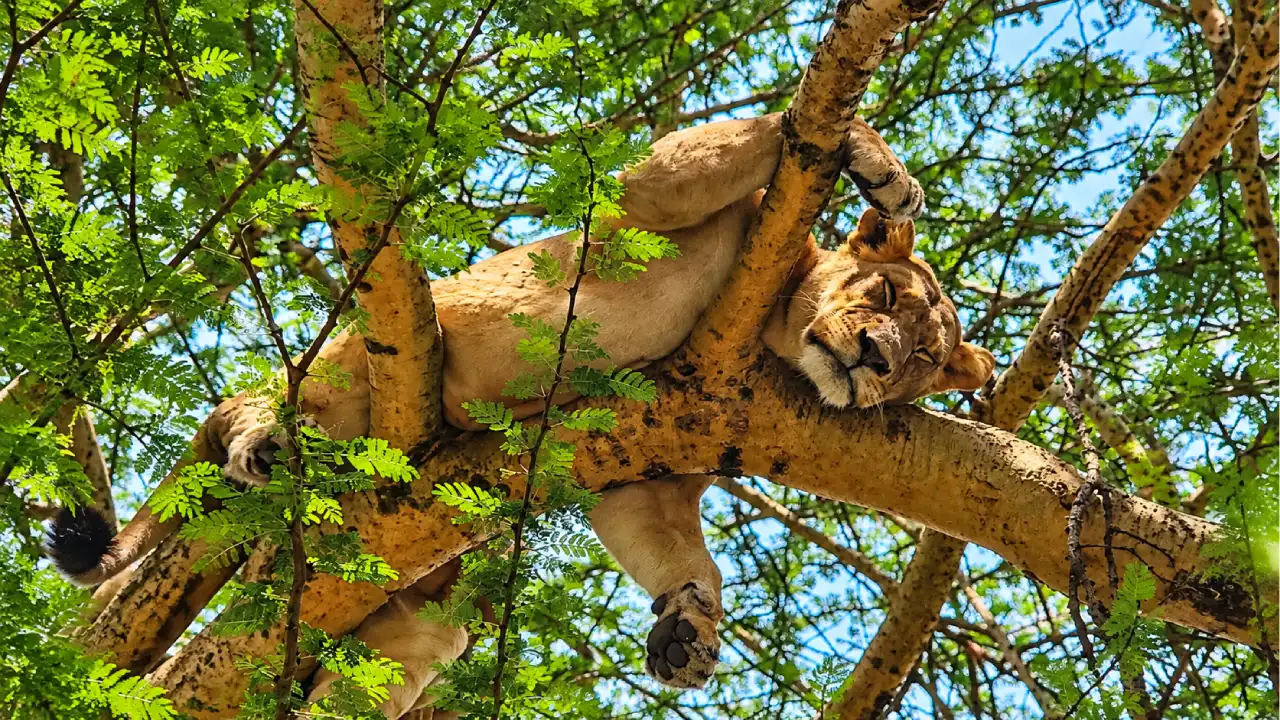
The leopard is the hardest big cat to find. It is solitary, powerful and hidden. Its coat has rosette-shaped spots that blend with branches and shadows. Leopards weigh about 30 to 90 kg. They hunt mostly at night and drag their kills into trees. Unlike other big cats, they adapt to forests, rocky hills and semi-desert. Kenya's Laikipia Plateau is also famous for rare black leopards. See our guides to the best places to see leopards in Kenya and the black leopard in Kenya.
Cheetah: built for speed
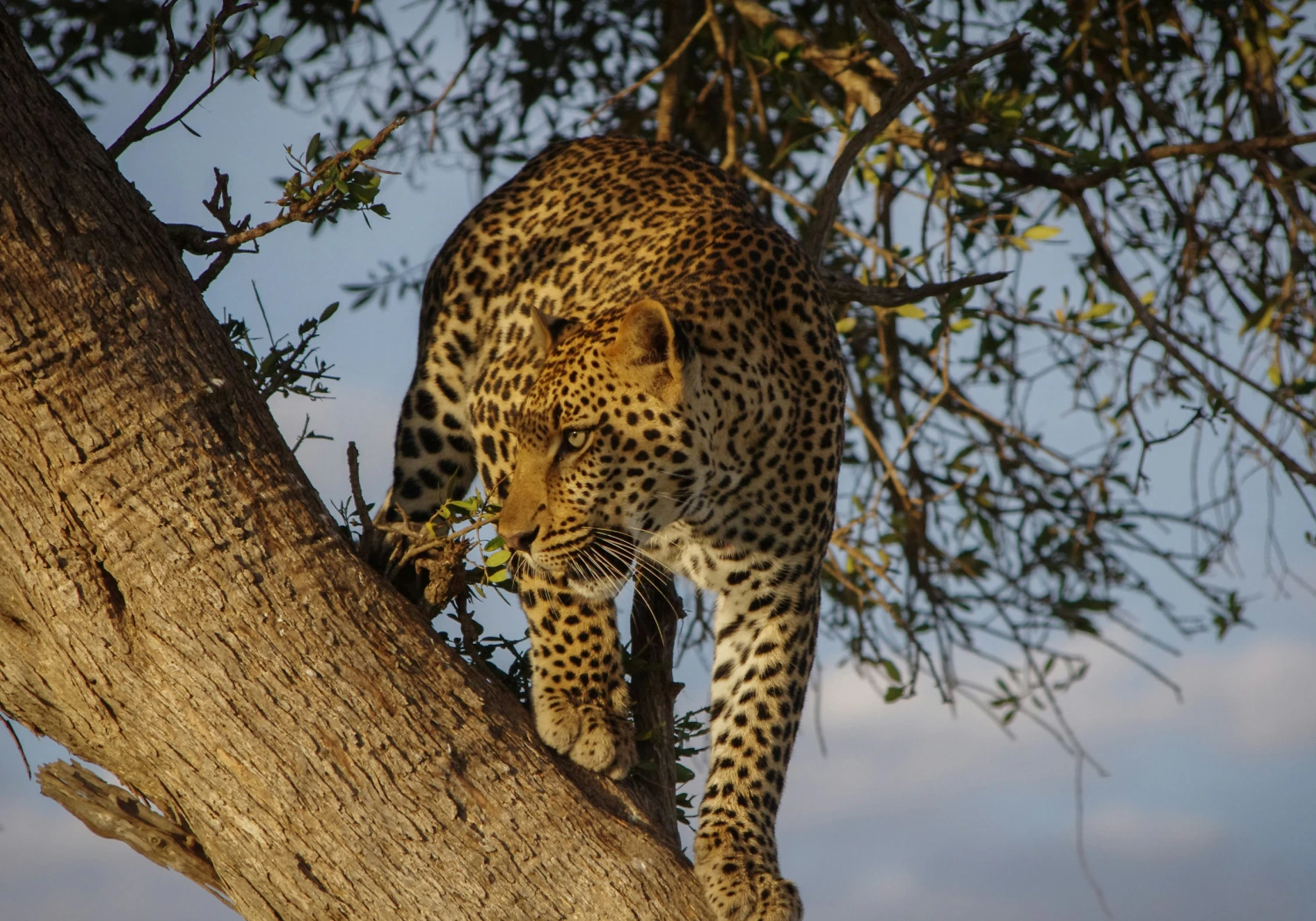
The cheetah is slim, long-legged and lightly built. Black "tear lines" run from its eyes to its mouth. It can reach about 100 km/h over short bursts. Unlike other big cats, it hunts by day, using sharp eyesight to spot prey from far away. Cheetahs cannot roar. They purr, chirp and make bird-like calls. They often climb termite mounds or safari vehicles to scan the plains. Read our guide to the best places to see cheetahs in Kenya.
Smaller wild cats: serval and caracal
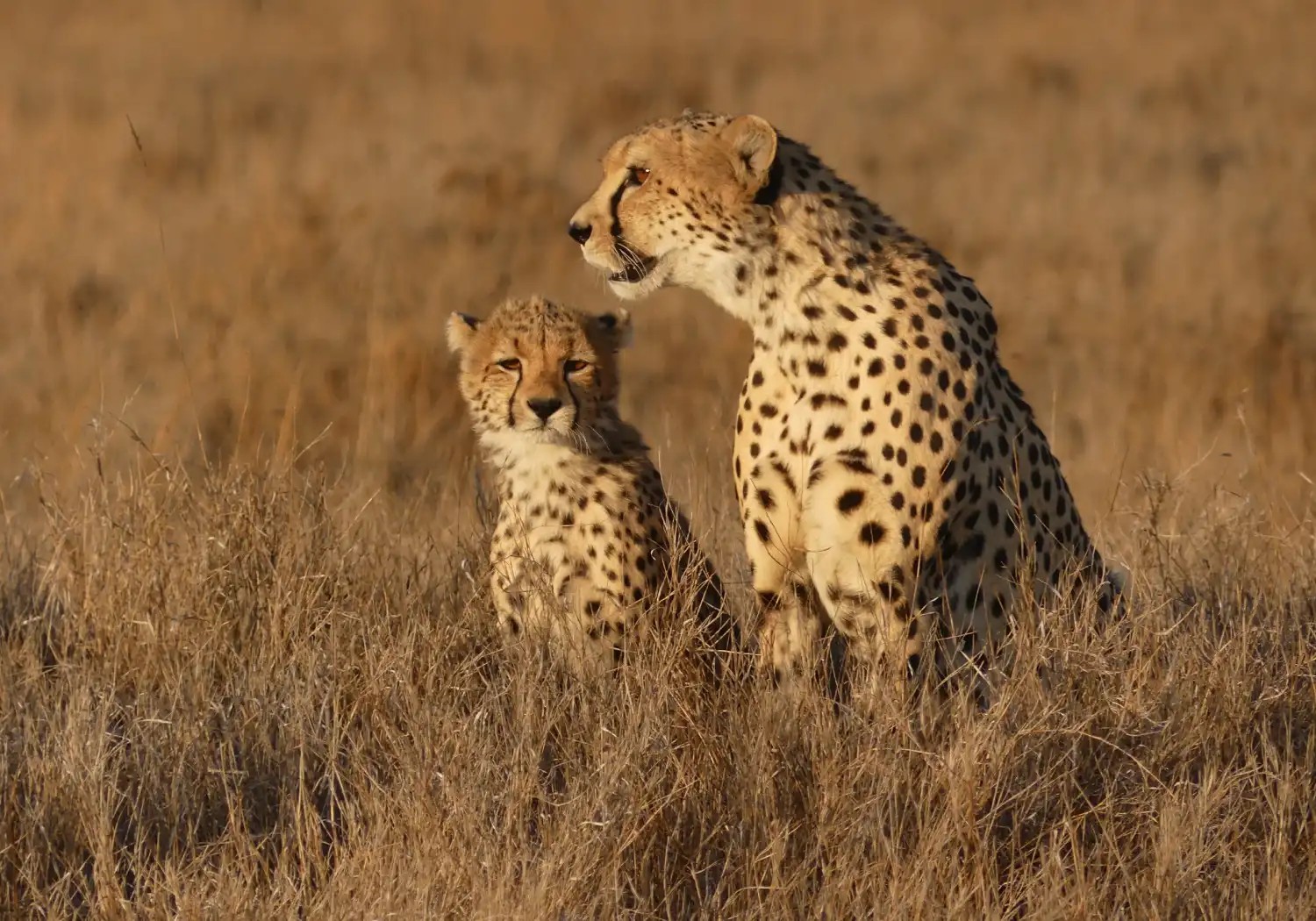
The serval and the caracal are not big cats, but they add magic to a safari. The serval has long legs, large ears and a spotted coat. It hunts rodents in tall grass. The caracal has black ear tufts and hunts at night. Both are shy and rare to see.
Where to find big cats in Kenya
Kenya is one of Africa's best countries for big cats. National parks suit short trips. Private conservancies offer fewer vehicles and calmer sightings.
Place | Lions | Leopards | Cheetahs | Why go |
|---|---|---|---|---|
Masai Mara National Reserve | Very good | Very good | Very good | Open plains, migration season and the most reliable big cat viewing |
Mara conservancies | Very good | Good | Good | Fewer vehicles, night drives in some camps and a calmer feel |
Samburu National Reserve | Good | Very good | Good | Dry northern scenery and the Ewaso Nyiro river |
Tsavo East and West | Good | Good in Tsavo West | Good in Tsavo East | Huge wilderness and famous red elephants |
Amboseli National Park | Good | Fair | Good | Open views, with Kilimanjaro behind |
Laikipia conservancies | Good | Very good | Good | Quiet private land and rare black leopards |
Meru National Park | Fair | Fair | Good | Remote and uncrowded |
Nairobi National Park | Good | Fair | Fair | Big cats with a city skyline, minutes from the airport |
Masai Mara: the best all-round choice
The Masai Mara has large resident populations of lions, leopards and cheetahs. Its open grasslands make sightings easier. The national reserve can be busy. The surrounding private conservancies have plenty of cats and fewer visitors. See our Masai Mara safari guide for costs and the best time.
Samburu and Laikipia: the north
Samburu is dry, rocky and dramatic. Its leopards and cheetahs hunt along the Ewaso Nyiro river. Laikipia's private conservancies add leopards, lions and cheetahs. They also protect the largest known group of black leopards. Read our guide to Laikipia wildlife conservancies.
Tsavo: wild and remote
Tsavo is one of Kenya's largest wilderness areas. Tsavo West is known for its leopards. Cheetahs are often seen on the plains of Tsavo East.
Amboseli and Nairobi National Park
Amboseli offers open views of lions and cheetahs with Mount Kilimanjaro behind. Nairobi National Park is the easiest way to see lions near the capital.
Best time, tips and how to plan a big cat safari
Best time to see big cats in Kenya
Big cats live in Kenya all year. July to October brings the Great Migration to the Masai Mara, which draws predators. January to February is dry, so animals gather near water and grass is short. The wet months are quieter and greener. Dawn and late afternoon are the best times of day.
How many days do you need?
- 2 days: a good chance of lions in the Masai Mara or a Nairobi National Park visit.
- 3 to 4 days: a strong chance of lions and cheetahs, and a fair chance of a leopard.
- 5 days or more: the best chance of all three, plus time for a conservancy or Samburu.
Tips for better big cat sightings
- Start early. Cats are most active at dawn and dusk.
- Hire an experienced driver guide who knows the territories.
- Look for vultures, alarm calls and other vehicles gathering.
- Scan termite mounds, rocks and tree branches for cheetahs and leopards.
- Stay quiet and keep your arms inside the vehicle.
- Add a conservancy stay for fewer vehicles and longer sightings.
- Be patient. Some of the best sightings take time.
Photography tips
Use a lens of 200 to 400 mm. Shoot in the soft light of early morning and late afternoon. Keep your shutter speed fast for running cheetahs. Bring a bean bag to rest your camera on the vehicle. Ask your guide to position the vehicle for the best light.
Safety and responsible viewing
Stay inside the vehicle at all times near big cats. Never feed or call animals. Keep your voice low and give the cats space. Responsible operators do not crowd animals. Learn how we travel responsibly in Kenya.
Frequently asked questions
What are the big cats in Kenya?
Kenya's big cats are the lion, the leopard and the cheetah. Smaller wild cats include the serval and the caracal.
Where is the best place to see big cats in Kenya?
The Masai Mara is the best all-round place. Its conservancies add fewer vehicles. Samburu, Tsavo, Amboseli and Laikipia also offer good sightings.
Can you see lions, leopards and cheetahs in one trip?
Yes. The Masai Mara offers all three. Allow 3 to 5 days. Leopards are the hardest to find, so give yourself time.
What is the best time to see big cats in Kenya?
July to October brings the migration to the Masai Mara. January to February is dry and good for viewing. Go at dawn or late afternoon.
Which big cat is hardest to see?
The leopard. It is solitary, nocturnal and well hidden. Samburu and the Masai Mara give the best chances.
How many lions are there in Kenya?
Kenya's lion population is estimated at under 2,500. Most live in the Masai Mara, Amboseli, Samburu, Laikipia and Tsavo.
Are black leopards real in Kenya?
Yes. Black leopards are very rare. Laikipia is known as a place where they have been recorded.
Can you see big cats at Nairobi National Park?
Yes. Lions are seen there regularly. Leopards and cheetahs are less common. It is a great short trip from the city.
Is it safe to see big cats on safari?
Yes, if you follow your guide's rules. Stay inside the vehicle, keep quiet and do not leave your seat near cats.
Do big cats hunt during the day?
Cheetahs hunt by day. Lions and leopards hunt mostly at night, dusk and dawn, but you may see them hunt in daylight.
Can Olengugih Safaris arrange a big cat safari in Kenya?
Yes. We plan big cat safaris with experienced driver guides. We cover the Masai Mara, Samburu, Amboseli, Laikipia and Nairobi National Park.
Kelvin's trick: stop looking for the cat
Here is what I teach every guest on day one. Do not look for the cat. Watch everyone else. Look for a zebra herd that freezes. Look for impalas staring one way. Look for a bird screaming from a tree. That is the cat's address. The animals almost always spot it before we do. Tell me which cat you most want to see, and we will build your days around it. Message us here or explore our Big Five safaris in Kenya.
Kelvin, travel consultant and driver guide, Olengugih Safaris
Guests can read reviews from other travellers on GetYourGuide, SafariBookings and Tripadvisor.
Keep tracking: Big Five safari in Kenya, Masai Mara safari guide and night game drives in Kenya.
Sources
- Rough Guides, Kenya wildlife: leopard and cheetah behaviour and habitats
- ATTA, Ol Kinyei Conservancy lion density: Kenya's lion population estimate
- Kenya Wildlife Service: park and reserve information
- IUCN Red List: conservation status of lion, leopard and cheetah