About the Bat-Eared Fox
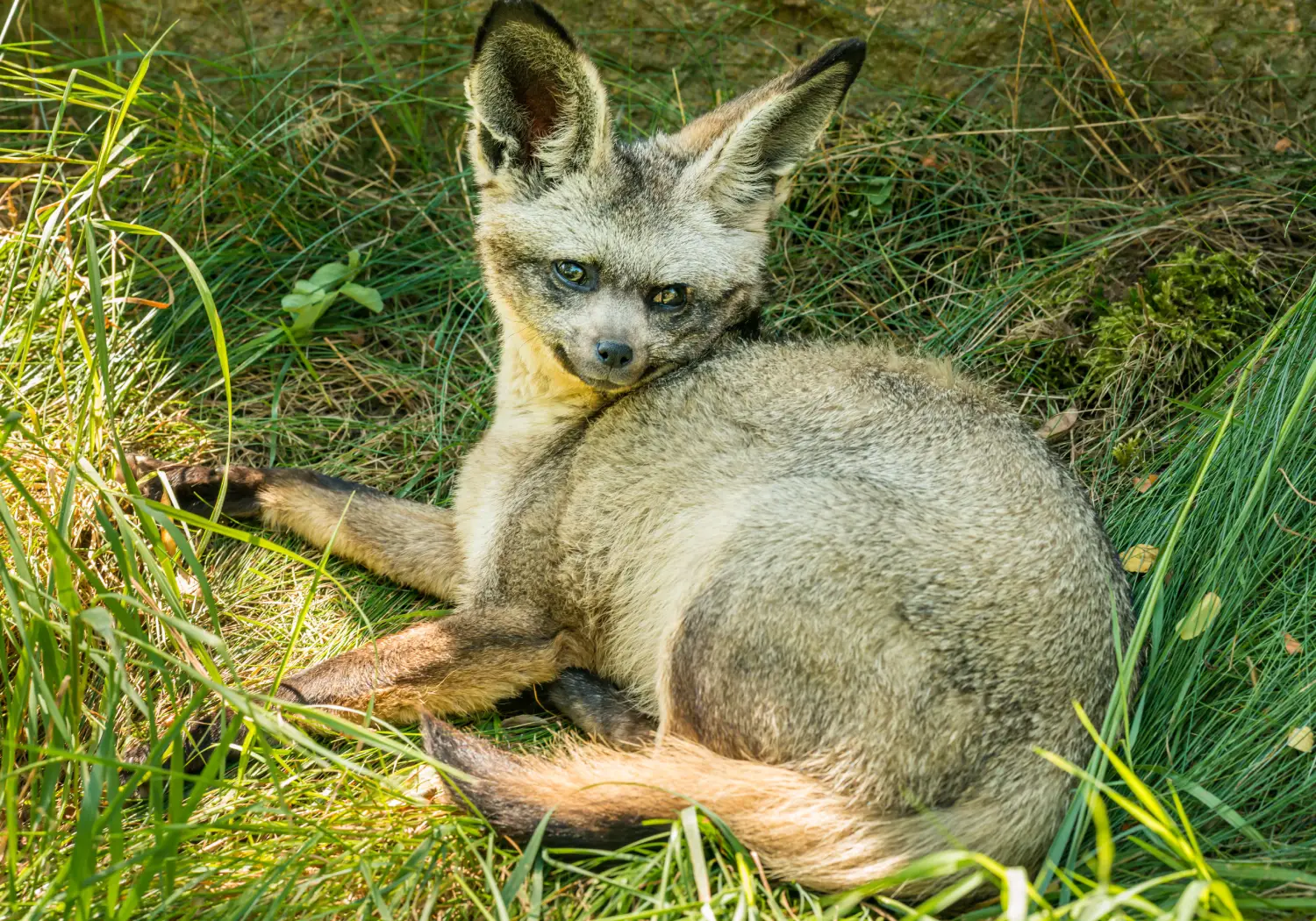
The bat-eared fox (Otocyon megalotis) is a small, sandy-grey fox with a black "mask", black legs and enormous ears, about 11–13.5 cm long. It uses them like satellite dishes to hear termites and beetles moving underground, and to shed heat on hot days. Insects make up most of its diet, and it has more teeth than almost any other land mammal, between 46 and 50, to crunch through them. Bat-eared foxes live in close family groups, and the fathers do much of the pup care. On the Mara plains, a family sunning itself outside its den is one of the most endearing sights of a safari.
Quick answer: The bat-eared fox lives on short-grass plains and dry savanna in two separate parts of Africa: East Africa and southern Africa. In Kenya, look for it in the Masai Mara, Amboseli, Samburu, Tsavo and Laikipia, especially near dens in the early morning and late afternoon. Sightings are never guaranteed.
What Does a Bat-Eared Fox Look Like?
The bat-eared fox is small and slender, about the size of a large house cat, with a yellow-brown to grey coat. Its face has a black "bandit mask" over the eyes and muzzle, and its lower legs and the tips of its ears and bushy tail are black. Its pale-lined ears are huge for its size, about 11–13.5 cm long, and can swivel independently.
Its teeth are just as unusual. Most dogs and foxes have no more than two upper and three lower molars on each side. The bat-eared fox has at least three upper and four lower, giving it 46–50 small teeth in all, ideal for crunching insects. Special jaw muscles let it chew very quickly.
Bat-Eared Fox vs Jackals
The bat-eared fox is often seen in the same places as jackals, but it is easy to tell apart.
- Size: the bat-eared fox is much smaller, at about 3–5 kg against 6–14 kg for jackals.
- Ears: its ears are enormous and rounded compared with a jackal's pointed ears.
- Markings: it has a black face mask and black legs. The black-backed jackal has a silver-black saddle, and the side-striped jackal a pale side stripe.
- Diet: the bat-eared fox eats mostly insects; jackals eat a much wider range of food.
Where Do Bat-Eared Foxes Live?
Bat-eared foxes live in two separate parts of Africa. One population lives in East Africa, from Ethiopia and Somalia through Kenya and Uganda to Tanzania. The other lives in southern Africa, from Angola and Zambia to South Africa. They prefer short-grass plains, dry savanna, scrub and semi-desert, especially where harvester termites are common, and they often live near herds of grazers, whose dung attracts beetles.
They shelter in dens they dig themselves or take over from aardvarks and other animals. These often have several entrances and tunnels several metres long. Browse our wildlife guide and Kenya destinations to see where these habitats are found.
What Do Bat-Eared Foxes Eat?
Bat-eared foxes are insectivores. According to the Animal Diversity Web, harvester termites and dung beetles can make up 80% of their diet. They also eat grasshoppers, scorpions, spiders, millipedes, small rodents, lizards, eggs and fruit. Brookfield Zoo notes that a single fox can eat about 1.15 million termites a year. They get most of their water from their food and rarely drink.
Bat-Eared Fox Behaviour
Bat-eared foxes live in pairs or small family groups, sharing a home range and den. Where termites are plentiful, several families may live close together.
Hunting by Ear
A foraging fox walks slowly with its head low and ears cocked forward, listening for insects underground. When it hears one, it digs quickly with its front paws and snaps it up.
Devoted Fathers
Male bat-eared foxes play a big part in raising pups. They guard, groom and play with them as much as, or even more than, the mother, while she spends more time foraging to produce milk.
Dodging Predators
When chased, a bat-eared fox relies on speed and remarkable agility, zigzagging and even reversing direction without slowing down. It also dives into its den. Predators include leopards, cheetahs, spotted hyenas, wild dogs, jackals, eagles and pythons.
Breeding
Females give birth in the den after a pregnancy of about 60–70 days. Litters usually have about two to six pups, whose eyes open at about nine days. They first leave the den at about 17 days old.
Is the Bat-Eared Fox Endangered?
No. The bat-eared fox is listed as Least Concern on the IUCN Red List and is fairly common across much of its range. Numbers can rise and fall with termite populations and rainfall, and local populations can crash during outbreaks of rabies or distemper, often spread from domestic dogs. In some areas it is also hunted for its fur or killed in mistaken belief that it preys on livestock. You can explore recorded sightings on iNaturalist.
Learn how your trip can support wildlife with our conservation-based safaris in Kenya.
How to See Bat-Eared Foxes on Safari in Kenya
Bat-eared foxes are a favourite sighting, and they are surprisingly easy to see once you know where their dens are.
Where to Look
- Masai Mara: families on the short-grass plains, often near termite mounds and old burrows. See our Masai Mara National Reserve guide and conservancies such as Naboisho.
- Amboseli: on the open plains and dry lakebed. See our Amboseli National Park guide.
- Samburu and Laikipia: dry grassland and scrub. See our Samburu National Reserve and Ol Pejeta Conservancy guides.
- Tsavo: open grassland in Tsavo East and West. See our Tsavo East National Park guide.
- Serengeti, Tanzania: one of the best places in Africa for bat-eared foxes. See our Serengeti National Park guide.
Find the Den
Guides often know where a family has its den. Arrive early or late in the day, switch off the engine and wait. Pups often come out to play near the entrance.
Go Early and Late
In East Africa, bat-eared foxes are mostly active at night and around dawn and dusk, when termites are on the move. In cooler months they may forage by day. Night drives in conservancies give another chance.
Build a Route With Variety
The 7 Day Kenya Elephants, Lakes and Masai Mara Safari passes Amboseli and the Mara, both good fox country. For families, try the 3 Day Masai Mara Family Wildlife Adventure or browse our Kenya family safaris.
Travel in the Dry Season
Short grass makes the foxes easier to spot. The drier months are generally June to October and January to February. Travelling in the wet months instead? Read Can I do a Kenya safari during the rainy season?
Photograph the Ears
A bat-eared fox peering over the grass, ears glowing in low sun, makes a perfect photo. Get low, use a long lens and shoot in the golden hour. Our photographic safaris in Kenya are built for moments like this.
Responsible Wildlife Viewing
Keep your distance from dens, switch off the engine and stay quiet so the family carries on naturally. Never drive over or park on a den, and don't block the entrance. On night drives, keep spotlights off the foxes' eyes for long.
Frequently Asked Questions About the Bat-Eared Fox
What is a bat-eared fox?
A small African fox with huge ears that eats mainly insects, especially termites. Its scientific name is Otocyon megalotis.
Why does the bat-eared fox have such big ears?
To hear insects moving underground and to release body heat in hot weather.
What do bat-eared foxes eat?
Mainly harvester termites and dung beetles, plus other insects, scorpions, small rodents, lizards, eggs and fruit.
How many teeth does a bat-eared fox have?
Between 46 and 50, more than almost any other land mammal.
How big is a bat-eared fox?
About 46–66 cm long plus a 23–34 cm tail, and about 3–5.3 kg.
Where can I see bat-eared foxes in Kenya?
The Masai Mara, Amboseli, Samburu, Tsavo and Laikipia are good places. Sightings are never guaranteed.
Are bat-eared foxes endangered?
No. They are listed as Least Concern.
Plan Your Kenya Safari
Want to watch bat-eared fox families, jackals and big cats on the Mara plains? Olengugih Safaris can design a private, flexible Kenya itinerary through the Mara, Amboseli, Samburu and beyond. Start planning your safari or contact our team for a free quote.
Sources
- Ear length, extra molars, termites and dung beetles up to 80% of the diet, fathers' role, pup development and predators: Animal Diversity Web
- Weight of 3–5.3 kg, East and southern African subspecies, Least Concern status and harvester termites: Wikipedia
- About 1.15 million termites a year, hearing termites, and dens dug by aardvarks: Brookfield Zoo Chicago
- 46–50 teeth, ears that shed heat, and reversing direction at speed: ZSL London Zoo
- Body and tail length, and the meaning of the scientific name: A-Z Animals
Interesting facts and identification clues
Interesting Facts About the Bat-Eared Fox
Its ears are about 11–13.5 cm long, huge for an animal weighing only 3–5 kg.
It can hear termites moving underground.
With 46–50 teeth, it has more teeth than almost any other land mammal.
A single bat-eared fox can eat over a million termites in a year.
Fathers do as much pup care as mothers, sometimes more.
Its scientific name means "big-eared, ear-dog" in Greek.
Content reviewed 22 Oct 2026